Two traders spot a head and shoulders on BTC. One shorts the neckline break and banks 22%. The other enters early, gets stopped out on a fake breakdown.
The difference? Patience and confirmation.
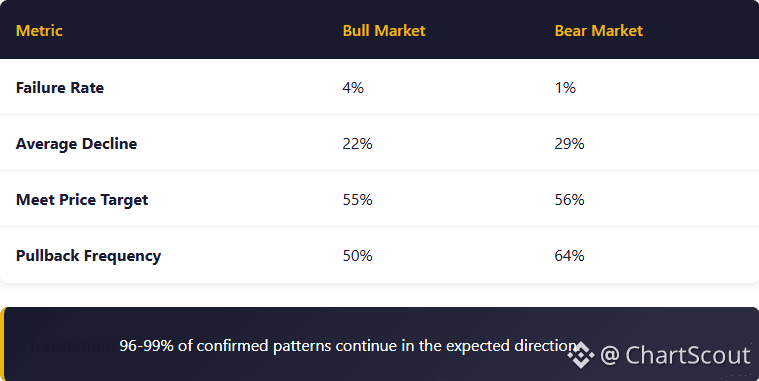
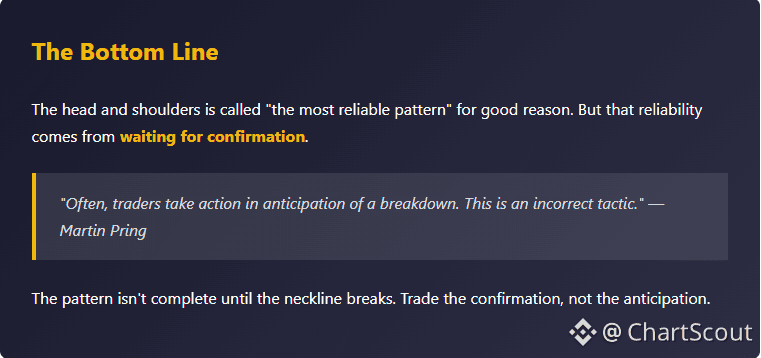
Based on Thomas Bulkowski's research of 814 patterns, the head and shoulders has a 96-99% success rate AFTER neckline break. Here's how to trade it properly.
What Is Head and Shoulders?
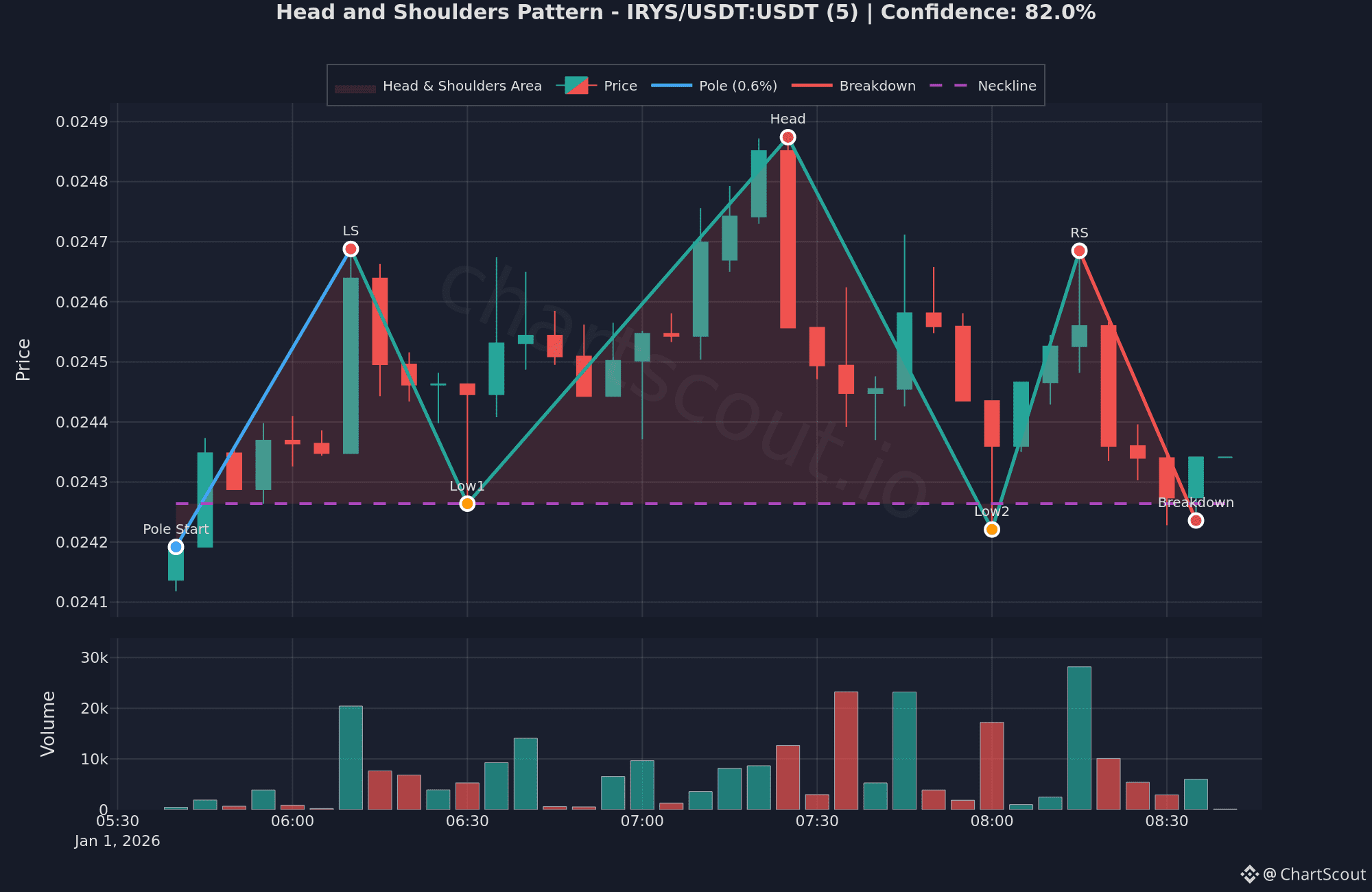
A bearish reversal pattern with three peaks:
Left Shoulder: First rally and pullback
Head: Higher rally (the peak), then decline
Right Shoulder: Lower rally that fails to match the head
Connect the two lows between peaks = Neckline
When price breaks below the neckline, the reversal is confirmed.
The Statistics (Bulkowski's Research)
Volume: Your Confirmation Signal
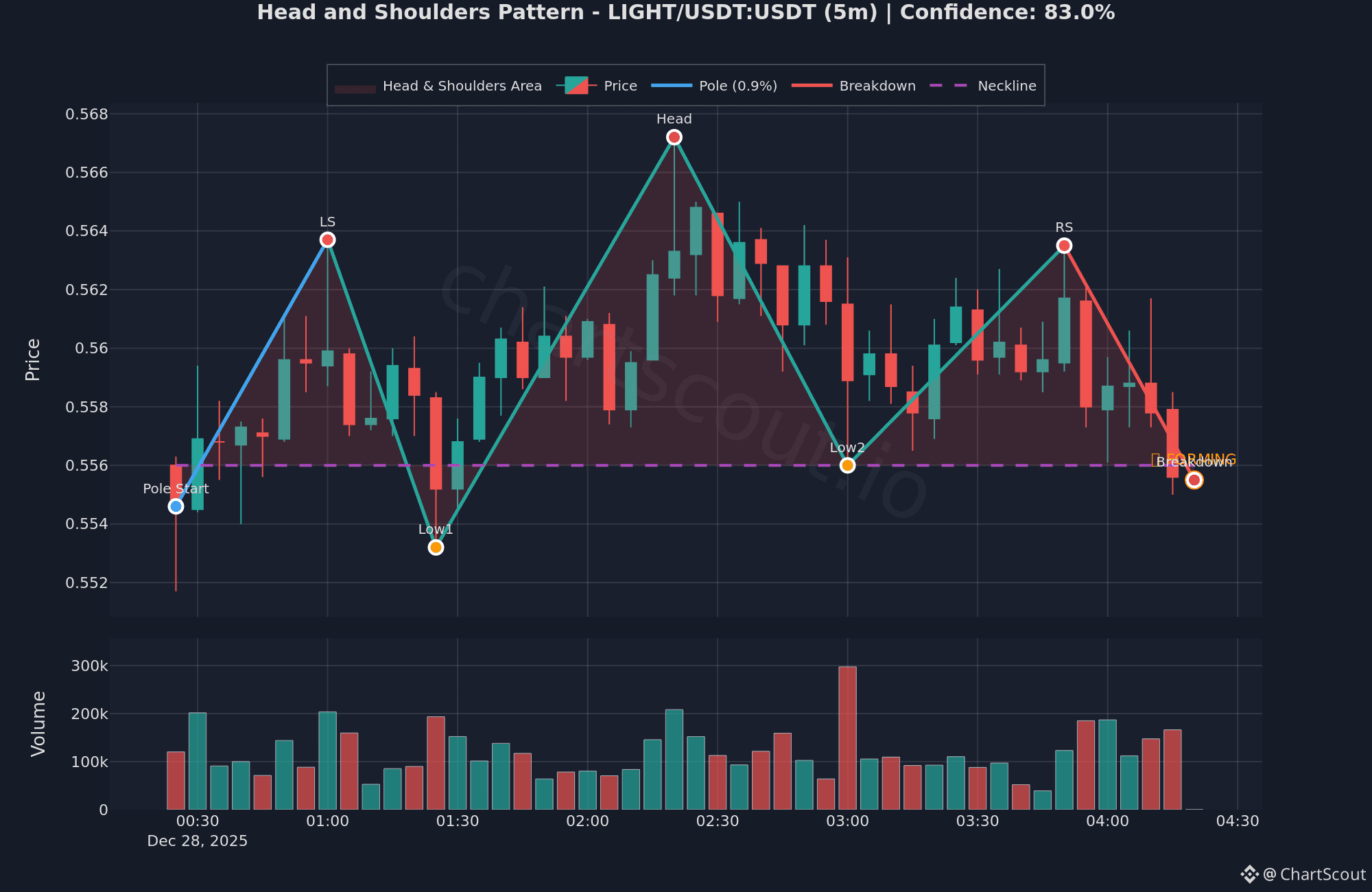
The "real tip-off" according to experts:
Left Shoulder: Highest volume
Head: Moderate volume
Right Shoulder: LOWEST volume
This declining volume shows buying pressure fading. If the right shoulder has equal or higher volume than the head, be cautious.
Trading Strategy
Entry Options
Conservative EntryEnter on neckline break close
Higher probability
Clear invalidation point
Pullback Entry
Wait for retest of neckline (occurs 50-64% of the time)
Better risk/reward
Takes patience
Price Target
Measure distance from head to neckline
Project that distance DOWN from breakout point
55% of patterns reach this target
Stop Loss
Standard: Above right shoulder
Aggressive: Just above neckline
Conservative: Above head
Critical Rules
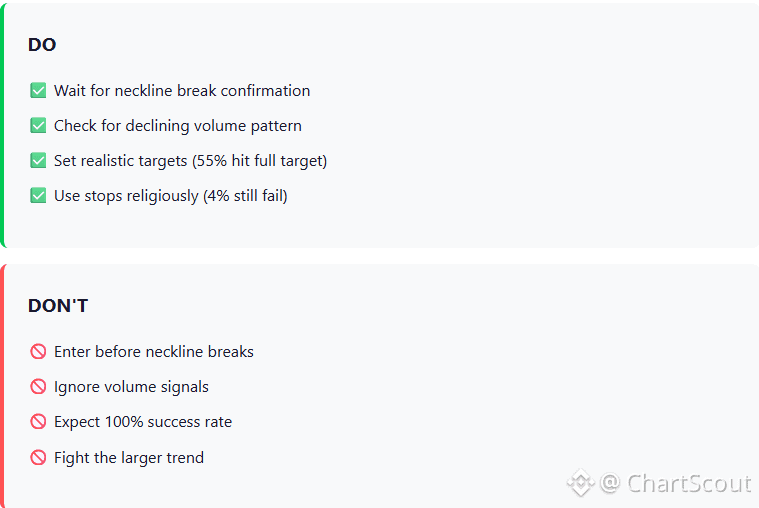
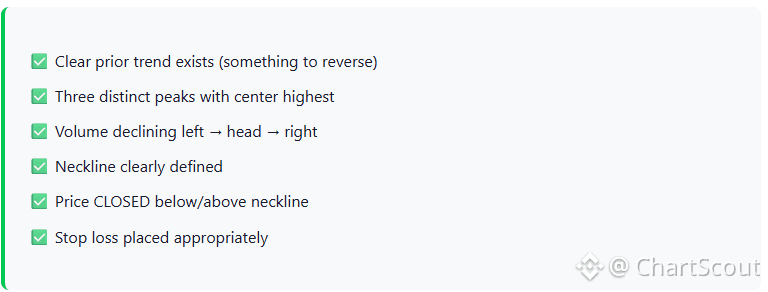
Quick Checklist
Before trading any H&S pattern:
📚Want the Full Deep-Dive?
This is the condensed version. For the complete guide with all statistics, expert quotes from Bulkowski and Martin Pring, advanced strategies, and more real examples, check out our extended article:
chartscout.io/head-and-shoulders-pattern
This article is for educational purposes only and does not constitute financial advice. Cryptocurrency trading involves substantial risk. Always do your own research.