

As Web3 moves closer to real-world use, one problem keeps appearing across blockchains: performance. Many networks are secure and decentralized, but once activity increases, they slow down. Transactions take longer, fees rise, and user experience suffers. Plasma exists to solve this exact issue by putting execution speed at the center of its design.
Plasma is not trying to be everything at once. Instead of acting as a general-purpose blockchain, it focuses on one critical role: fast and reliable execution. Its architecture is built to deliver low latency, high throughput, and stable performance, even when demand is high. This makes Plasma a strong foundation for applications that need constant interaction and instant responses.
One of Plasma’s biggest strengths is parallel execution. On many blockchains, transactions are processed one by one, which creates congestion during busy periods. Plasma is designed to execute multiple transactions at the same time whenever possible. This removes bottlenecks and allows the network to scale smoothly without sacrificing speed.
Smart contract efficiency is another key focus. Plasma reduces unnecessary computation, keeping execution clean and predictable. For users, this means faster interactions and fewer delays. For developers, it means building applications without worrying about sudden slowdowns or unpredictable costs as usage grows.
Plasma is designed to fit naturally into a modular blockchain ecosystem. In modern Web3, different layers handle different tasks. Some chains focus on settlement and security, others on governance or data availability. Plasma acts as the high-speed execution layer, handling frequent and time-sensitive activity while staying connected to the broader ecosystem.
Speed does not come at the cost of security. Plasma maintains strict validation and deterministic execution to ensure that results are correct and reliable. Its performance gains come from smart architecture, not weakened assumptions. This makes it suitable for applications where accuracy and trust are essential.
For developers, Plasma aims to remove friction. By supporting familiar tools and standards, it makes building and scaling applications easier. Predictable execution and stable costs allow teams to focus on innovation rather than constant optimization.
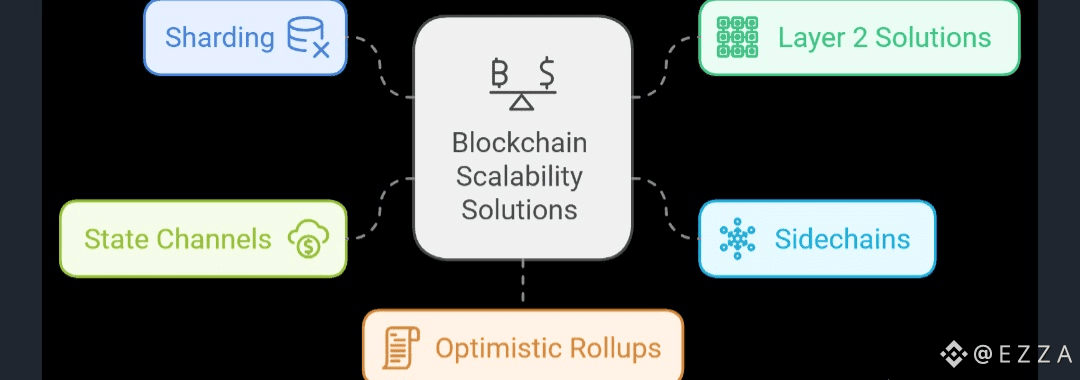
Plasma is especially valuable for use cases that struggle on slower networks. In DeFi, faster execution improves trading efficiency and reduces slippage. In gaming, low latency enables real-time experiences. For AI agents and automated systems, Plasma provides an environment where continuous actions can run without interruption.
The network is also built for the future of Web3. As automation increases, blockchains must support always-on activity rather than occasional transactions. Plasma is designed for this reality, where smart contracts behave like live systems instead of static code.
By improving efficiency and reducing congestion, Plasma avoids the extreme fee spikes that often drive users away from other networks. This creates a healthier and more sustainable environment for long-term adoption.
Plasma represents a shift in how blockchains are designed. Instead of forcing one network to handle everything, it specializes in execution and does it well. In a Web3 world that demands speed, reliability, and scalability, Plasma provides the performance layer needed to make decentralized applications truly usable at scale.

