

Web3 ne transactions aur smart contracts par kaafi focus kiya hai, lekin data storage hamesha side problem ki tarah treat hota raha. Large files, media assets, AI datasets, game resources — in sab ke liye aaj bhi zyada tar projects centralized clouds par depend karte hain. Yeh dependency quietly decentralization ko break kar deti hai.
Walrus Protocol isi weak point ko directly address karta hai.
Walrus ko sirf ek “storage network” ke roop me dekhna incomplete picture deta hai. Yeh ek aisa system hai jo large, unstructured data ko Web3 ke native environment ka hissa banana chahta hai — bina kisi central provider par trust kiye. Media files, NFT assets, AI training data, ya application state — sab ko long-term, verifiable storage milta hai.
Traditional cloud storage ka sabse bada issue control ka hota hai. Data ek provider ke servers par hota hai. Agar provider fail ho jaye, policy change ho, ya access restrict kar de, application helpless ho jaata hai. Walrus is model ko todta hai. Data ko chhote parts me divide karke network ke multiple nodes par distribute kiya jaata hai. Koi single failure point nahi hota.
Is design ka practical benefit resilience hai. Agar kuch nodes offline bhi ho jaate hain, data phir bhi reconstruct ho sakta hai. Yeh approach sirf security ke liye nahi, cost efficiency ke liye bhi important hai. Puri file har node par copy karna wasteful hota. Walrus encoding techniques use karta hai jisse redundancy controlled rehti hai, lekin availability compromise nahi hoti.
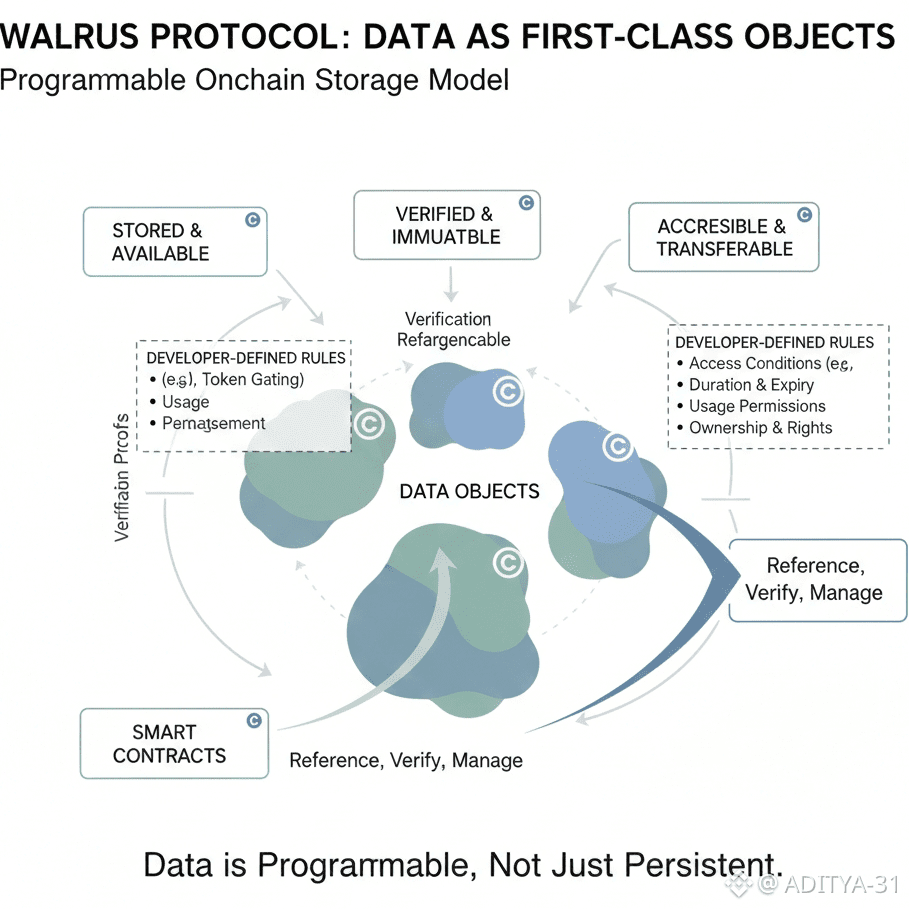
Walrus ka ek interesting aspect yeh hai ki storage ko chain ke bahar ki cheez nahi maana gaya. Stored data objects blockchain environment ke andar first-class citizens ki tarah treat hote hain. Data blobs ko onchain objects ke roop me reference kiya ja sakta hai. Smart contracts unke existence, availability, aur lifecycle ke saath interact kar sakte hain.
Isse application design ka approach change ho jaata hai. Developers sirf compute aur logic nahi, data ke behavior ko bhi program kar sakte hain. Storage kab expire ho, kaun access kare, kis condition me data referenced ho — yeh sab logic ke through define ho sakta hai.
Walrus ke documentation me troubleshooting ka section bhi ek subtle signal deta hai. Project assume karta hai ki real developers, real data ke saath kaam kar rahe honge. Tooling updates, configuration mismatches, testnet resets — yeh sab realities ko openly accept kiya gaya hai. Isse ek maturity dikhai deti hai. Yeh “plug and forget” demo system nahi hai, balki evolving infrastructure hai.
Economic layer yahan sirf secondary role nahi play karti. $WAL token storage payments, node incentives, aur network participation ke liye use hota hai. Jo users data store karte hain, woh network ko pay karte hain. Jo nodes storage provide karte hain, unhe rewards milte hain. Is alignment ke bina decentralized storage sustainable nahi ho sakta.
Broader picture me dekhein toh Walrus ka timing important hai. Web3 ab sirf token transfers tak limited nahi raha. Applications heavy ho rahi hain. AI integration badh raha hai. Media-rich platforms grow kar rahe hain. In sab ke liye reliable, decentralized storage optional nahi raha.
Centralized clouds Web2 ke liye perfect the. Web3 ke liye woh compromise create karte hain. Walrus jaise protocols is gap ko fill karte hain — jahan data permissionless hota hai, verifiable hota hai, aur kisi ek entity ke control me nahi hota.
Continuous updates aur tooling improvements yeh indicate karte hain ki project static nahi hai. Infrastructure build karna ek one-time event nahi hota. Yeh iterative process hota hai. Walrus isi mindset ke saath move kar raha hai.
Simple words me, Walrus Protocol storage ko afterthought se nikal kar foundation bana raha hai. Agar Web3 ko genuinely decentralized banna hai, toh data ko bhi utna hi decentralized hona padega jitna execution aur consensus. Walrus isi direction me kaam kar raha hai — quietly, but structurally.

