
Imagine a digital world where your data isn’t just locked up tight—it’s yours to control, verify, and even profit from if you want. That’s what Walrus is building on Sui. These days, data leaks and snooping are everywhere, but Walrus is different. Privacy isn’t an afterthought here. It’s baked right into the core, using sharp cryptography and a tough, decentralized design to keep your info safe. I’ve seen plenty of crypto projects mess up security, but Walrus actually nails it. Your files, your app states, your media—they stay private, yet you can still plug them straight into the blockchain.
At the heart of Walrus is a clever privacy system. They use a tech called erasure coding through their RedStuff setup. Basically, it slices up your data into tiny pieces and spreads them out across a bunch of nodes. No single node ever holds the whole file, so nobody can snoop on everything. The math checks out, too—a replication factor around 4.5x, storage overhead at 5x, so it’s efficient without leaking secrets. If you need to recover data, you only grab the missing bits, not the whole thing. Even if someone tries to attack the system, they can’t piece it all together. This works for tricky stuff like AI models or compliance docs—stuff you really can’t risk leaking—while still letting you prove everything’s legit on-chain.
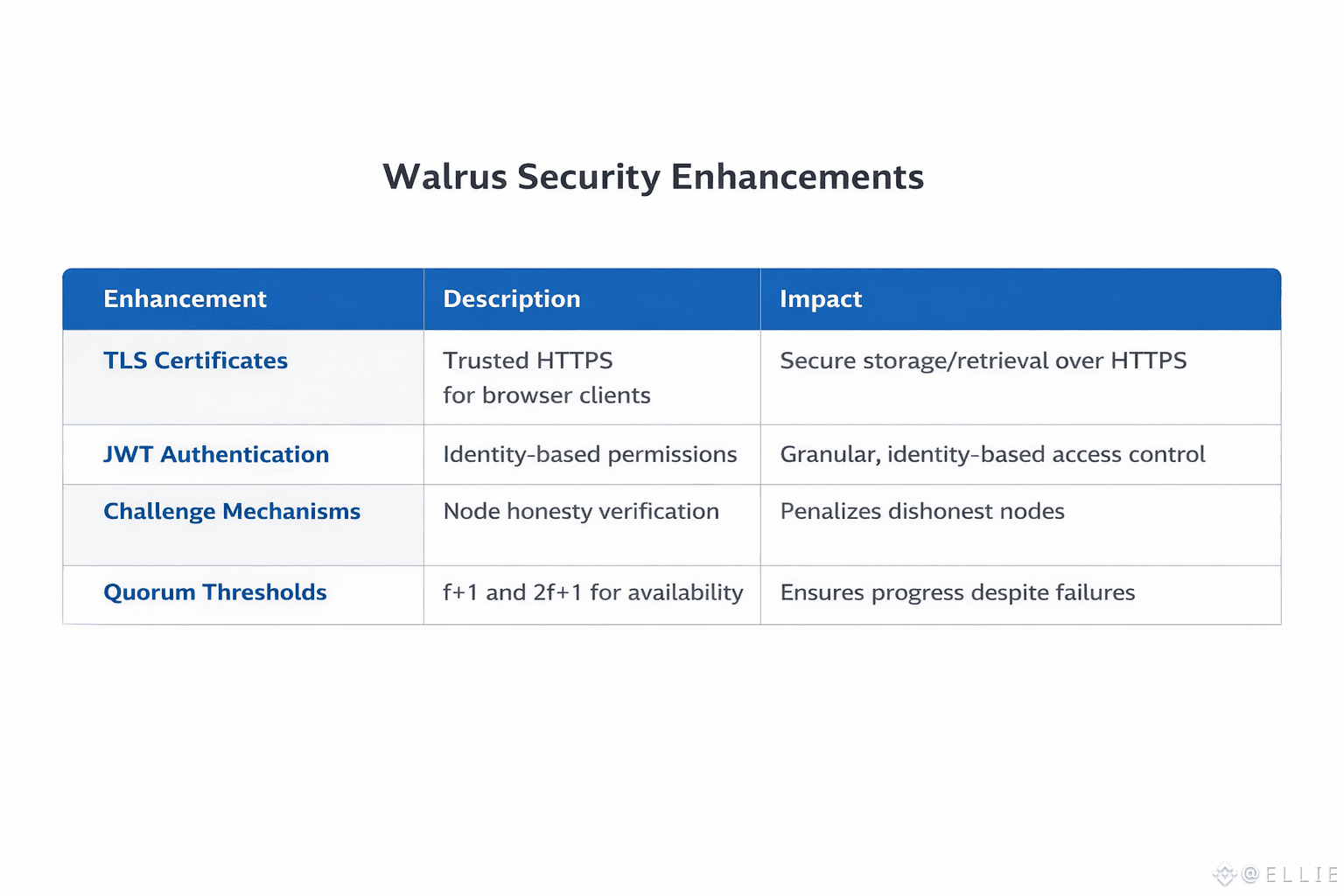
Walrus hasn’t stopped there. They recently rolled out support for real TLS certificates (think Let’s Encrypt), so storage nodes can talk to browsers over HTTPS—no hacks or weird plugins needed. Developers can build apps where users stash and fetch their data with normal web tools, but with Web3-level security. Add in JWT authentication, and any identity provider can set permissions down to the finest detail. You get usage tracking without losing anonymity. These upgrades, live since early 2026, let companies finally ditch old-school cloud providers. Now data moves silently and securely across dApps on Sui, Ethereum, Solana—wherever you need it.
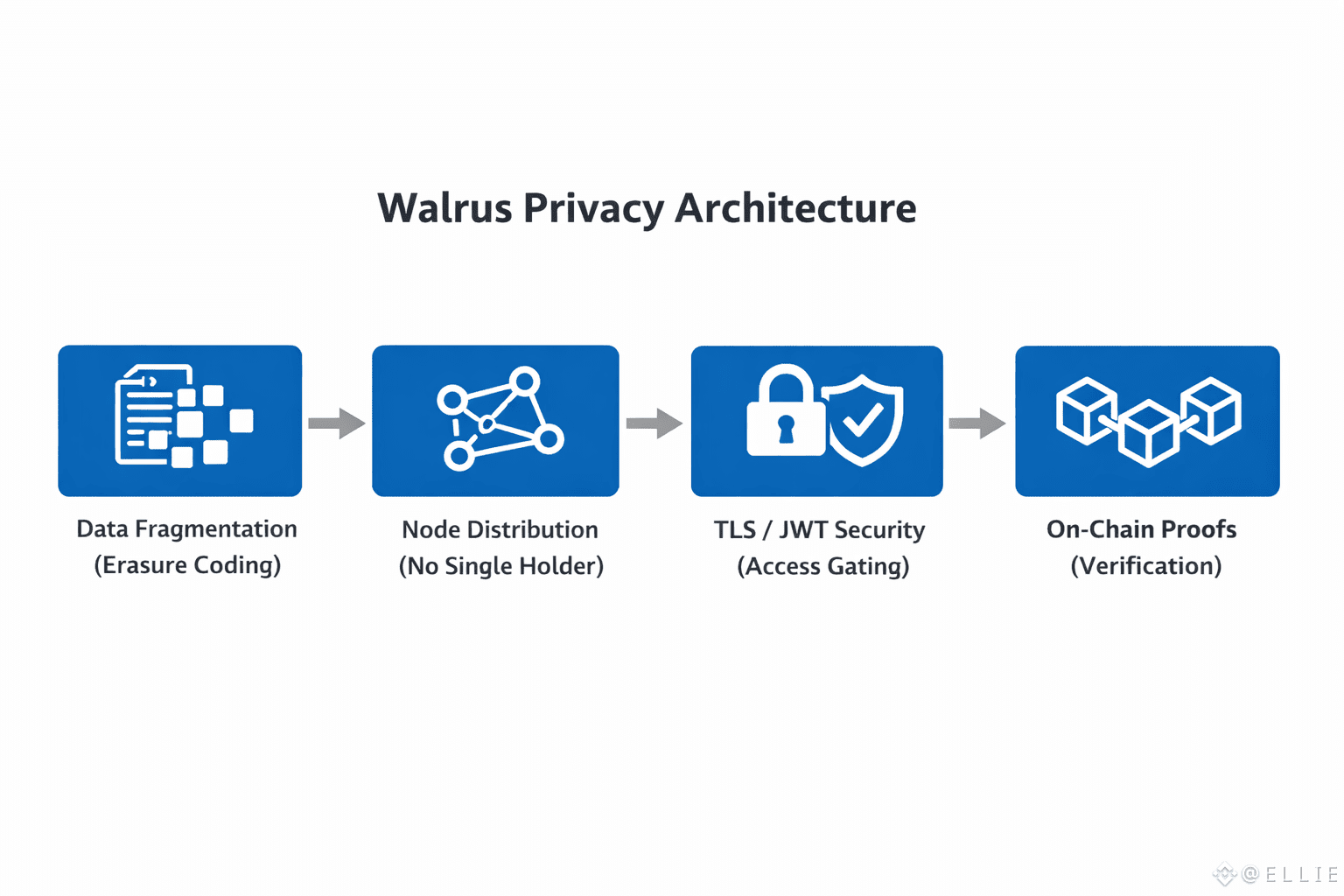
Security runs deep in the Walrus network. Nodes get tested with regular challenges; cheaters get caught and punished, but the network keeps moving—no drama. In testing, 105 nodes in 17 countries managed a thousand shards, handled over a terabyte of data, and racked up more than 5 petabytes in capacity over two months. Quorum rules keep things running even if some nodes go down, and no single operator can hoard too many shards. If something breaks, data gets rebuilt right where it is—no need to reshuffle the whole network. Privacy holds strong because of the way data stays fragmented and encoded.
And Walrus isn’t just building for itself. Integrations like Seal turn data into protected, tradable assets. Partners like Talus run AI agents on Walrus, keeping training data private but verifiable. Itheum lets you tokenize your datasets—make money on them without spilling any secrets. Even Walrus Sites, their decentralized hosting platform, keeps NFT experiences private and portable. Since launching mainnet in March 2025 with over 100 nodes, the whole ecosystem has come together. It’s fast, affordable, and finally gives Web2 a run for its money—except your privacy actually stays intact.
Bottom line: Walrus is flipping the script on data. Now, your info is private, provable, and under your control. With $140 million in backing from big names like Standard Crypto and a16z, this isn’t just a tech upgrade—it’s a push for a better web, where privacy fuels the next wave of innovation, from AI to DeFi.


