
Picture a blockchain where developers aren’t stuck battling clumsy tools or dodging regulatory landmines. Instead, they’re building privacy-first apps that real financial institutions actually want to use. That’s Dusk Network. It’s a Layer-1 platform built from scratch for creators—one that makes it easy to launch compliant, production-ready finance apps without the usual pain. While most crypto platforms drown you in flashy SDKs that never quite deliver, Dusk keeps things practical: EVM compatibility, zero-knowledge magic, and a whole toolkit that makes building regulated DeFi way less stressful. I’ve tinkered with a lot of this stuff, and Dusk’s focus on builders really stands out. You can prototype, deploy, and scale fast—and compliance is baked in from the start.
What really kicks things off for developers is Dusk’s Rusk VM 2.0. Imagine a turbo-charged virtual machine, running on WebAssembly, that handles confidential smart contracts with precision. This isn’t just another runtime—it’s tuned for zero-knowledge proofs using PLONK, so you can write contracts in Rust or Solidity that handle private computations out of the box. Want to keep transaction details hidden but still verifiable? That’s built-in—great for things like automated settlements or yield optimizers. The VM’s gas metering keeps everything efficient, so heavy contracts don’t slow down the network. And if you’re coming from Ethereum, DuskEVM makes it easy to port your contracts and upgrade them with privacy features thanks to the Hedger module, which adds homomorphic encryption for processing encrypted data.
Dusk also stands out with its SDK suite. You get the Dusk SDK for Rust development, plus smooth wallet integrations—MetaMask included—so testing feels familiar. There’s a dedicated testnet where you can really push the limits, whether you’re tokenizing assets under MiCA compliance or just stress-testing your latest idea. The docs actually cover what you need: API endpoints, hands-on guides, even deep dives into Phoenix transactions—these let you send confidential, unlinkable transfers that break address associations at the protocol level. With Citadel, you can build apps that handle decentralized KYC: verify identities in private, keep out sanctioned addresses, and move on. And this isn’t just pie-in-the-sky. Hackathons have already produced prototypes like privacy-first lending platforms, proving Dusk actually lowers the barrier for launching compliant, innovative DeFi.
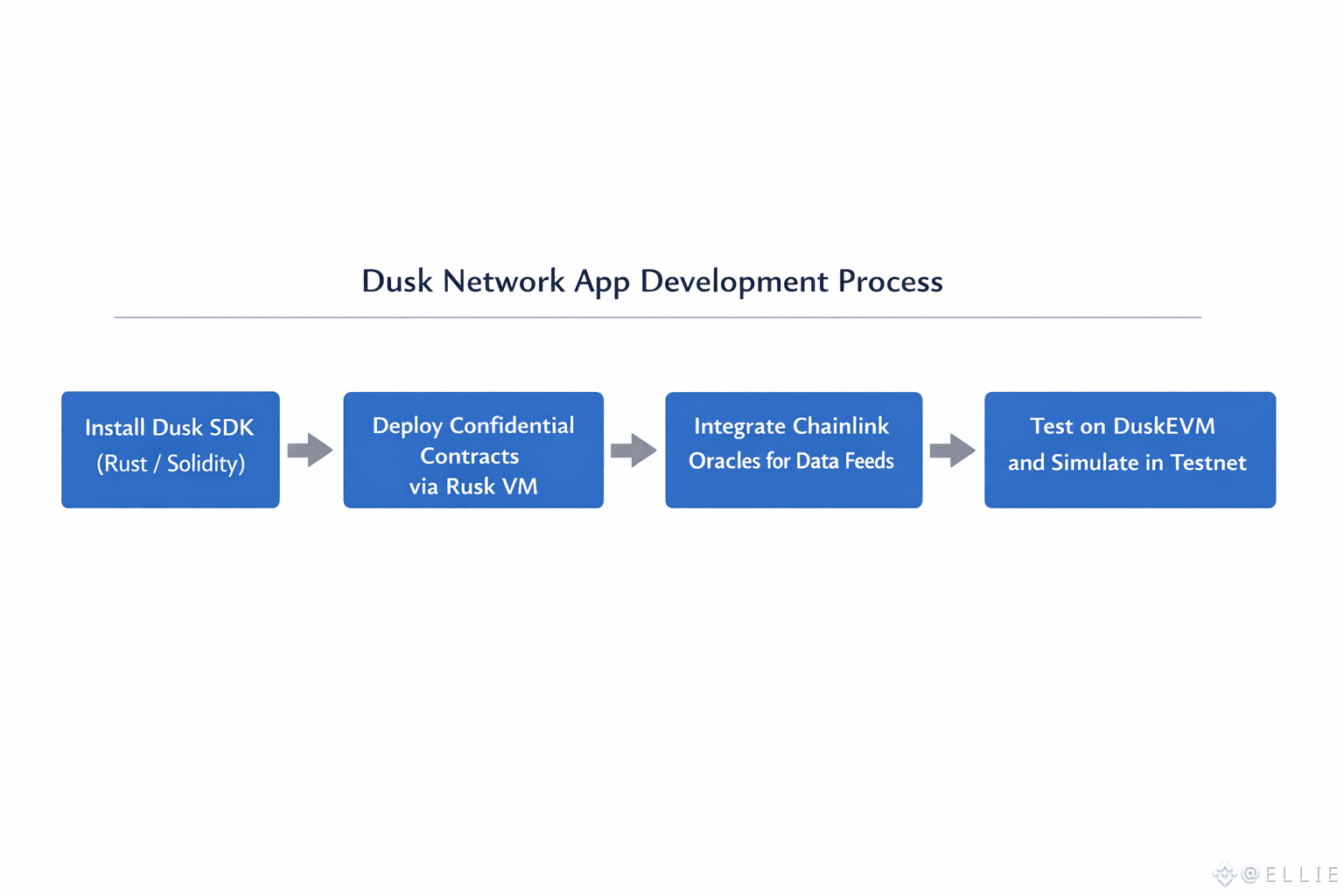
When it comes to building, Dusk’s modular architecture really helps. DuskDS handles settlement and consensus, while DuskEVM takes care of execution—so you can tweak your smart contract logic without touching the core ledger. It makes development cycles fast and flexible. Succinct Attestation in consensus means you get finality in just a few seconds, perfect for apps that need instant confirmation like cross-chain bridges. You also get Chainlink oracle integration—pull in live data, set up dynamic pricing for tokenized RWAs, whatever your use case. If you’re building on DuskTrade, the network’s RWA app, you can create modules for things like bond or fund management, giving users direct on-chain ownership that ticks all the European compliance boxes. As of January 20, 2026, the network’s rolling: 500 million DUSK tokens in circulation, daily transaction volumes hitting $250 million across different apps, and clear proof that builders are driving the action here.
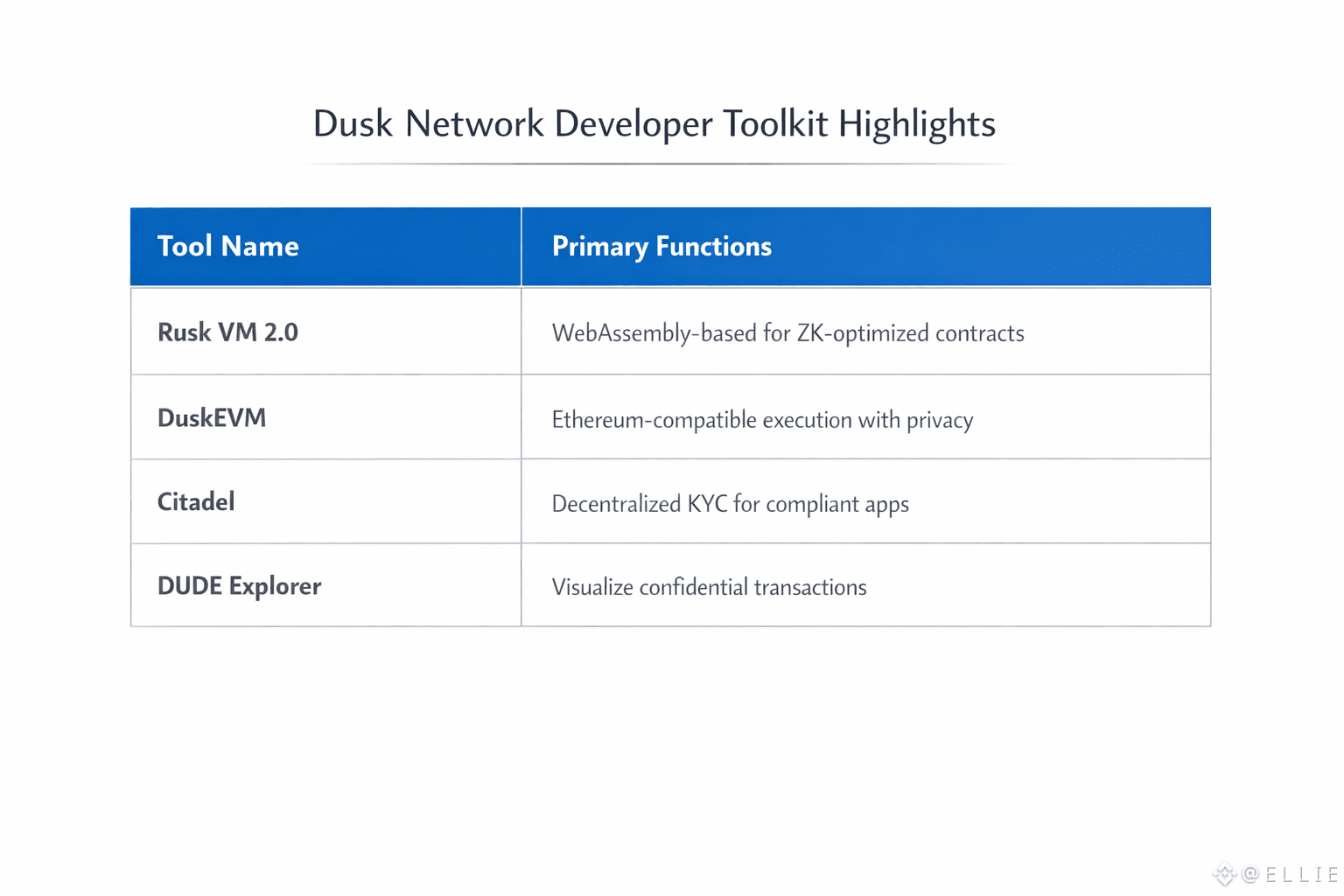
The community keeps this engine running. Tools like the DUDE explorer let you visualize confidential transactions, and cross-chain bridges let you test with Ethereum or Solana. Dusk’s grant program backs fresh ideas, from quantum-resistant security to brand-new DeFi building blocks. Weekly dev hangouts on Discord (archived on YouTube) give you a direct line to the team—whether you’re stuck on ZK proofs, need tips for deploying on DuskEVM, or just want to learn from others. They’ve already racked up more than 50 episodes, sharing everything from architecture deep-dives to security advice and grant news. Partnerships expand what’s possible: Quantoz’s EURQ stablecoin lets you create euro-based apps, and Cordial Systems’ custody APIs help you handle assets securely in your own builds.
And on security? Dusk doesn’t cut corners. Every core component goes through strict audits, and the SDK comes with formal verification tools to catch bugs before they become problems.
