
Walrus isn’t just another cloud alternative—it’s a full-on challenge to the centralized giants that have dominated storage for years. Those big-name clouds? They’re convenient, sure, but you’re stuck with single points of failure, random outages, censorship risks, and bills that just keep climbing. Walrus flips that whole model. Built on Sui, it’s decentralized by design, so you get stronger reliability, lower costs, and a system that’s actually built for things like AI, DeFi, and everything Web3. This isn’t about catching up to AWS or Google Cloud. Walrus is already beating them where it really counts: rock-solid uptime, transparent fees, and true freedom from censorship. Sick of getting boxed in by your cloud provider? Walrus gives you an actual way out.
Here’s how it works. Traditional clouds try to protect your data by duplicating it everywhere, but that just leads to high costs and, weirdly, more risk. Walrus spreads your data across a global network of independent nodes, using clever erasure coding through the RedStuff protocol. Your files get chopped into tiny pieces—slivers—and scattered, so no single node holds everything. Thanks to a lean 4.5x replication factor, the system only uses about 5x storage overhead, but it’s tough as nails: Your data survives even if two-thirds of the shards vanish, and it keeps writing even if a third of the network goes quiet. Recovery is quick and cheap, too. Instead of rebuilding everything, Walrus just restores what’s missing, so you’re not burning through bandwidth or running up the bill like you do with old-school, fully replicated systems. In real-world tests—105 nodes, 17 countries, 1,000 shards, over 1.18 terabytes of data, and hundreds of gigs of metadata—the network handled more than 5 petabytes of capacity. Individual nodes pitched in anywhere from 15 to 400 terabytes each. Try getting that kind of horizontal scaling from a centralized provider without breaking the bank.
Now, let’s talk cost. Centralized clouds love to nickel-and-dime you—premium fees for redundancy, surprise egress charges, and, of course, that lovely vendor lock-in. Walrus ditches all that. Node operators set their own prices based on hardware, stake, risk, and demand. The protocol collects bids and builds a schedule that’s actually fair and competitive. Payments happen in WAL tokens, so providers get rewarded for uptime and users only pay for what they use. That’s it—no hidden fees, no weird throttling, just a straightforward, usage-based model. For anyone dealing with big files or high-volume data—think AI training sets or media hosting—you save a ton. Plus, quorum thresholds (f+1 at 19 nodes for basic uptime, 2f+1 at 38 for extra strength) guarantee cloud-level availability, all without trusting a single company.
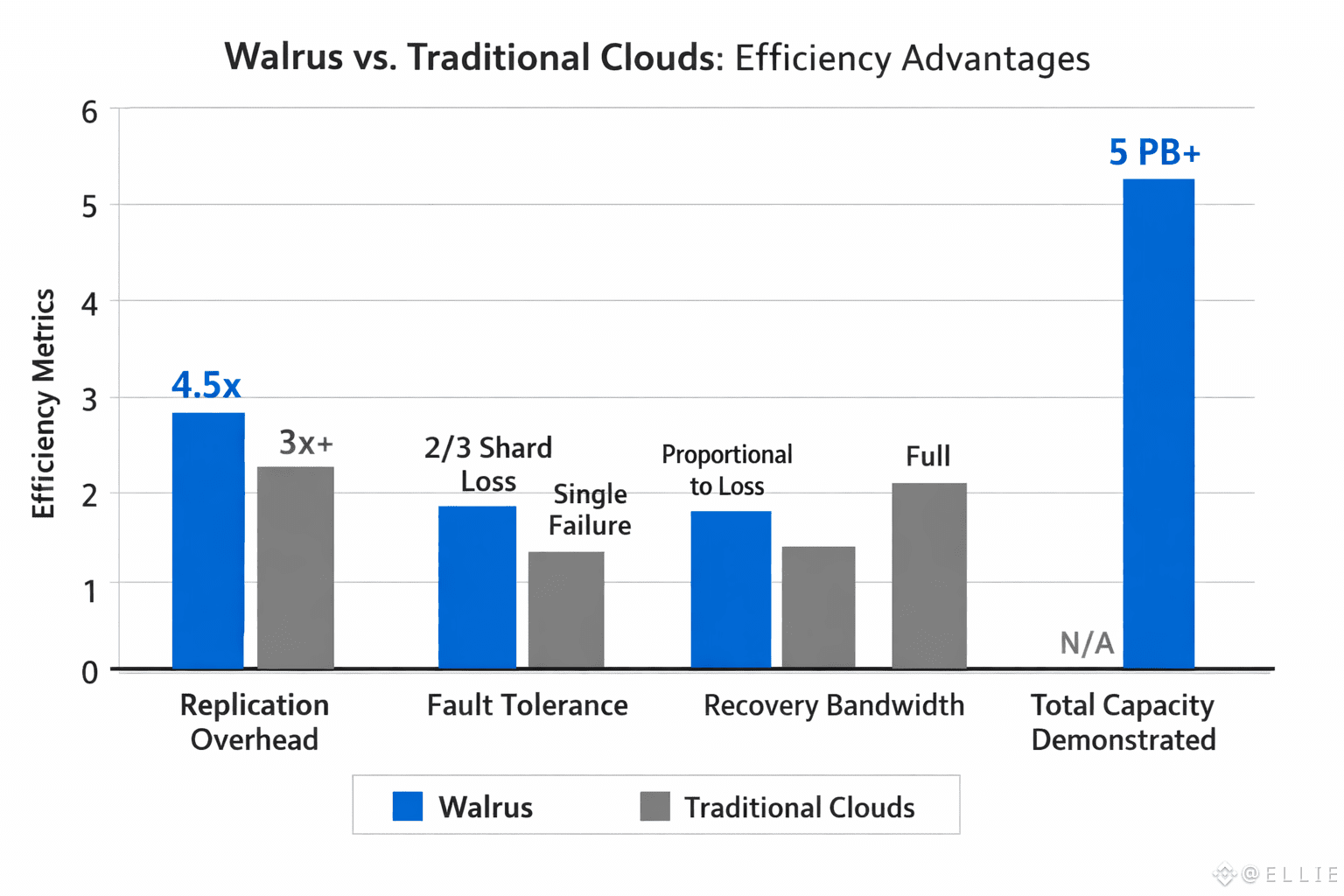
But what really sets Walrus apart? Censorship resistance and real resilience. Centralized clouds can freeze your account or shut you down with a single takedown notice. Walrus? Not so easy. With cryptographic proofs, built-in challenge systems, and penalties that ramp up over time, the network makes it nearly impossible for anyone to just cut you off. If a node drops off or starts lagging, Walrus rebuilds your data locally, not by shuffling everything around. And soon, emergency migrations will instantly handle chronic underperformers. All this was stress-tested in setups around the world. Even if a region goes dark or local policies change, your stuff stays online and secure. Reads move at the speed of your internet, not bogged down by endless consensus checks—so big files load fast, no matter what.
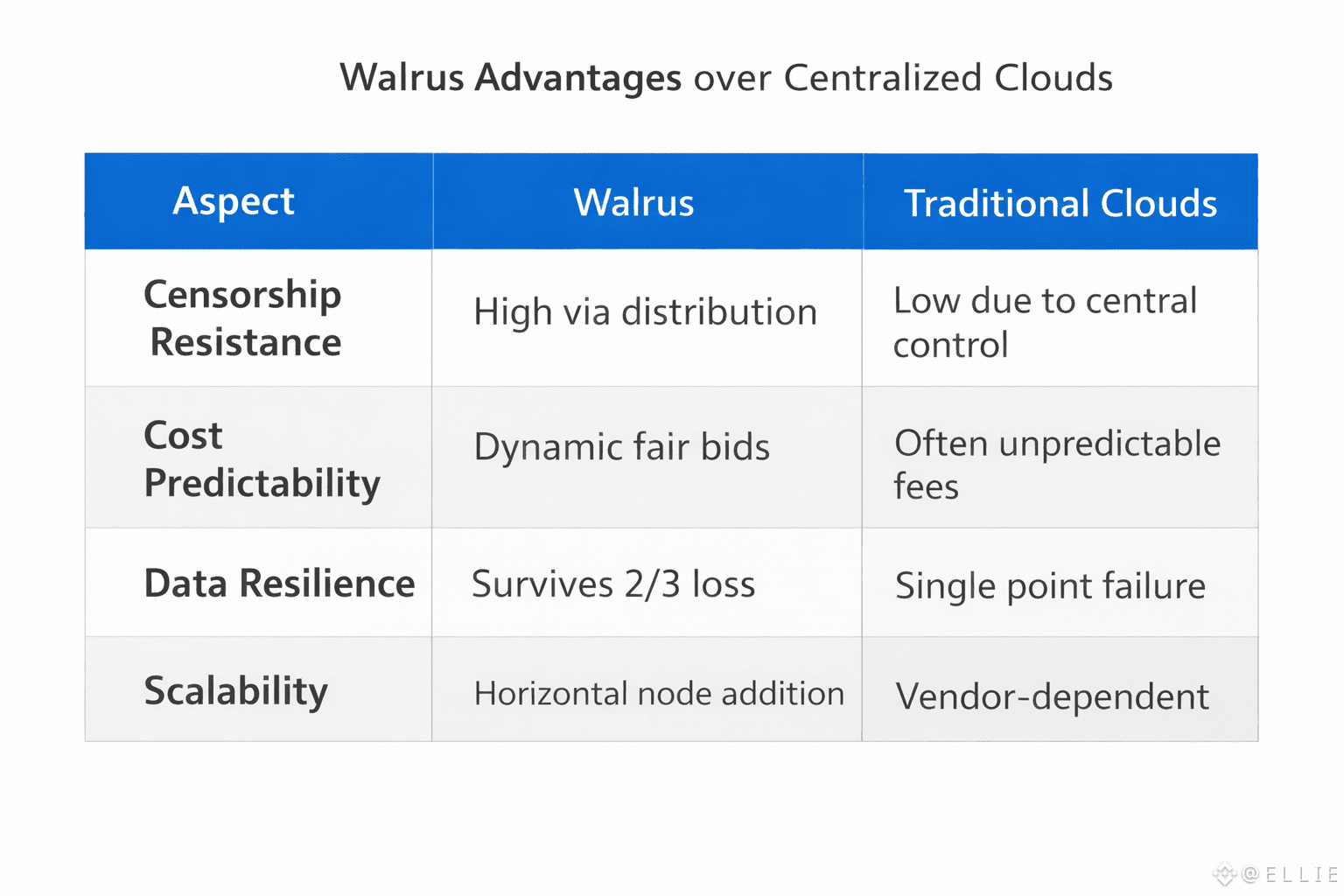
This isn’t just theory, either. Walrus is already powering real things that centralized clouds struggle with. In DeFi, it stores private, tamper-proof documents for real-world assets. In AI, it keeps data markets honest and traceable. Content creators use Walrus Sites to launch fully decentralized websites—like Flatland or Snowreads—that load as fast as any Web2 site, but with actual user ownership. Cross-chain support means apps on Ethereum, Solana, and beyond can all use the same blobs, breaking down data silos for good. Since launching on mainnet March 27, 2025, with more than 100 nodes up and running, Walrus has moved from hype to reality. It’s a working, cost-effective alternative to centralized storage, ready to take over.
Bottom line: Walrus is the next step for data infrastructure. It’s decentralized, efficient, and built to handle anything you throw at it. If you want storage that’s resilient, affordable, and actually gives you control, you don’t have to wait. Walrus is already here.

