

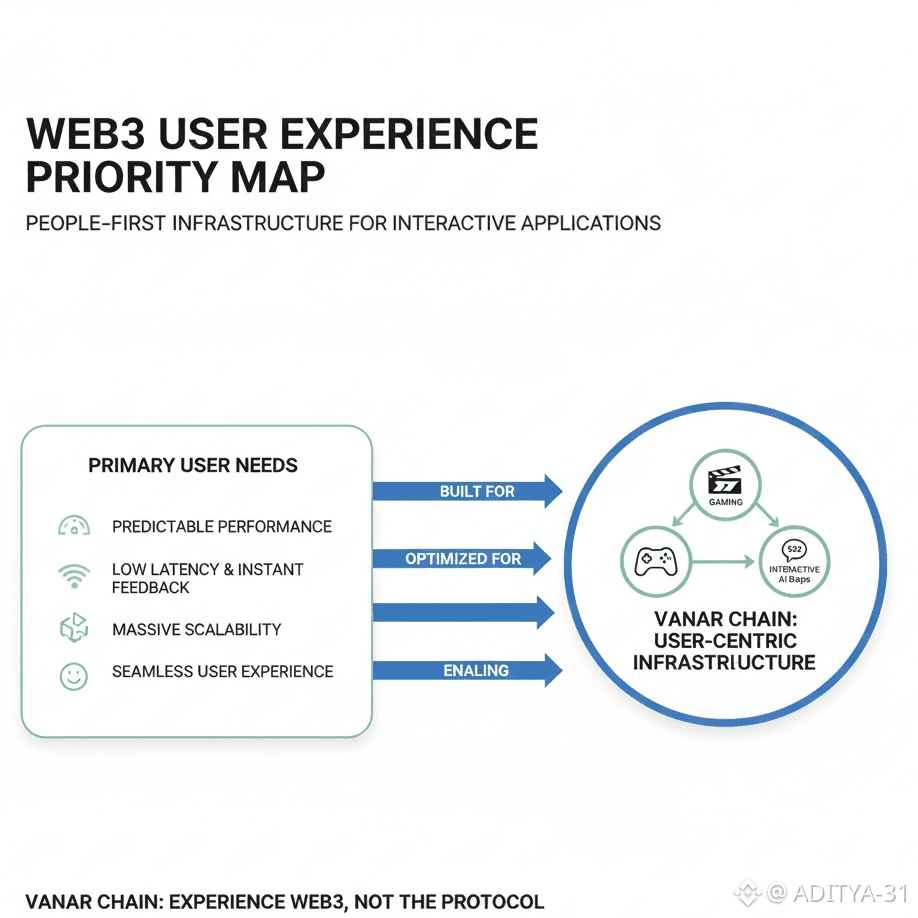
Web3 ke early years largely finance ke around ghoomte rahe. Speed, fees, liquidity — sab kuch numbers me measure kiya gaya. Lekin jaise-jaise blockchain applications users ke kareeb aane lage, ek gap clear hone laga. Gaming, entertainment, branded experiences, aur interactive content ke liye jo infrastructure chahiye, woh sirf fast hona kaafi nahi hota. Usse predictable, scalable, aur user-friendly bhi hona padta hai.
Vanar Chain isi gap se start karta hai.
Vanar ek Layer-1 blockchain hai jo Web3 ko sirf financial tools tak limit nahi karta. Iska design assumption yeh lagta hai ki future adoption users, creators, aur digital experiences se aayega — na ki sirf traders aur protocols se. Isi wajah se scalability aur accessibility ko equal importance di gayi hai.
Network ka economic backbone $VANRY token hai. Yeh sirf gas token nahi hai. Transaction fees, smart contract execution, staking, aur governance — sab jagah VANRY ka role defined hai. Staking ke through token holders directly validators ko support karte hain, jo network security aur decentralization dono ko strengthen karta hai. Yeh passive holding model nahi hai; yahan participation matter karti hai.
Developer adoption ke liye Vanar ne EVM compatibility choose ki hai. Iska matlab yeh hai ki developers ko naya ecosystem seekhne ki zarurat nahi hoti. Ethereum-based tooling, libraries, aur smart contracts yahan naturally fit ho jaate hain. Difference yeh hai ki execution smoother aur throughput better banane ki koshish ki gayi hai, jo consumer-facing apps ke liye important hota hai.
Jahan Vanar clearly differentiate karta hai, woh hai uska application focus. Network ka narrative sirf DeFi ya infra ke around nahi ghoomta. Gaming aur immersive experiences iske roadmap ka central hissa hain. Interactive environments, NFTs, digital ownership, aur virtual experiences ke liye ek aisi base layer chahiye hoti hai jo latency aur unpredictability se suffer na kare. Vanar isi use-case ko target karta hai.
Is approach ka ek side effect yeh bhi hai ki project crypto-native boundaries ke bahar soch raha hai. AI integrations, brand-level Web3 use-cases, aur enterprise-friendly applications ka mention yeh signal deta hai ki Vanar sirf crypto users ke liye nahi, balki mainstream adoption ke liye positioning kar raha hai. Brands tab blockchain adopt karte hain jab technology invisible ho jaaye aur experience front-and-center rahe.
Tokenomics ke level par bhi approach measured lagti hai. Supply capped hai, aur incentives ko ecosystem activity ke saath align kiya gaya hai. Yeh short-term hype ke bajaye long-term participation ko encourage karta hai. Network ke grow hone ke saath rewards meaningful bante hain — artificial pressure create karke nahi.
Market presence dheere-dheere expand hui hai. Exchange availability aur liquidity ne access improve kiya hai, lekin project ka tone abhi bhi infrastructure-driven lagta hai, price-driven nahi. Yeh ek important distinction hai, kyunki consumer-centric ecosystems ko build hone me time lagta hai.
Bigger picture me, Vanar Chain ek aise Layer-1 ke roop me ubhar raha hai jo Web3 ko sirf protocols aur charts se nikal kar real digital experiences ke kareeb laana chahta hai. Scalability, developer familiarity, aur consumer use-cases ka combination isse ek clear identity deta hai.
Agar Web3 ka next phase gaming, entertainment, aur interactive ownership ke around shape hota hai, toh Vanar jaise networks background me quietly kaam karte hue adoption ko possible bana sakte hain — bina noise ke, bina over-promises ke.
