

Walrus is a decentralized storage and data availability network built on the Sui blockchain. It is designed specifically to handle large files — things like videos, images, datasets, and complex data that traditional blockchains struggle to store directly. Instead of trying to pack everything on a chain where every byte costs gas, Walrus stores only critical metadata on Sui and manages the actual data off-chain in a distributed network of storage nodes.
This approach solves a real problem. Centralized cloud storage — think Amazon S3 or Google Drive — can be expensive, controlled by corporations, and vulnerable to censorship and security breaches. Walrus does the opposite. It breaks the data into pieces using a technique called erasure coding (specifically its own Red Stuff algorithm), distributes these pieces across many storage nodes, and ensures that even if some nodes go offline, the data can still be reconstructed. This means resilience, durability, and censorship resistance — all core values of the decentralized web.
Walrus doesn’t just store data cheaply — it makes it possible for developers to build real applications on top of it. Developers can store content for NFTs, host decentralized websites, manage blockchain archives, and support AI datasets with verified availability. Because the data is tied back to smart contracts and tokens on Sui, everything remains secure, decentralized, and programmable.
How Walrus Works at a High Level
Let’s break down the core of the Walrus protocol in simple terms.
When someone wants to store a file — called a blob — the data is broken into tiny pieces by Walrus’s encoding algorithm. Not every piece needs to be available to rebuild the original file. Thanks to smart engineering, only a subset of those pieces is needed to reconstruct the whole, making the system robust even if some nodes fail or go offline.
The metadata — including proofs that the data is stored and available — is written on the Sui blockchain. That means any app or developer can check whether the data is still accessible without having to download the entire file itself. This makes verification fast, cheap, and transparent.
Once stored, these blobs can be retrieved and delivered through decentralized networks, CDNs (content delivery networks), or even directly to applications that need them. This enables use cases ranging from decentralized app (dApp) media hosting to enterprise-level data storage solutions.
Unlike older storage networks that rely on full replication (copying the entire file to many nodes), Walrus keeps replication costs down to about 4–5 times the original data size. This makes it significantly more efficient and cheaper — sometimes up to 80% less expensive than alternatives — while still keeping data safe and decentralized.
The Role of WAL Token
At the center of this network is the WAL token, which provides the economic and governance backbone for the protocol.
WAL is the native token of the Walrus network and serves three essential functions:
Payments for Storage Services
Users who want to store data pay WAL tokens. WAL is deducted based on storage usage and then distributed as rewards to storage node operators and stakers. This creates a built-in economic incentive for people to provide storage capacity and for users to help secure the networkStaking and Network Security
WAL supports security through a delegated proof-of-stake mechanism. Token holders can delegate their tokens to trusted storage nodes. These nodes that perform well and provide reliable service earn rewards that are shared with the delegators. Over time, this model keeps the network secure while rewarding active participation.Governance and Decision-Making
WAL holders have a voice in the protocol’s future. Governance allows stakeholders to vote on key parameters, penalties for underperforming nodes, pricing models, and future upgrades. This makes the system more sustainable and community-oriented.
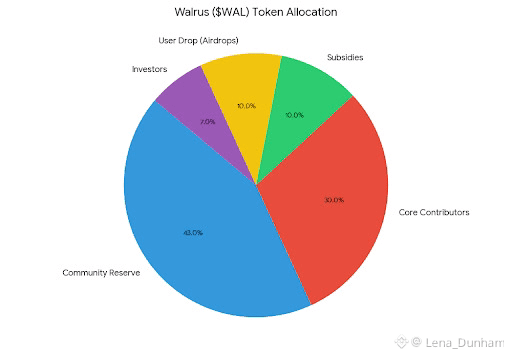
With a fixed maximum supply of 5 billion tokens, WAL has been designed to balance growth with scarcity. Early allocations were used for community incentives, ecosystem development, and network bootstrap, making sure the launch and growth phases have enough support.
Mainnet Launch and Real Usage
In March 2025 Walrus reached a major milestone with its mainnet launch. After over a year of development and testing, the protocol moved from testnet to a fully live environment where anyone can publish and retrieve data, host decentralized sites, and participate in staking and governance activities.
The launch was not just a technical feat — it marked the beginning of real usage. Developers can now build applications that store actual files on Walrus, and enterprises exploring decentralized storage have a real platform to test and adopt. This shift from theoretical to practical usage is what differentiates projects that survive from those that fade with market hype.
WAL on Binance and Accessibility
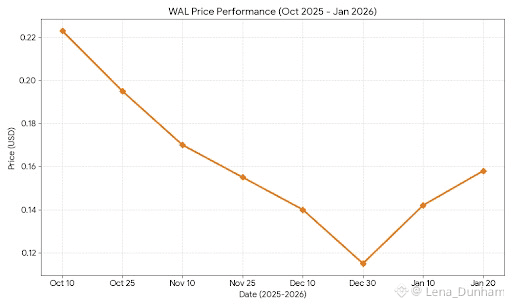
The broader crypto community got a clear signal of Walrus’s seriousness when Binance, one of the world’s largest cryptocurrency exchanges, listed WAL in October 2025. The token was made available on both Binance Spot and Binance Alpha, giving users multiple trading pairs such as WAL/USDT, WAL/USDC, and WAL/BNB.
Binance also included WAL in its HODLer Airdrop program as the 50th project. Users who participated in certain Binance saving products between October 1 and 3, 2025 were eligible to receive WAL tokens as rewards. This helped spread the token into more hands and encouraged long-term holders.
The Binance listing was more than a marketing event. It means WAL became easily accessible to a broader audience, including retail and institutional traders. Liquidity, price discovery, and on-chain usage all benefit when a token is available on major exchanges.
Why Usage Matters More Than Markets
The real lesson from Walrus is that usage drives value, not just market cycles. Many tokens see short bursts of interest that have little to do with real-world adoption. Infrastructure tokens like WAL are different because demand for decentralized storage directly impacts the token’s utility.
As more developers build apps that rely on Walrus, as more enterprises explore decentralized data alternatives, and as the cost advantages become more apparent, WAL goes from being a story in a chart to a token tied to actual services. When a blockchain token’s demand stems from people using the network’s features day in and day out, that’s when the value story becomes real — and sustainable.
Looking Forward
Decentralized storage is becoming increasingly important as Web3 expands. AI systems need ways to store large datasets securely and verifiably. NFT platforms need decentralized hosting for media. Blockchain applications need scalable, affordable data layers. Walrus answers these needs with a powerful combination of smart engineering and economic incentives.
WAL is more than a speculative asset. With real applications running on mainnet, real demand for storage services, and solid infrastructure supporting its growth, it stands as a model for how infrastructure tokens should derive value. Real usage is what will give WAL meaning in the long term.

