If you've been following the Sui scene in January 2026, you've probably noticed the focus is shifting from just speed to true control. While Sui handles transactions quickly, Walrus (WAL) is quietly fixing a big problem in Web3: the centralized frontend.
Most people don't realize that even though a service like Uniswap or Aave is supposed to be decentralized on the blockchain, the website you use to access it is usually hosted by companies like Vercel or Amazon AWS. If Amazon shuts down the website or a government blocks it, most users would lose access.
Walrus Sites, which just launched, might be the most game-changing thing in crypto right now. It's not just another Dropbox for crypto. It's a way to host websites without needing a server. By integrating with SuiNS (Sui Name Service), developers can now host entire websites directly on the Walrus network and link a .sui domain to them. This means:
* No more AWS bills: You only pay once in WAL tokens to store your website files.
* No takedowns: Because the website is hosted on a decentralized network, no single group can shut it down.
* Security: Cryptography is used to ensure the website code hasn't been tampered with, preventing the frontend hacks that were common in 2024 and 2025.
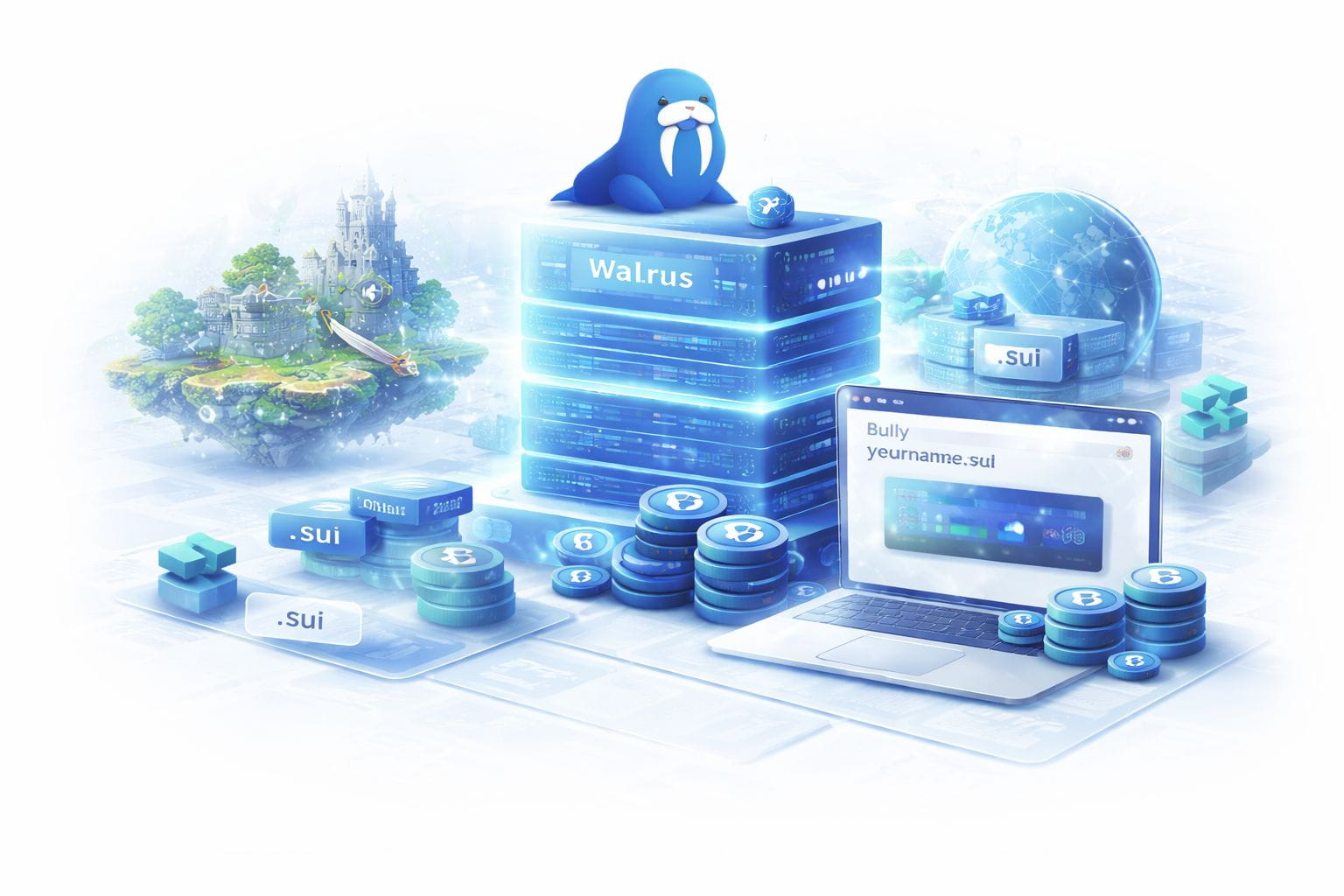
Walrus may get a lot of use in gaming in 2026. Sui is known as the Gaming Chain due to its speed, but games with high-quality graphics have large file sizes. Storing all that data on the Sui blockchain would be very expensive. Right now, many Web3 games keep their actual game files on a central server but store their NFTs on-chain. If the company goes out of business, your in-game items could disappear. Walrus lets games store these large files cheaply and in a decentralized way. Since Walrus uses Red Stuff (its 2D erasure coding), it can retrieve data faster than networks like Arweave. This makes game assets truly permanent because they can be streamed directly from Walrus.
The Storage Fund is also worth noting. Walrus uses a pay once, store forever model, similar to Arweave. When you pay to store a file, your WAL tokens go into a Storage Fund. This fund then pays validators over time. As the network grows and storage costs decrease, the difference between the storage fee paid and the cost to store increases, adding value to the protocol.
Essentially, Walrus is a bet that Sui will succeed. If Sui becomes a popular L1 for gaming and DeFi, all those apps will need a decentralized storage layer. Walrus is the built-in solution for Sui. At $0.14, WAL is priced as if it will only see limited use. It doesn't yet reflect the possibility of it becoming the standard hosting layer for the Move ecosystem. Now that the Tusky migration is done, showing the network's strength, the technical risk is much lower than before.