
Have you ever wondered why one of the most discussed yet least understood blockchain tokens in recent months has been VANRY (Vanar Chain), a native asset purpose-built for AI, metaverse, and real-world utility? In late 2025 and early 2026, VANRY has been in the spotlight not for speculative hype but for verified ecosystem activity and real network developments. On January 20, 2026, Binance Square launched a CreatorPad campaign offering 12,058,823 VANRY token vouchers, an initiative that signals growing institutional support and deeper integration into major crypto community platforms. These types of reward programs reflect both engagement with the broader crypto audience and a recognition of VANRY’s active role in bridging traditional blockchain use cases with emerging AI technologies.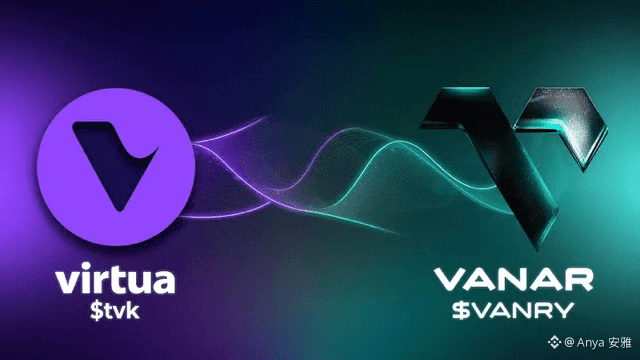
From a foundational perspective, VANRY represents the native token of Vanar Chain, a Layer-1 blockchain originally rebranded from the Terra Virtua Kolect (TVK) project, with full adoption across networks including Ethereum and Polygon. The token functions as the primary utility and gas token for transactions, decentralized application interactions, and governance activities within the Vanar ecosystem. Recent exchange listings — such as its availability on Kraken and LCX Exchange, with pairs like VANRY/EUR — have broadened its accessibility and liquidity across global markets. Together, these developments highlight a shift from speculative narratives to platform-level utility and broader market integration.
In terms of network and ecosystem growth, Vanar Chain has been expanding its technical stack beyond simple transaction validation. According to recent data, the project’s architecture includes a multi-layered design supporting AI workloads — with elements like Neutron for on-chain data storage, Kayon for AI reasoning, and Flows for industry applications — enabling developers to build intelligent decentralized applications that can operate with real-time data and compressed storage directly on the blockchain. This level of integration has real implications for the frequency and type of on-chain activity observed, positioning VANRY as more than just another token in a crowded field.
Observing market behavior, VANRY’s price dynamics illustrate the influence of broader crypto trends. According to CoinMarketCap data from late December 2025, VANRY experienced significant volatility — ranging from an all-time high of $0.38245 in early 2024 to lows near $0.00642 in October 2025, with current prices around $0.00767 USD. Such fluctuations often mirror broader risk appetite within crypto markets, particularly when Bitcoin (BTC) dominance and price stability shift capital allocation among large-cap and mid-cap assets. For example, when BTC dominance rises, liquidity often flows out of speculative or utility tokens and into major assets, compressing altcoin trading volumes and valuation metrics.
Broader on-chain data also reveals how liquidity movement affects VANRY trading environments. In the past 24 hours, markets have shown measurable shifts, with VANRY’s trading volume rising by over 18 percent, coupled with a near-double-digit price uptick at approximately $0.01 per token and a market cap in the tens of millions. These metrics indicate active participation from traders and liquidity providers, as well as heightened sensitivity to macro crypto oscillations that are often driven by BTC and ETH performance.
Exchange infrastructure developments also influence VANRY’s market behavior. In mid-2025, Bitget temporarily suspended VANRY deposit services for maintenance, while trading remained operational — a technical decision that impacted liquidity inflows and outflows on that platform. These kinds of exchange-level operational changes can create short-term volume shifts and affect price stability, particularly for mid-cap tokens with evolving infrastructure support.
On the security and ecosystem support front, Vanar has formed partnerships designed to reinforce network integrity and user engagement. Collaborations with cybersecurity platforms like Immunefi enhance vulnerability detection across smart contracts and blockchain infrastructure, while community-driven programs via Galxe foster broader participation and reward mechanisms. Together, these initiatives contribute to a more resilient and interactive ecosystem that goes beyond token trading.
A defining trend within the VANRY ecosystem has been the emergence of AI-driven on-chain utility engines such as myNeutron v1.1, which now includes monetization features where subscriptions can be paid via VANRY, unlocking storage capabilities and AI features. Coupled with frameworks that convert subscription revenue into token buybacks and burns, this reinforces a growing utility layer that ties real application usage to token demand. These mechanisms are observable on-chain, suggesting a move toward a self-reinforcing economic model rather than purely speculative activity.
Looking at the broader application landscape, VANRY’s integration with games and real-world scenarios adds another dimension to network dynamics. Partnerships supporting token rewards within blockchain games — where tens of thousands of players have earned VANRY in gameplay contexts — illustrate diversified use cases that extend beyond DeFi or simple trading activity. This diversity in utility echoes how tokens tied to real engagement often exhibit different volume profiles compared to short-term speculative assets.
In sum, VANRY’s trajectory through verified ecosystem updates, developer expansion, on-chain activity, exchange listings, and token utility extensions reflects a broader shift toward utility-oriented adoption in the crypto market. While market dynamics such as Bitcoin dominance and altcoin rotation continue to influence price behavior, it’s the ongoing technical and network developments that anchor VANRY’s evolving narrative as a crypto asset rooted in real blockchain utility.