
For years, the crypto world has been haunted by a ghost. It’s the specter of the empty token—a digital asset with a beautiful website, a charismatic founder, and absolutely zero reason to exist beyond the hopes of the next buyer. Its demand is fictional, a shared hallucination propped up by hype and desperation. But what happens when a token’s demand isn’t a story you tell? What happens when it’s a force you measure, an engine you can hear firing in real-time?Welcome to the reality of WAL. This isn't a token hoping for demand. This is a token whose demand is engineered, inevitable, and already in motion.
WAL is the lifeblood of the Walrus ecosystem, but to call it just a "governance token" is to call the heart "just a pump." It is the fundamental economic unit of a new kind of machine—a Builder's Economy. And in this economy, demand isn’t traded on sentiment; it’s hard-coded into action. Every single day, as builders wake up and push the ecosystem forward, they aren’t just writing smart contracts. They are writing the demand curve for WAL.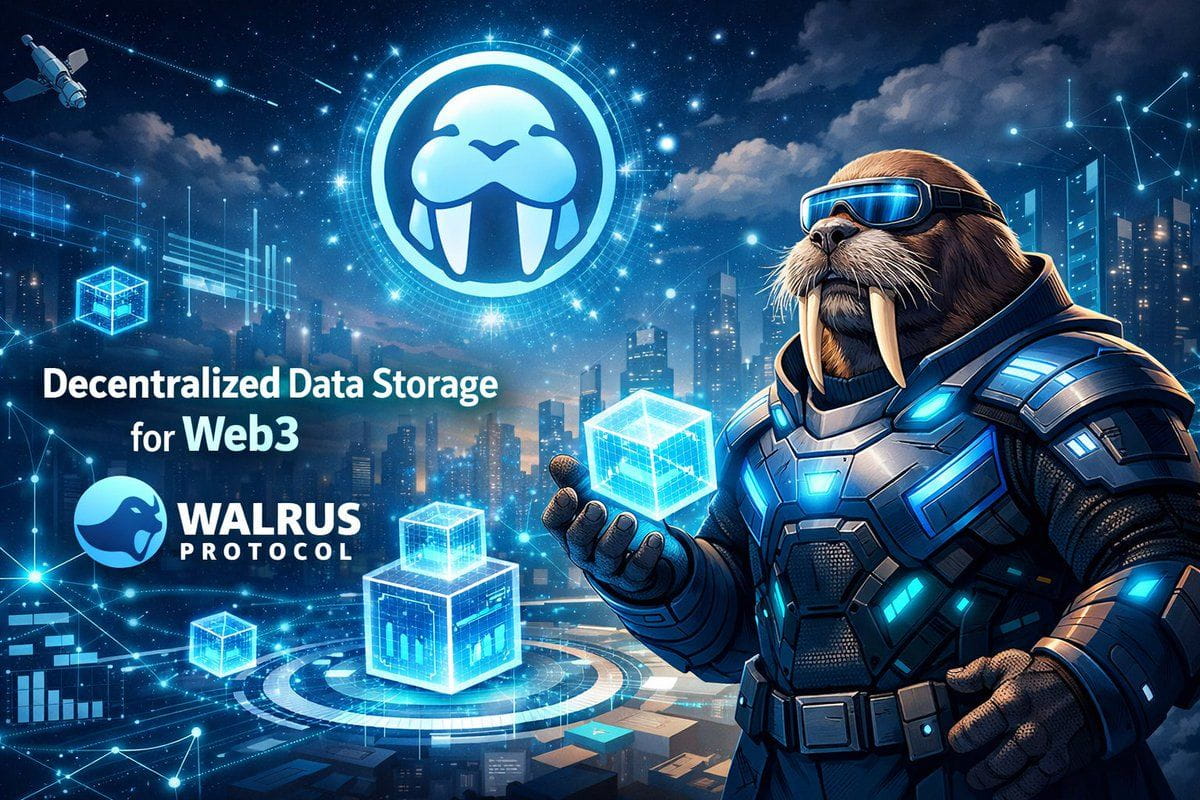
The Demand Flywheel: Built by Builders, Fueled by Utility
Forget abstract "value accrual." Let’s talk mechanics. The Walrus protocol is a landscape of opportunity for developers: access to liquidity, builder incentives, collaborative tools, a thriving community. To access this premium environment, to fuel their creations and tap into the collective power of the ecosystem, builders use WAL. It is the passport and the power source. It is the stake required to mine the gold.
This creates a breathtakingly simple and powerful flywheel. A developer acquires WAL to build. They use that WAL to access resources and launch their project. Their project, if successful, attracts users and volume. That success generates protocol fees and value, a portion of which is strategically used to buy back and burn WAL, or to reward key ecosystem contributors—who are often builders themselves. This reduction in supply and reinvestment into the ecosystem increases the scarcity and utility of WAL, attracting more builders who see a richer, more valuable platform. They acquire WAL to participate. And the wheel spins faster, powered by pure, tangible creation.
This is demand with a direct line to productivity. The more the ecosystem grows, the more builders are compelled to hold and use WAL. You can literally watch demand increase with every new project deployed, with every new innovative dApp that calls Walrus home.
Beyond Speculation: The Tangible Use-Cases That Anchor Value
So what are builders actually doing with WAL? This is where theory becomes concrete. WAL is the key that unlocks the builder’s toolkit. It is staked to access priority liquidity pools and favorable lending terms. It is used in governance to steer the protocol's resources toward the most promising verticals—builders voting on the future of their own workshop. It functions as a credential, a badge of proven contribution that unlocks deeper tiers of collaboration and co-development within the Walrus network.
Furthermore, the most promising projects born within Walrus will inevitably choose to align their own tokenomics with WAL. Think fee sharing, liquidity pairings, and staking mechanisms that prioritize WAL holders. This creates a constellation of micro-economies, all orbiting and reinforcing the central star. WAL becomes the reserve currency of a nation of builders. Its demand is diversified across a hundred different use-cases, a hundred different projects, making it resilient, robust, and deeply embedded.
This transforms WAL from a speculative asset into a productive asset. Holding it isn't about betting on a story; it's about owning a share in the engine of production.
The Community That Guards the Flame
This engineered demand creates a different kind of holder. The WAL community isn't a passive audience. It's a coalition of believers in this fundamental truth: that the most sustainable demand comes from utility, and the deepest utility comes from empowering those who build. They are builders themselves, early supporters, and deeply pragmatic strategists who understand economic design. They don’t shout for pumps; they debate mechanism improvements. They don’t fear sell pressure; they analyze builder onboarding rates.
This community is the immune system that protects the integrity of the demand engine. They vote against short-term sugar rushes that would dilute the builder-focused mission. They champion initiatives that deepen utility, that attract serious developers, that strengthen the core flywheel. They are, in essence, the stewards of real demand. Their confidence isn't based on hype, but on the constant, visible proof of construction happening before their eyes. They share screenshots of transaction volumes, of new project deployments, of governance proposals—not just price charts.
The New Reality: Demand You Can See
In a world of fictional narratives, WAL presents something radical: a fact. The fact is that for the Walrus ecosystem to function, to grow, and to thrive, WAL must be used, held, and valued by the very people creating that value. The demand is literally built into the business model. It is a prerequisite for progress.
This is the ultimate hype—the hype of reality. The excitement that comes from watching a economic model play out exactly as designed, where human ambition and intelligent incentive alignment create a predictable and powerful outcome. The shareable line isn't "to the moon." It's "watch them build." The engaging story is the dozens of quiet developers, right now, using WAL to power their dreams, unconsciously weaving the most compelling case for the token with every line of code they write.
WAL isn't waiting for demand.And the work is just beginning.

