
Although many people assume that Stablecoins are just simple digital cash, they also think that because Stablecoins have a stable price, then that means that the underlying infrastructure has already been solved.
In reality, the fact that Stablecoins appear to be stable at the surface actually creates a lot of complexity under the surface.

At the industry level, when a Stablecoin is settled, it will still be using a blockchain built for general-purpose usage. These types of networks were designed to provide Flexibility, rather than focus on the specific needs of High Volume Monetary Movement. As more people use Stablecoins, tradeoffs will occur between settling finality and congestion, Fee Markets will be fluctuating based on the demand for services unrelated to Stablecoins, and Operational Risk will be increasing as more Stablecoins share Blockchain Infrastructure with Speculative Activity. All of these factors create Fragility for Stablecoin Infrastructure when users expect it to operate predictably, especially with Large-Scale Payment Flows and Institutions using it.
PLASMA XPL solves this issue by designing and constructing the Settlement Layer first, rather than making adjustments to it later. The Settlement Layer has been optimized to provide an optimal Way to Transfer Stablecoins as a Primary Function and not as an Additional Use Case. The Blockspace, Validation Logic, and Fee Mechanics of the Network have been designed to provide Predictable Throughput and Deterministic Performance. By utilizing a Narrowed Scope, the PLASMA XPL Network will accept some level of Limitation in order to provide Clarity and Reliability at the Infrastructure Level.
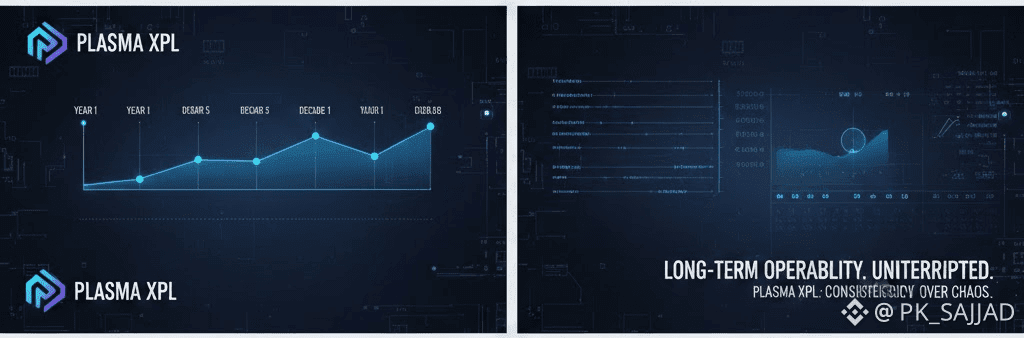
The project context provides explanation of these decisions:
The network is intended for settlement of stablecoins as the primary infrastructure.
The network focuses on maintaining of stability over diversity of features.
Long-term functionality is prioritized with regard to how the architecture is designed.
Execution paths are simplified to mitigate the number of potential edge cases.
Throughput assumptions have been projected against defined paths of payment flows.
Operational continuity has guided the design of the governance model.
Settlement integrity has determined the development of all security models.
A thought of as a limiting factor rather than a primary goal.
The architecture is based on how and why money will be used.
While that will be vital to long-term success, it will also allow for stablecoins to increasingly provide the connective tissue between all financial systems. Consequently, financial institutions require environments where the behaviour of users remains stable over time, and not just through market cycles. Administrative problems are solved for users because the cost of the transaction and settlement can be predicted. Many ecosystems benefit from the idea of boring, slowly changing, and easily understood core monetary infrastructure.
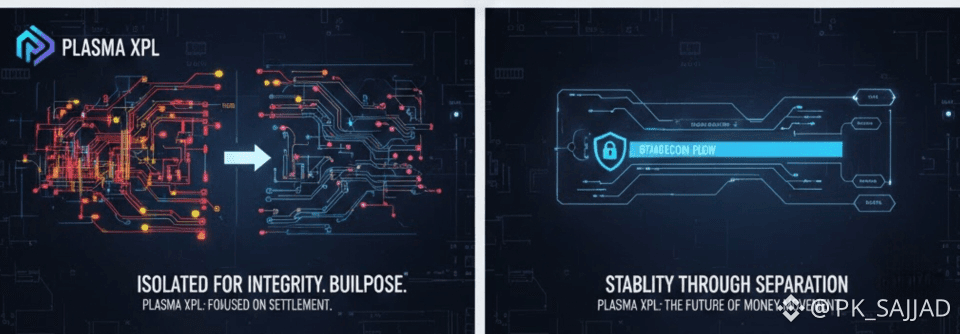
The focus of the infrastructure is on the long-term viability of projects, therefore it is believed that while some blockchains function in the spirit of experimentation, others are built for settlement purposes. Separating the two functions of blockchains has allowed the resulting infrastructure systems to age more gracefully than when they are offered as both experiment and settlement platforms. The reason a properly functioning infrastructure will feel unexciting is that a functioning infrastructure usually is meant to be a dependable resource and, as such, it might not always be interesting.

