
Vanar is a Layer-1 blockchain built with one clear idea in mind: real people should be able to use Web3 without feeling confused, stressed, or technical. Most blockchains were created by developers for developers. They work well inside crypto circles but feel strange and difficult for normal users. Vanar tries to fix this by designing everything from the ground up for games, entertainment, brands, and everyday digital experiences. The team behind Vanar has years of experience working with gaming studios, entertainment companies, and consumer brands, and that background strongly shapes how the chain is built and how it behaves.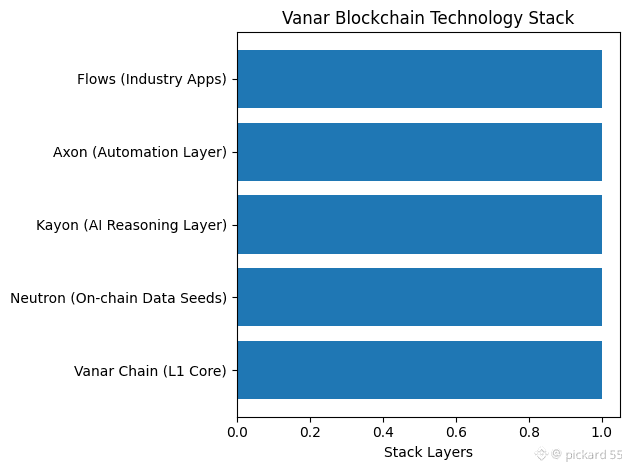
At its core, Vanar is an L1 blockchain, meaning it runs independently and does not rely on another chain for security or execution. It is EVM-compatible, so developers who already know Ethereum can deploy smart contracts without learning everything from scratch. This matters because adoption does not happen if builders face high friction. Vanar focuses on fast transactions, smooth user experiences, and predictable costs, which are all critical for apps meant for millions of users rather than a small crypto-native audience.
One of the biggest problems in Web3 today is unpredictability. Fees change suddenly, networks become congested, and users do not understand why something costs one dollar today and fifty dollars tomorrow. For games, brands, or consumer apps, this is unacceptable. Vanar directly addresses this by introducing a fixed-fee model. Instead of charging fees based only on raw gas units that fluctuate with token price, Vanar adjusts transaction costs based on the real dollar value of the VANRY token. This makes fees stable and predictable. For developers, this feels more like traditional cloud pricing. For users, it feels simple and fair. This single design choice is one of the strongest reasons Vanar positions itself as “built for mass adoption.”
Another major issue in Web3 is digital ownership. In many NFT systems, the token lives on-chain but the actual content, like images, files, or metadata, lives off-chain on external storage. If that storage disappears or changes, ownership becomes fragile. Vanar tackles this problem through a technology called Neutron. Neutron compresses meaningful data into small, verifiable units called “Seeds” that can be stored directly on-chain. This allows important data to remain permanent, searchable, and verifiable without relying entirely on external systems. In simple terms, Vanar wants digital ownership to actually mean something long-term.
Vanar is not just about transactions. It is built as a full technology stack. The base layer is the Vanar Chain itself, which handles accounts, smart contracts, and transactions. On top of that sits Neutron, which acts like on-chain memory. Above Neutron is Kayon, an AI reasoning layer that allows natural language queries, compliance checks, analytics, and automated logic over blockchain data. Future layers include Axon, which focuses on automation, and Flows, which are industry-specific applications. This layered approach shows that Vanar is thinking beyond simple token transfers and aiming for a future where blockchain, AI, and real-world systems interact smoothly.
AI plays a central role in Vanar’s long-term vision. Many blockchains talk about AI, but Vanar tries to give it structure. Neutron handles data. Kayon handles reasoning. Together, they aim to allow AI agents to understand, verify, and act on blockchain data in a more reliable way. This opens doors to use cases like automated compliance, enterprise reporting, financial analysis, and intelligent applications that go far beyond NFTs or DeFi.
Security and network operation are handled through staking and validators using a Delegated Proof of Stake-style system. Validators secure the network, produce blocks, and earn rewards in VANRY. Users can stake their tokens to support validators and earn rewards as well. This creates incentives to keep the network secure while allowing token holders to participate in its growth.
Sustainability is another part of Vanar’s public identity. The project highlights partnerships and infrastructure choices that align with renewable energy and green cloud solutions, including hosting validator infrastructure on energy-efficient platforms like Google Cloud. While “green blockchain” claims always depend on real implementation, the intention is clear: Vanar wants to be attractive to brands and enterprises that care about environmental responsibility.
The VANRY token powers the entire ecosystem. It is used to pay transaction fees, stake for network security, reward validators, and participate in governance. VANRY also exists in a wrapped ERC-20 form to support bridging and interoperability with other EVM ecosystems. According to official documentation, the maximum supply is capped at 2.4 billion tokens. The chain originated from the Virtua ecosystem, with a 1:1 token swap for earlier holders, and the remaining supply is distributed gradually through block rewards over many years. A large portion of new issuance goes to validators, with smaller portions allocated to development and community incentives. This long-term issuance model is designed to support network security and ongoing growth rather than short-term hype.
Like many projects, token data can appear slightly different across various third-party sources, especially when older documents or summaries are used. For serious users and investors, the safest approach is always to verify official documentation and on-chain data. Transparency and clarity around token supply and distribution will remain important as Vanar grows.
The Vanar ecosystem already includes known products. Virtua is a metaverse and digital experience platform that uses Vanar as its underlying blockchain, including its marketplace. VGN, the Vanar Games Network, focuses on helping games enter Web3 without destroying the user experience. Gaming is a natural focus because players already understand digital items, skins, and virtual economies. If Web3 adoption is going to happen at scale, gaming is one of the most realistic entry points.
Vanar’s roadmap is about expanding its stack rather than just launching more tokens. The focus is on improving Neutron integrations, expanding Kayon’s AI capabilities, rolling out automation through Axon, and delivering industry-specific workflows through Flows. The goal is to make Vanar useful not just for crypto projects, but also for enterprises, developers, and brands that want blockchain benefits without blockchain complexity.
Of course, challenges remain. Competition among Layer-1 blockchains is intense. Many projects promise speed, low fees, and adoption. Standing out requires real users and real products, not just technology. Adoption risk is real, especially outside crypto-native circles. Fixed fees improve usability but introduce new governance and pricing mechanisms that must remain transparent and secure. Bridges, integrations, and AI systems add complexity and potential attack surfaces. Regulatory environments are also evolving, especially as blockchain projects move closer to enterprise finance and compliance.
In the end, Vanar is a serious attempt to move Web3 closer to the real world. It is not built around hype cycles or short-term trends. Its design choices show a focus on usability, predictability, and long-term infrastructure. If Vanar succeeds, it could become a chain where games, brands, AI systems, and everyday users interact naturally without needing to understand blockchain mechanics. If it fails, it will likely fail for the same reason many L1s do: adoption is harder than technology.
What makes Vanar interesting is not just what it is today, but what it is trying to become. It is betting that the future of Web3 belongs to chains that feel invisible to users, stable for builders, and powerful enough to support AI-driven, real-world applications.
