
Blockchain technology has grown very fast over the past few years. More users, more applications, and more value now move on public networks every day. But as usage increases, one core problem becomes more visible. How should transactions be ordered and processed in a way that feels fair, predictable, and easy to understand. Many existing blockchains rely on fee based competition, where users pay more to move ahead. This system may work for traders with deep pockets, but it creates confusion and frustration for normal users. Vanar introduces a different approach by using a strict queue based transaction ordering system that focuses on logic, fairness, and user trust.
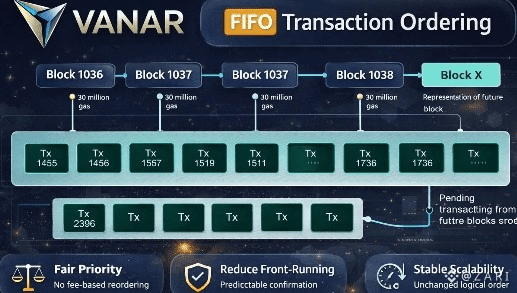
At the center of Vanar’s design is a simple idea. Transactions should be processed in the order they arrive. This model is often called First In First Out. When a user submits a transaction on Vanar, it enters the network and is placed into a shared transaction pool. The position of that transaction is determined only by time of arrival. Nothing else affects its place in the queue. When a new block is created, transactions are added one by one from the front of the queue until the block reaches its fixed gas limit. Any transaction that does not fit is not skipped or rearranged. It simply waits for the next block.
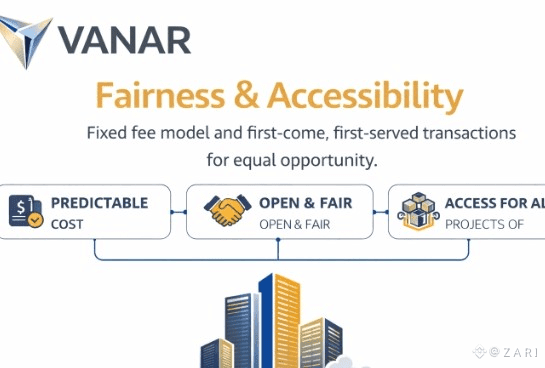
This design removes one of the most stressful elements of blockchain usage. Users no longer need to guess the right fee or worry about being pushed back by someone paying more. If a transaction is sent earlier, it will be executed earlier. This clear rule makes the system easy to understand, even for people who are new to blockchain. It feels closer to how digital systems work in daily life, such as ticket queues or online order processing.
Fairness is one of the strongest benefits of Vanar’s transaction model. In many networks, high fee bidding creates an uneven playing field. Wealthy users and automated bots can dominate block space, while smaller users wait without clear expectations. This behavior also opens the door to front running and transaction manipulation. Vanar reduces these risks by removing fee based priority. Every user is treated equally. The network does not care how large or small the transaction value is. This creates a more balanced environment, especially for decentralized finance, gaming, and NFT applications where order matters.
Predictability is another key advantage. In systems where transactions can be reordered, developers must design complex logic to handle uncertainty. A transaction that should happen first might be executed later, causing failed actions or unexpected results. Vanar’s strict ordering allows developers to plan with confidence. They know exactly how transactions will flow through the network. This reduces errors and makes applications more stable under real world conditions.
User experience plays a major role in long term adoption. Mainstream users do not want to interact with systems that feel chaotic or unfair. They expect digital services to behave consistently. Vanar’s queue based execution helps create that feeling of reliability. When users understand that their action will be processed in order, trust increases. This is especially important for consumer apps, payments, and brand focused platforms where even small delays can damage confidence.
Scalability is often misunderstood as only a technical problem. In reality, it is also about behavior under pressure. When activity increases, some blockchains respond with sudden fee spikes and unpredictable execution. Vanar takes a calmer approach. If the network is busy, transactions simply wait their turn. Nothing breaks. Nothing changes behind the scenes. This steady behavior keeps the system usable even during high demand and prevents panic driven fee wars.
Transparency is another area where Vanar stands out. Because the ordering logic is simple and visible, users can easily understand why a transaction was included in a certain block. There is no hidden prioritization and no private advantage. Anyone observing the network can see how transactions move from the queue into blocks. This openness strengthens confidence and aligns with the core values of decentralized systems.
Vanar’s transaction model also fits well with enterprise and institutional needs. Businesses often require systems that behave consistently and can be explained clearly to non technical teams. A queue based execution model is easy to audit and easy to describe. This makes Vanar more approachable for companies exploring blockchain for payments, digital assets, or large scale applications.
In the long run, Vanar’s approach reflects a user first mindset. Instead of optimizing for short term profit or validator advantage, the network focuses on clarity and fairness. By respecting order and removing unnecessary complexity, Vanar lowers the barrier to entry for new users and developers. It shows that blockchain does not need to be confusing to be powerful. Sometimes the best innovation is choosing a simple rule and applying it consistently.
As the blockchain industry matures, networks that prioritize trust, predictability, and real world usability are more likely to succeed. Vanar’s queue based transaction system is a strong example of how thoughtful design choices can shape a better future for decentralized technology.