
Native cryptocurrencies are vital to blockchain applications so they run independently, providing the required supply and infrastructure for blockchain networks — without which it could be hard to run decentralized applications. VANRY is thus serving this purpose on the Vanar Chain, which is built around the basic gas token native to the network. VANRY is more than a digital asset to use for trading or speculation; it is at the core of the ecosystem as it allows transactions to be performed, smart contract execution, and a smooth and efficient network.
What are gas tokens and how are they used inside a blockchain? Gas in a blockchain network is the computational cost for operations on the network. All actions — whether token transfer, smart contract deployments, or interacting with decentralized applications — consume processing resources. Users are required to pay a fee called gas to prevent network congestion and abuse. Gas tokens have three primary uses: 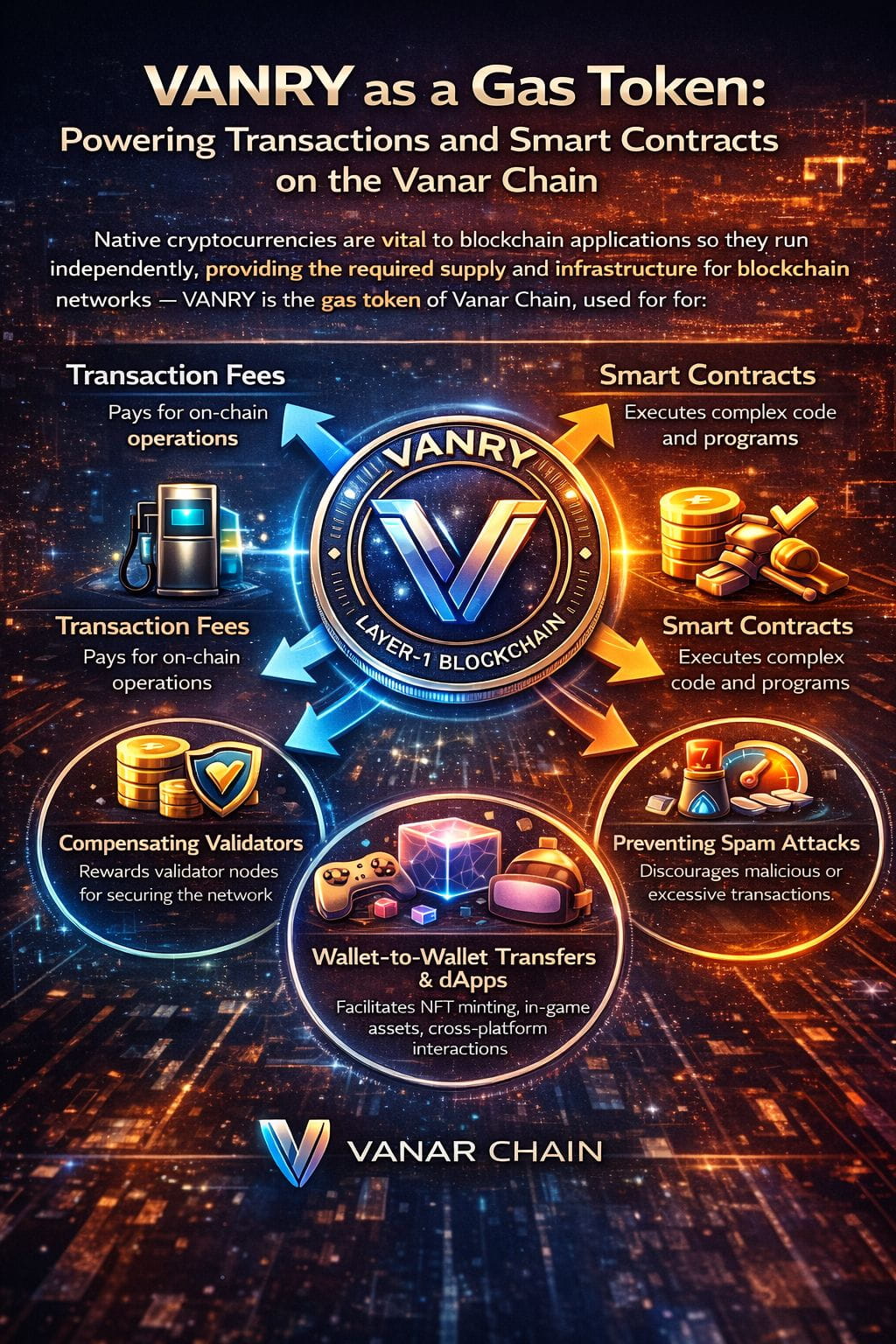
Compensating Validators – Rewarding network participants who validate transactions and maintain security.
Preventing Spam Attacks – Introducing a cost barrier to reduce the incidence of malicious or high-volume transactions.
Optimizing Resource Allocation – Prioritizing transactions during high network demand.
VANRY for payment of transaction fees includes:
:wallet-to-wallet token transfers
:NFT minting and trading
:In-game asset transactions
:Cross-platform dApp interactions
:Blockchain updates and data storage
