
Most blockchains are great at recording transactions, but they struggle when it comes to storing real data the heavy stuff like videos, AI models, game assets, or massive datasets. That’s where Walrus steps in, and it does so in a way that feels less like hype and more like solid engineering quietly changing how Web3 works.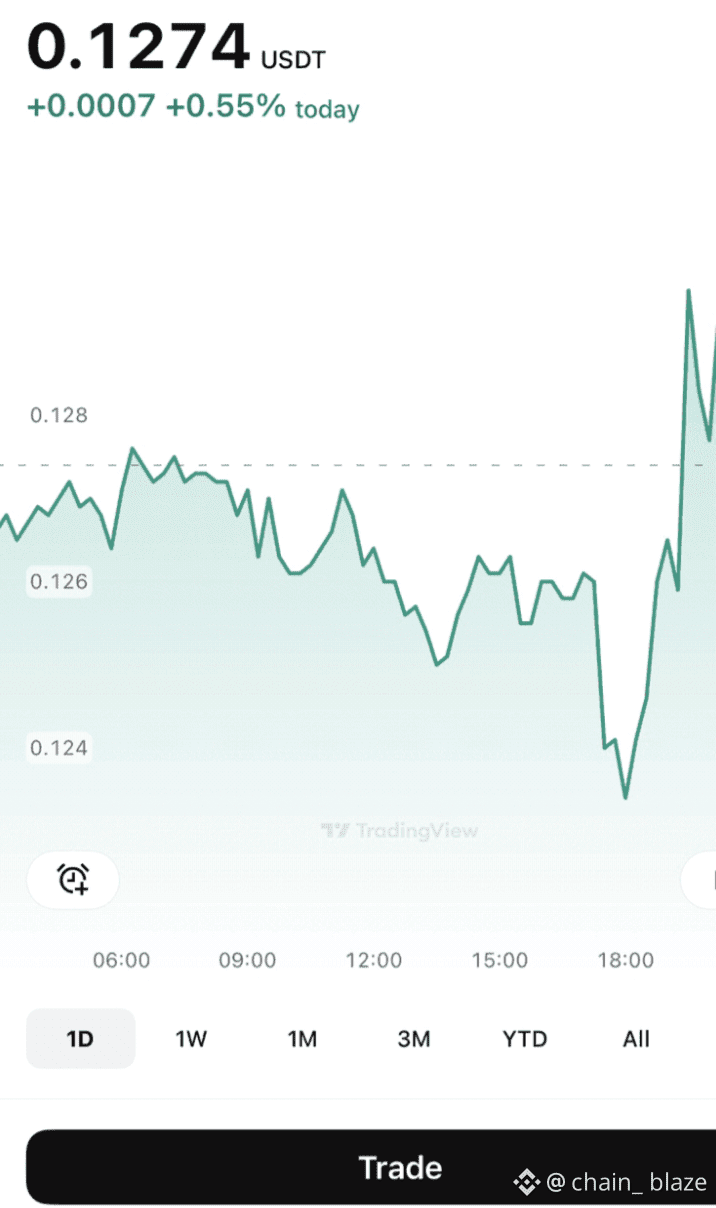
Walrus is a decentralized storage and data availability network built on Sui, designed for one very clear purpose: storing large files reliably, cheaply, and without depending on a single company or server. Instead of trying to cram big data directly onto a blockchain, Walrus splits files into many small encrypted pieces and spreads them across a global network of independent storage nodes. Even if several of those nodes disappear or go offline, the data can still be rebuilt. This makes Walrus extremely resilient, almost like a digital organism that heals itself when parts go missing.
What makes Walrus especially powerful is how it blends off-chain storage with on-chain guarantees. The actual data lives across the network, but the proof that the data exists and is available is written on-chain on Sui. That means anyone can verify that a file is really there and hasn’t been tampered with, without needing to download the entire thing. For developers, this is huge. Storage becomes something smart contracts can understand, control, and automate. Files aren’t just files anymore they become programmable objects.
Under the hood, Walrus uses advanced erasure coding to break data into shards in a very efficient way. Traditional storage systems often copy files many times to stay safe, which gets expensive fast. Walrus avoids that by keeping redundancy low while still being highly fault-tolerant. The result is a system that can survive failures, attacks, or outages without wasting resources.
At the center of the network is the WAL token. It’s not just a speculative asset; it’s how the system actually runs. Users pay in WAL to store data, and those tokens flow to the storage providers and stakers who keep the network alive. People who stake WAL help secure the system and are rewarded for honest behavior, while bad actors can be penalized. WAL holders also get a voice in how the protocol evolves, from pricing rules to security parameters. Early on, part of the token supply is used to subsidize storage, helping developers and new users onboard without friction.
By early 2026, Walrus is no longer an experiment. Its mainnet has been live since March 2025, and the ecosystem around it keeps growing. Developers are actively using it to store real application data, not just test files. Games rely on it for assets, AI teams use it for datasets and model weights, and Web3 apps use it to host media and frontends without centralized servers. Millions of blobs have already passed through the network, and tooling like explorers, staking dashboards, and developer SDKs have matured fast.
From a market perspective, WAL has found its place among mid-cap crypto assets. It trades across many major exchanges and sees steady daily volume. Like most crypto tokens, its price has moved up and down with market cycles, but the underlying network activity continues regardless of short-term charts. That’s often a sign of infrastructure rather than hype-driven projects.
Looking ahead, Walrus has clear ambitions. Scaling storage throughput is a top priority, especially for AI and media-heavy use cases. More advanced access controls are coming, allowing data to be shared selectively or gated by tokens. There’s also a strong push toward becoming truly multichain, so applications on Ethereum, Cosmos, and other ecosystems can rely on Walrus without being locked into Sui. To make things easier for businesses, the team is also working on more stable pricing models that reduce exposure to token volatility.
In the bigger picture, Walrus is trying to become something foundational: the memory layer of Web3. Blockchains decide what happened. Walrus makes sure the data behind those decisions is always there, verifiable, and free from centralized control. It’s not flashy in the way meme coins or trend-driven projects are, but it’s the kind of infrastructure that serious applications quietly depend on.
The risks are real, of course. Competition in decentralized storage is fierce, and adoption always takes time. Token prices can be unpredictable, and no protocol is guaranteed to win. But Walrus has already crossed the hardest line from idea to working network with real users.
If Web3 is going to support AI, games, media, and global-scale apps, it needs somewhere to put its data. Walrus isn’t shouting about it, but it’s steadily building exactly that.

