
Walrus is one of those projects that doesn’t scream for attention but is slowly laying down the kind of infrastructure the next generation of the internet actually needs. Built on the Sui blockchain, Walrus is a decentralized storage and data availability protocol focused on one big problem: how to store massive amounts of data in a secure, efficient, and decentralized way without relying on Big Tech cloud servers.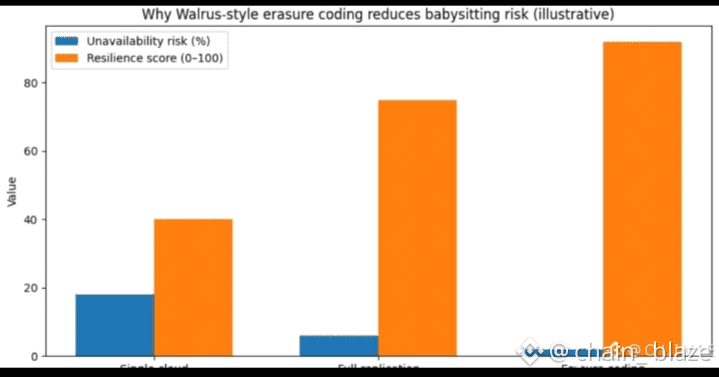
Instead of trying to be everything, Walrus is very clear about its mission. It focuses on storing large chunks of unstructured data, often called “blobs.” These can be videos, images, NFT media files, AI datasets, blockchain history, or even entire decentralized websites. In today’s Web3 world, most blockchains are good at handling transactions but terrible at handling data. Walrus steps in to fix that gap.
When someone uploads data to Walrus, the file isn’t stored in one place. It’s broken into many smaller pieces using advanced erasure coding. These pieces are then spread across many independent storage nodes. Even if a large number of nodes go offline or act maliciously, the data can still be recovered. This makes the system both resilient and censorship-resistant, without wasting huge amounts of storage on full copies of the same file.
Sui plays a key role behind the scenes. It coordinates payments, keeps track of storage commitments, verifies that data is actually available, and manages how storage nodes behave. Every stored file becomes a programmable object on Sui, which means developers can build smart logic around storage itself. This is what makes Walrus more than just “decentralized Dropbox.” It’s programmable storage.
The WAL token is the fuel that keeps everything running. Users pay in WAL to store data. Storage nodes earn WAL for honestly doing their job. Token holders can stake WAL to help secure the network and earn rewards, and they can also vote on how the protocol evolves over time. Over the long run, penalties and slashing are expected to reduce supply when nodes misbehave, which adds economic pressure for reliability.
Walrus launched its mainnet in early 2025, after extensive testing with developers in the Sui ecosystem. Since then, it has been quietly gaining adoption, especially among projects that need cheap, reliable storage for large datasets. AI-related use cases are a natural fit, as training data and model checkpoints are massive and expensive to store using traditional methods. NFTs also benefit, because Walrus can store the actual media files instead of relying on centralized servers that may disappear.
From a market perspective, WAL has already gone through the classic crypto cycle. After reaching much higher prices earlier, it has pulled back significantly, yet it still maintains healthy trading volume and a solid market capitalization. That kind of drawdown often shakes out hype-driven holders and leaves behind long-term believers who care about fundamentals.
Of course, Walrus isn’t without risks. Adoption is everything. If developers don’t build on it, the tech won’t matter. Some features like advanced governance and burning mechanisms are still rolling out, and competition from established players like Filecoin and Arweave is real. But Walrus is playing a different game by focusing on efficiency, programmability, and tight integration with a high-performance blockchain.
At its core, Walrus is trying to become invisible infrastructure the kind that just works, quietly storing the data that powers decentralized apps, AI systems, and future blockchains. If Web3 truly scales to billions of users, storage will be one of the biggest bottlenecks. Walrus is betting that when that moment comes, it will already be there, holding the data together beneath the surface.

