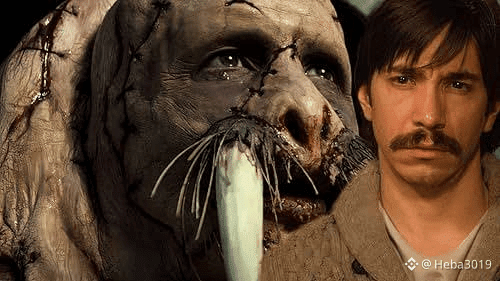
The film Tusk, directed by Kevin Smith and released in 2014, shocked audiences with its bizarre premise and dark humor. At first glance, it seems like a simple horror-comedy, but beneath the surface, it tells a disturbing and unsettling story that blurs the line between reality and absurdity. Inspired loosely by urban legends and real-life peculiar crimes, the story of the “Walrus Man” explores human obsession, transformation, and the extremes some people will go to fulfill their fantasies.
At the center of Tusk is Wallace Bryton, a brash podcaster who travels to Canada to interview a mysterious recluse named Howard Howe. Wallace’s carefree and arrogant demeanor sets the stage for the horror that unfolds. He expects an easy interview, but Howard has a far more sinister agenda. The “Walrus Man” is not just a figure from folklore; in the movie, he is Howard’s horrifying creation—a human transformed into a walrus through years of preparation, surgery, and psychological manipulation.
Howard Howe’s character is loosely inspired by stories of real-life eccentric and criminal figures, who become obsessed with animals or other identities, taking their desires to grotesque extremes. While the story itself is fictional, the concept of someone attempting to transform a human into an animal is a reflection of extreme cases of body modification obsession and criminal eccentricity. In this sense, Tusk exaggerates a reality already present in human psychology: the compulsion to control, dominate, and reshape others according to one’s own imagination.
The movie unfolds as a psychological thriller, with Wallace gradually realizing the danger he is in. The horrifying process of transformation is both literal and symbolic. Literally, Wallace is surgically altered to resemble a walrus, complete with tusks and flippers, making him entirely dependent on Howard. Symbolically, the story examines themes of dehumanization, obsession, and isolation. The transformation strips Wallace of his humanity, reflecting how unchecked obsession can destroy not only the victim but also the perpetrator.
The narrative of Tusk has fascinated audiences and critics alike because of its combination of absurdity and genuine horror. Many viewers initially dismiss it as ridiculous, but the underlying themes are deeply unsettling. The film critiques the modern fascination with fame, media, and social obsession. Wallace, a podcaster obsessed with online attention, becomes a victim of someone’s darker desires—a twisted inversion of the idea that the observer can become the observed.
Interestingly, Kevin Smith drew inspiration for the story from a peculiar podcast story he heard about a man who allegedly kidnapped another person. While the real story was far less dramatic, the idea of human obsession and grotesque eccentricity stayed with Smith, giving birth to the character of Howard Howe. The exaggeration of turning a human into a walrus was intentionally absurd, designed to provoke shock, dark laughter, and a sense of disbelief. Yet, despite its strangeness, the story taps into a deep fear: that someone could wield power over another’s body and identity in extreme, unimaginable ways.
In analyzing the “Walrus Man,” it’s also important to recognize the psychological dimension. Howard Howe embodies traits of sociopathy and extreme fixation. His entire life revolves around capturing, controlling, and transforming another human being. The story serves as a cautionary tale about unchecked obsession, the dangers of isolation, and the horrific lengths to which some individuals may go when consumed by fantasy. Wallace, on the other hand, represents naïve arrogance, unawareness of danger, and the vulnerability of those who underestimate others. Together, the two characters create a tension-filled narrative that blends horror, dark comedy, and psychological exploration.
Beyond its narrative, Tusk has gained attention for its cultural impact and cult status. Fans are drawn to its outrageous premise, memorable characters, and the sheer audacity of the concept. The film also spawned spin-offs and discussions about human identity, transformation, and the boundaries between the natural and unnatural. The “Walrus Man” has become a symbol in pop culture for stories that mix horror with absurdity, forcing audiences to confront their discomfort while laughing at the sheer improbability of the situation.
In conclusion, Tusk: Walrus Man is more than a shocking horror-comedy; it is a story that explores human obsession, transformation, and the extremes of eccentricity. While inspired by real-world anecdotes of unusual crimes and obsessive behavior, the narrative takes these ideas to grotesque heights, creating a cautionary tale about control, isolation, and the dark sides of human desire. Wallace’s transformation into the “Walrus Man” forces viewers to confront the fragility of human identity, the consequences of unchecked obsession, and the fine line between reality and grotesque fiction. Ultimately, the story leaves a lasting impression: a bizarre, horrifying, and strangely thought-provoking tale of what can happen when human fantasy and fixation collide.