
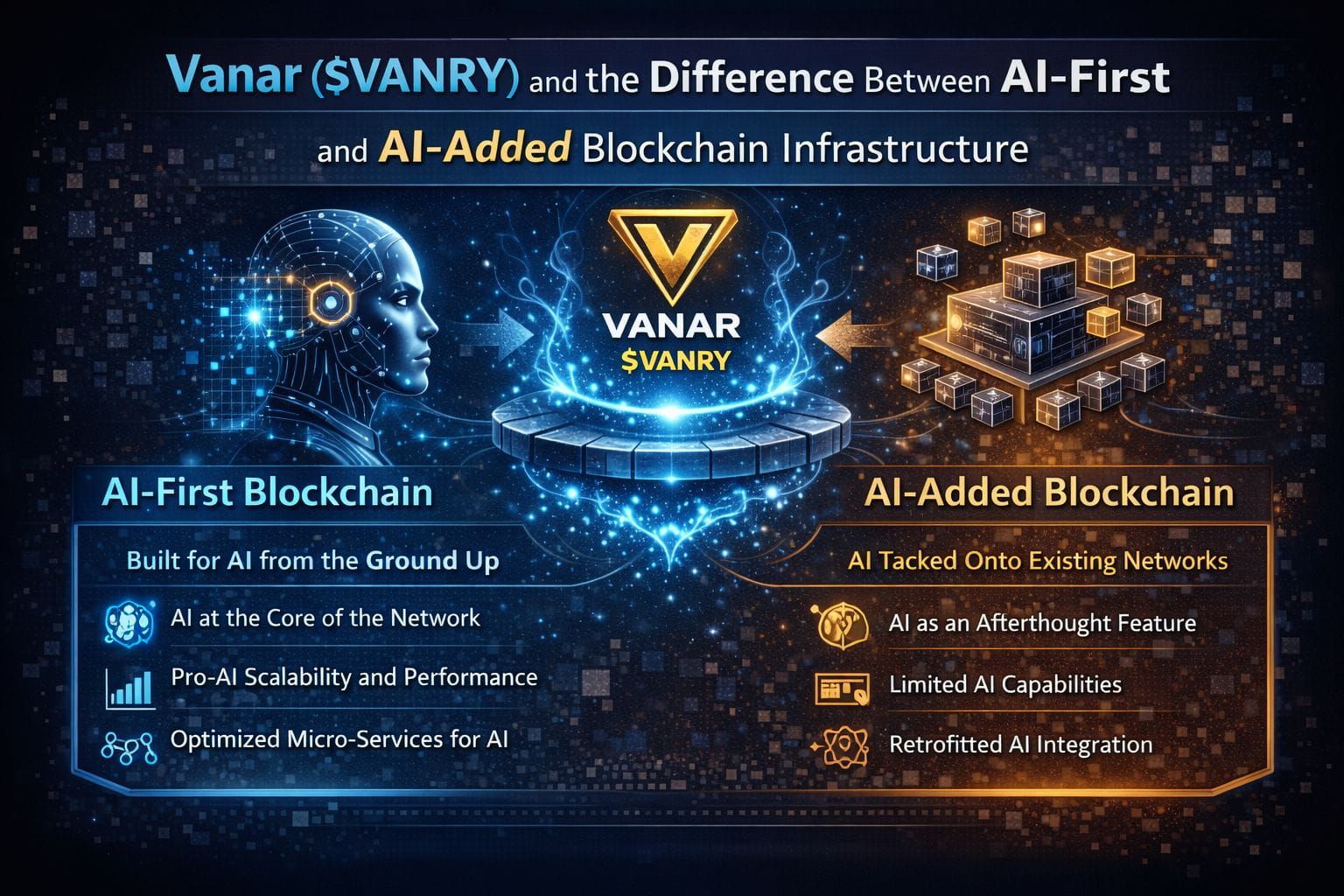
I’ve lost count of how many times I’ve heard the words “AI-powered” attached to a blockchain project, only to find nothing in the product that actually feels intelligent. Usually it means a dashboard, a model running in the background, or a future plan. After using enough of these platforms, you start to notice a clear split. Some systems are built with AI in mind from the start. Others just add it later and hope it sticks. That difference matters more than people admit, and it’s where Vanar ($VANRY) becomes an interesting case.
In AI-added systems, the blockchain comes first and everything else gets layered on top. Data moves slowly, actions are rigid, and then AI is asked to “optimize” things after the fact. I’ve used platforms like this. The AI suggestions feel late. Updates don’t sync well. You can sense that the system is reacting instead of responding. It’s not broken, but it never feels natural.
AI-first infrastructure feels different because it assumes constant change. Data isn’t treated as something to store and forget. It’s something that keeps flowing. Vanar leans toward this way of thinking. Media updates, user actions, and transactions are handled in a way that keeps the system flexible, which is exactly what AI needs to be useful in real situations. Without that flexibility, intelligence stays theoretical.
What makes this more than a technical debate is how it feels as a user. When AI is truly integrated, things improve quietly. Load times shorten. Interactions feel smoother. Systems adapt without asking for attention. I’ve noticed that when infrastructure supports this kind of flow, AI stops feeling like a feature and starts feeling like part of the environment. That doesn’t happen by accident.
This conversation is becoming louder now because Web3 platforms are growing up. They’re handling more users, more content, and more real behavior. Static systems are struggling, and adding AI on top isn’t fixing the cracks. Vanar comes up in these discussions because its infrastructure choices seem aligned with the idea that adaptation should be native, not forced.
From my own perspective, the most frustrating platforms are the ones that promise intelligence but behave rigidly. You wait. You refresh. You wonder if the system understood what you just did. Those moments usually point to weak coordination underneath. Vanar’s approach feels calmer. It focuses on keeping data clean and interactions predictable, which is the foundation AI actually needs.
There’s no rush here, and that’s a strength. AI-first infrastructure isn’t about launching flashy tools. It’s about preparing the ground so learning and automation can grow naturally. Vanar ($VANRY) reflects that patience. And as AI moves from marketing language to everyday expectation, that kind of groundwork is what will separate platforms that adapt from those that always feel one step behind.
