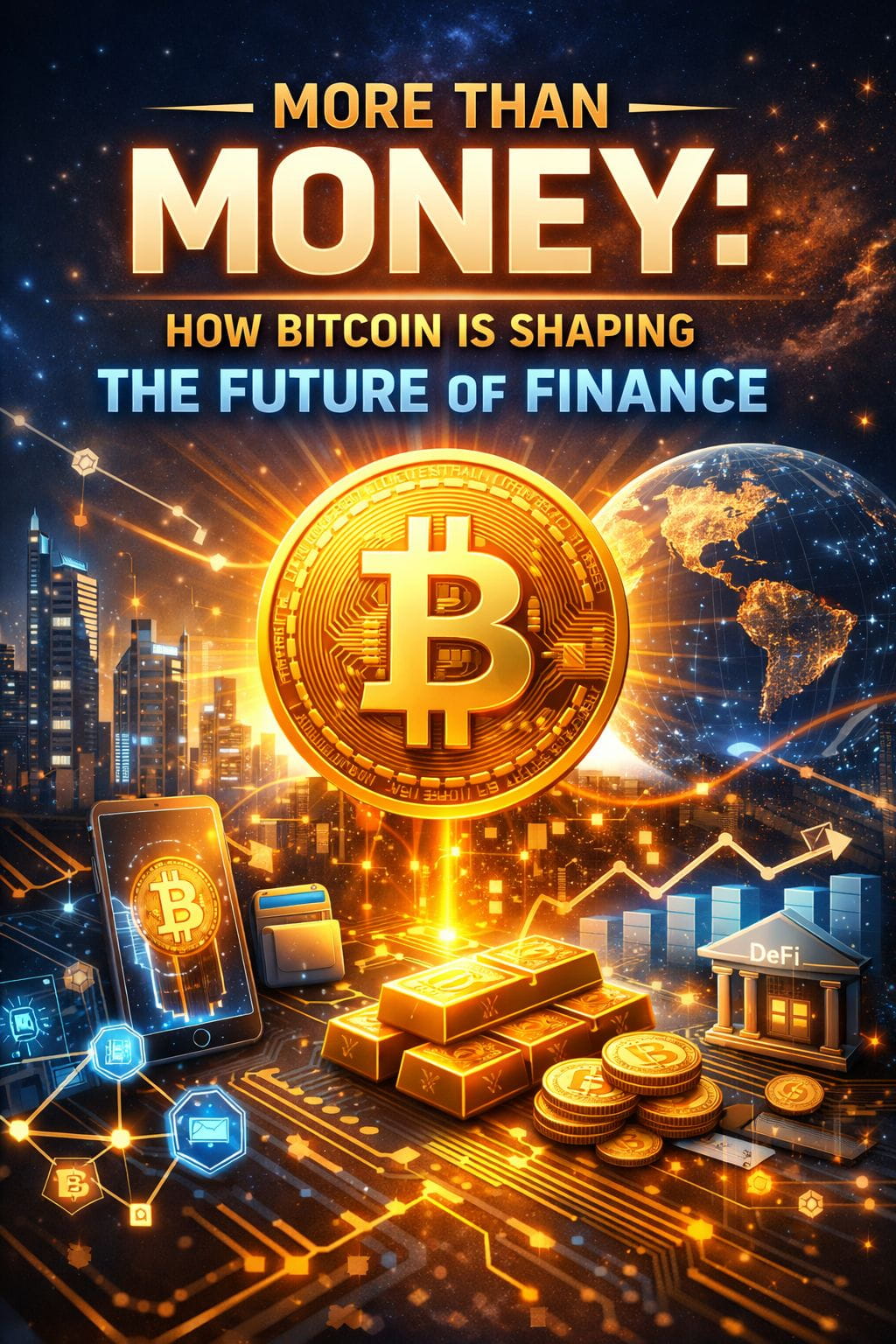
"Bitcoin: The Foundation of Digital Finance and Its Future Impact."
Bitcoin is the first decentralized digital currency, launched in 2009 by the mysterious creator known as Satoshi Nakamoto. It was built to solve a major problem in traditional finance: the need to trust banks or intermediaries to move money. Bitcoin allows people to send value directly to one another, anywhere in the world, without relying on centralized institutions.
At the heart of Bitcoin is blockchain technology—a public, distributed ledger that records every transaction permanently and transparently. The network is secured through cryptography and a consensus system called Proof of Work. In this system, miners use computational power to verify transactions and add new blocks to the blockchain. In return, they earn Bitcoin rewards. This process keeps the network secure, prevents fraud like double spending, and maintains decentralization.
One of Bitcoin’s most powerful features is its fixed supply. Only 21 million bitcoins will ever exist. This scarcity makes Bitcoin fundamentally different from fiat currencies, which can be printed endlessly. As a result, Bitcoin is often compared to digital gold and is widely used as a long-term store of value and a hedge against inflation.
In everyday life, Bitcoin already plays an important role. People use it for international remittances, online payments, investments, and savings—especially in countries facing inflation, capital controls, or limited access to banking services. Bitcoin gives users full control over their funds, offering financial freedom and censorship resistance.
As technology improves, Bitcoin is becoming more practical for daily use. Tools like mobile wallets and the Lightning Network enable faster, cheaper transactions, making Bitcoin suitable for small payments, transfers, and even microtransactions.
Looking ahead, Bitcoin’s future appears strong. Growing institutional adoption, increasing regulatory clarity, and expanding infrastructure are helping Bitcoin mature into a global financial asset. Rather than replacing traditional finance, Bitcoin is likely to complement it—acting as a digital reserve asset and a foundation for a more open financial system.
In essence, Bitcoin is not just a cryptocurrency. It is a financial revolution that is changing how people store, transfer, and think about money—today and for generations to come.