
Walrus just smashed the single-day upload record—17.8 terabytes. That’s a serious leap for decentralized storage, especially for AI data. So, what makes Walrus such a beast? Let’s dig in.
Walrus runs as a chain-agnostic storage layer on Sui, and it’s built to handle massive data blobs. Instead of just copying data everywhere, it chops files up with erasure coding, spreads the pieces across different nodes, and keeps redundancy pretty lean—just 4 to 5 times overhead instead of full-on replication. That saves a ton on costs. The Seal system locks metadata on-chain, and availability proofs make sure access is quick and verifiable. Pulling huge files? Takes less than two seconds.
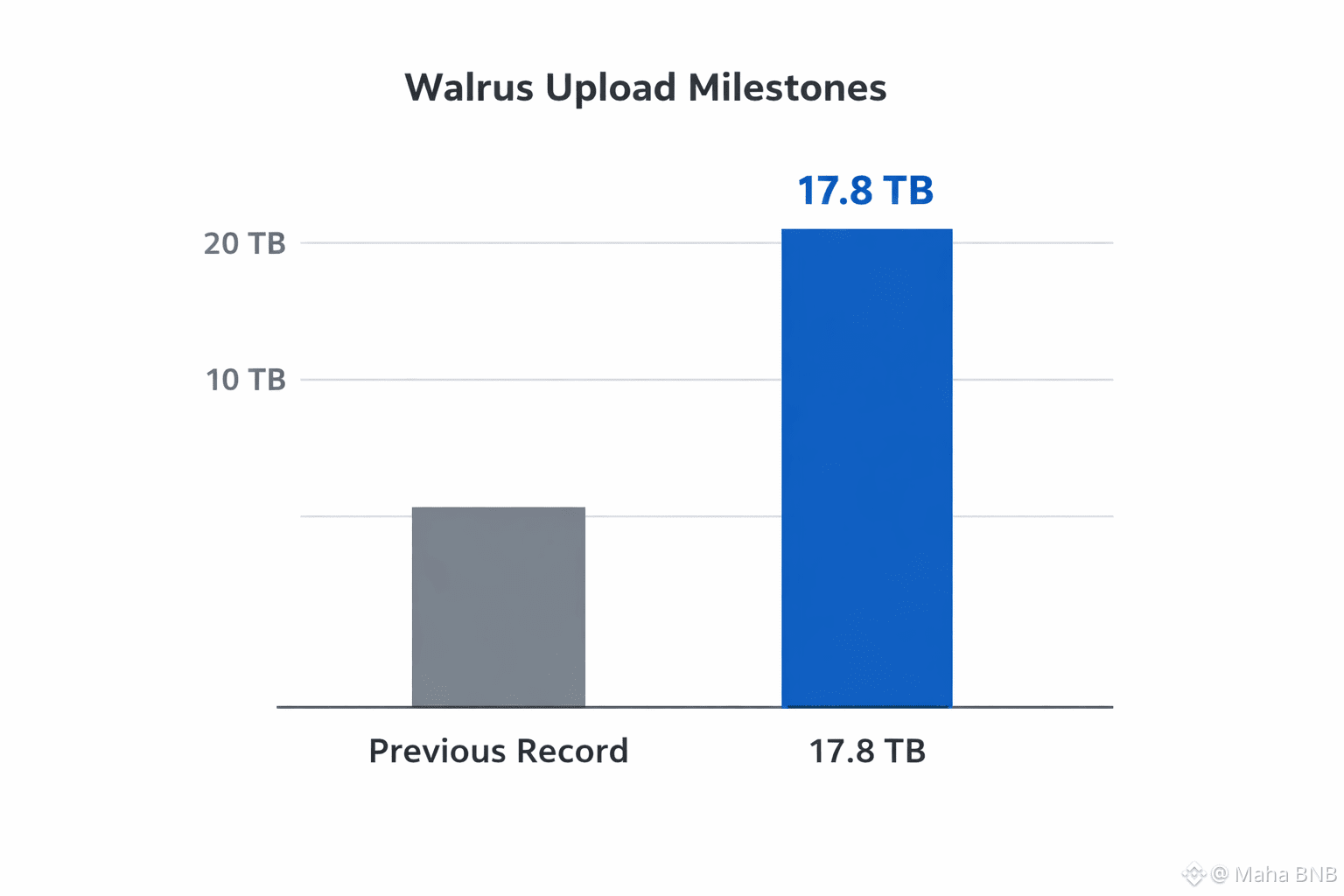
They’re targeting the big stuff—AI datasets, media, agent memory. Developers are already storing over a petabyte, and that’s as of late 2025. That 17.8 TB upload in a single day? It doubled their previous best. The infrastructure just keeps up, scaling to enterprise levels without breaking a sweat.
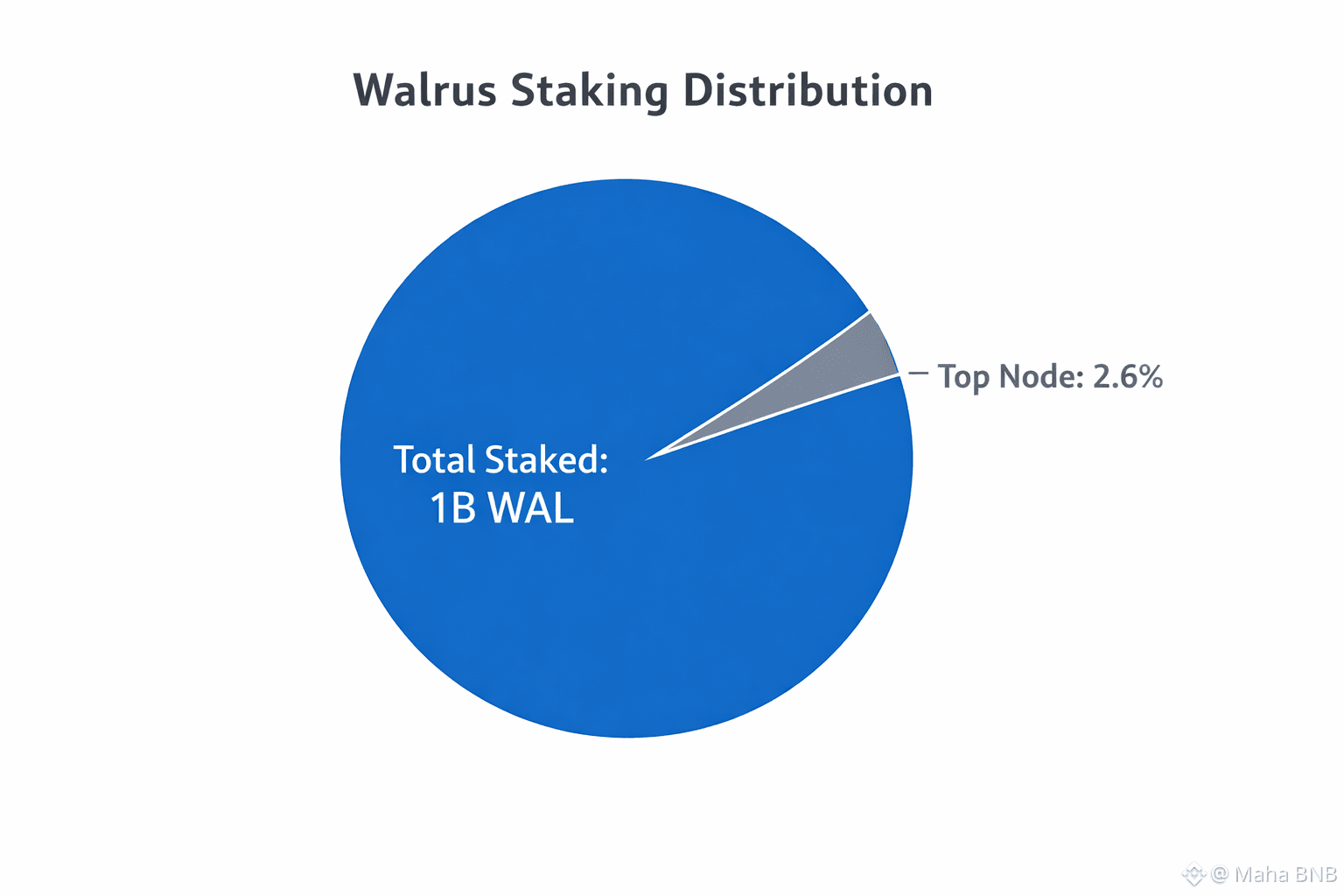
Walrus isn’t just storage. It’s a whole data marketplace for the AI era. Developers can monetize their datasets directly. Verification tools make sure the data’s real. Governance happens through staking—nodes earn when they stay online, get penalized when they don’t. Staked WAL hit one billion by mid-2025, and one node holds about 2.6% of that. The community can adjust parameters with votes, keeping things fair.
Partnerships are expanding the ecosystem fast. Talus plugged in for AI agent frameworks, keeping model data safe. Itheum brought data tokenization, so you get programmable, gated markets and new ways to make money. Dozens of dApps already run on Walrus. Real projects are moving off centralized clouds.
Then there’s Walrus Sites—decentralized hosting, no servers needed. Deploy code, get an object ID, and share the URL. Anyone can access it from any browser, no wallet required. The system shrugs off node failures and moves data objects easily, all at costs that compete with the big Web2 names.
People are actually building on this thing. Flatland runs as a decentralized app. Snowreads hosts content securely. Walrus Staking is fully on-chain. The docs site shows off just how easy it is. Builders are launching dApps on Sui, Ethereum, Solana—no barriers, so more Web3 users are coming in.
Walrus isn’t just talk. You see it in action—data chunks moving like shipping containers, built-in fault tolerance, and Sui’s speed giving it an edge. The roadmap moves forward with steady releases. It’s proven resistant to power grabs, especially in decentralized blogs, and the system handles spikes in demand without issues.
The Walrus Foundation isn’t short on backing either. They’ve raised $140 million from Standard Crypto and a16z to push the network’s speed and reliability even further. Their RFP program keeps fueling ecosystem projects, and developers keep getting new tools.
In the end, Walrus turns data into something you can govern, trade, and trust. AI systems tap verified sources. Autonomous agents store memory they can actually access later. Enterprises get censorship resistance. And builders can finally ship with confidence, knowing the protocol’s here for the long haul, powered by real incentives.