Every Creator Has Felt the Pain
When I look at most Web3 platforms today, I notice something interesting: everyone talks about decentralization, ownership, and innovation, but very few talk honestly about how the experience actually feels for users. As a creator, I’ve learned that people don’t stay because something is “on-chain”. They stay because it works smoothly, instantly, and without frustration.
This is where my attention shifted toward @Vanarchain Vanarchain. Not because of hype, but because its vision seems to focus on something creators deal with every day: performance. Whether it’s interactive content, virtual environments, or real-time digital experiences, creators need infrastructure that doesn’t interrupt the moment. One delay is enough to lose attention forever.
From my perspective, @Vanarchain Vanarchain feels like it’s trying to solve that exact problem. Instead of forcing creators to adapt to slow systems, the network appears designed to support fast execution and low-latency interaction. That matters more than people realize. When users don’t notice the technology, that’s when it’s doing its job properly.
What Creators Actually Need: Real-Time and Smooth
Most blockchains today were designed as general-purpose computers with broad ambitions, and then creators were expected to adapt. This makes sense on paper, but in practice it introduces latency, unpredictable fee behavior, and unnecessary steps that break interactive experiences. Many creators tolerate this at first, but the audience never does. Retention falters at the first moment of noticeable friction.
@Vanarchain flips that script. It treats low-latency execution and predictable performance as primary design criteria, with decentralized logic and smart contracts adapting around that priority. In other words, the user experience is the foundation, then the blockchain capabilities come next — not the other way around. This is critical for creators looking to build things like real-time digital environments, interactive games, collaborative live sessions, or social events. $VANRY
When infrastructure is tuned for immediacy, the audience doesn’t notice the blockchain at all — they just think the experience is “fast and intuitive.” Developers can focus on creativity instead of babysitting performance bottlenecks. For creators who care about both decentralized ownership and how their audience feels in the moment, that’s a foundational difference.
Trading Data Anchors the Discussion
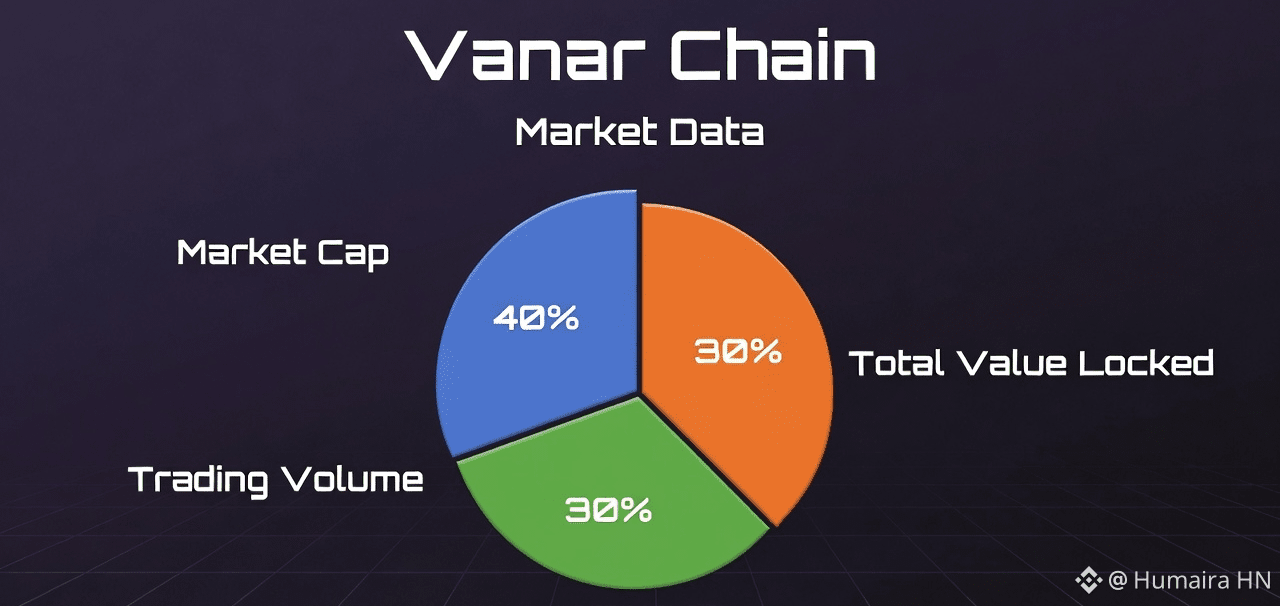
This is where current market data helps put things into perspective. As of January 28, 2026, $VANRY is hovering around $0.0076 per token, with a market cap estimated between $15 million and $17 million, depending on the source. Daily trading volume is typically in the range of $3.5 million to $4.2 million. Looking at the network itself, DefiLlama reports that @Vanarchain ’s total value locked (TVL) across active dApps is roughly $120 million, and average chain fees over the past 24 hours have stayed extremely low, only a few dollars per transaction. While these figures don’t automatically prove the network has achieved broad adoption or product-market fit, they offer a tangible snapshot: for a platform designed for real-time, interactive creator experiences, you want to see consistent user activity, smooth engagement, and reliable performance as the ecosystem grows.

Slow UX Isn’t the Only Risk Ecosystem Fit Matters
Infrastructure and pricing are only part of the story. A platform might have low latency and strong architecture but still fail if developers don’t build on it. Creators are influenced by where tooling, integrations, and real usage show up. For networks focused on real-time experiences, developer adoption and product availability are equally important.
Vanarchain’s modular infrastructure signals an evolution beyond simple launch narratives. This is significant because performance claims only translate to long-term value if developers and users drive repeat engagement. Trading data tells part of the story, but repeated real-world usage is the ultimate measure.
What This Means for Creators and Users
From my vantage point, the fundamental question for platforms built around creative engagement is the same: does the experience feel seamless, fast, and dependable? Creators won’t forgive surprise slowdowns mid stream, and audiences won’t tolerate pauses in moments meant to be live and immediate. If Vanarchain’s infrastructure can deliver this consistently, it replaces confusion with confidence and confidence turns into habit.
That’s why performance isn’t a niche topic; it’s a driver of engagement and retention. Tools that feel fast are used again and again. Systems that feel slow are abandoned after the first rough experience. A creator may choose a platform for decentralization, but they continue using the one where audiences stay engaged and active.
Practical Takeaways for Evaluation
If you’re thinking about @Vanarchain as a builder, collector, or contributor, here’s how I recommend approaching it:
Watch usage patterns, not just price look for projects that repeatedly draw users back.
Check latency in real sessions deploy small tests on mainnet to see responsiveness under real conditions.
Monitor developer activity ecosystems grow where builders commit time and resources.
Compare trading and liquidity active volume suggests ongoing participation, even if the price is volatile.
Real adoption shows up in repeat interactions, not only in price charts or predictions. That’s especially true for creator-centric infrastructure, where attendee experience is paramount. $VANRY
Final Thought
In Web3, infrastructure that prioritizes responsiveness and habit forming experiences can be more impactful than one that leads with features alone. For creators who care about their audience staying engaged, smooth interaction is the differentiator. If @Vanarchain can deliver reliability at scale and if the ecosystem grows around that promise then it may earn something most networks never do: consistent real usage and real stickiness. #vanar