
Data scarcity has always been a huge roadblock for AI, but Walrus on Sui changes everything. Instead of hoarding information, Walrus turns raw data into real, verifiable assets. Think of it as a backbone for data markets—here, datasets actually get economic value, thanks to cryptographic proofs and decentralized storage. Developers can tokenize information, letting AI models train on sources they can trust—no central gatekeepers needed.
At its core, Walrus works as a storage layer that doesn’t care what chain you’re on, but it’s built to really fit with Sui’s fast architecture. It handles massive, messy blobs—stuff like datasets or media—using erasure coding. Basically, it chops data into pieces, adds redundancy so nothing gets lost, and spreads those pieces across nodes. Anyone can store shards, and if you need your data back, you only need a handful of them to reconstruct the whole thing. This keeps data available even when the network’s under pressure, unlike old-school replication that just racks up your costs.
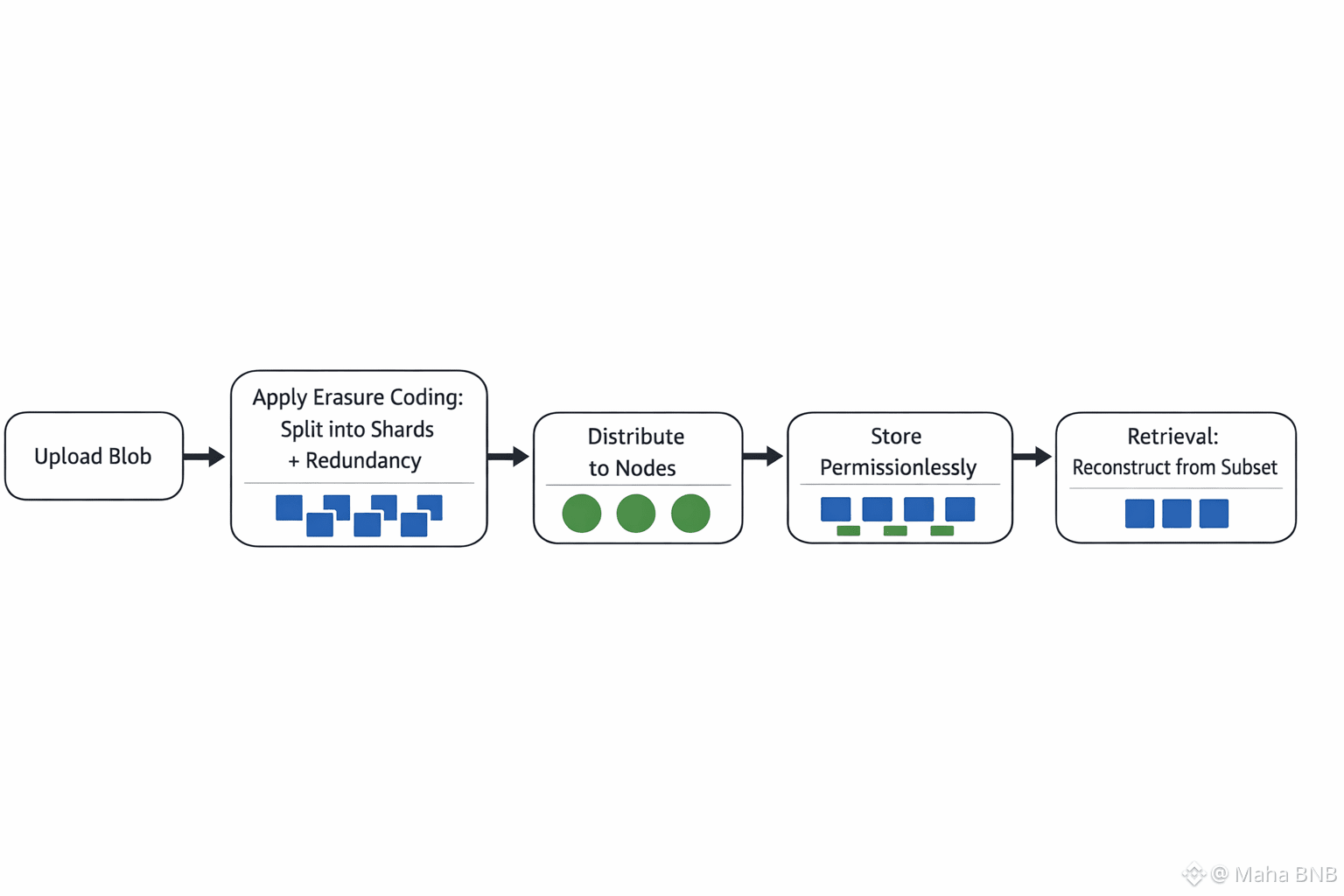
But Walrus isn’t just about storage. Its Seal technology steps things up by locking down access using on-chain rules. Data owners set permissions through Sui smart contracts, sealing their data away from prying eyes. This creates confidential spaces for sensitive AI datasets—so you can verify what you need without ever exposing the raw info. Seal works with Sui’s object model, so data acts like an asset you can transfer and track, always keeping its integrity.
To keep things moving, the Walrus Foundation runs an RFP program. They invite builders to pitch project ideas that use Walrus, then give resources to the best ones. It’s all about fueling new data-driven apps, whether that’s AI agents or decentralized content platforms. If your proposal wins, you get support—no need for centralized funding.
Partnerships show Walrus in action. Talus Network uses it to store AI agent states and models, so agents can operate persistently and verifiably. Their data anchors on Sui for easy audits. The Itheum protocol puts datasets on Walrus, turning them into tradable NFTs. People mint data assets, set royalties, and trade in open markets—so quality data actually gets rewarded.
Funding isn’t an issue. Walrus Foundation pulled in $140 million from heavyweights like Standard Crypto and a16z. That money goes to building a fast, AI-ready storage network. They’re all about performance—nodes get incentives through staking.
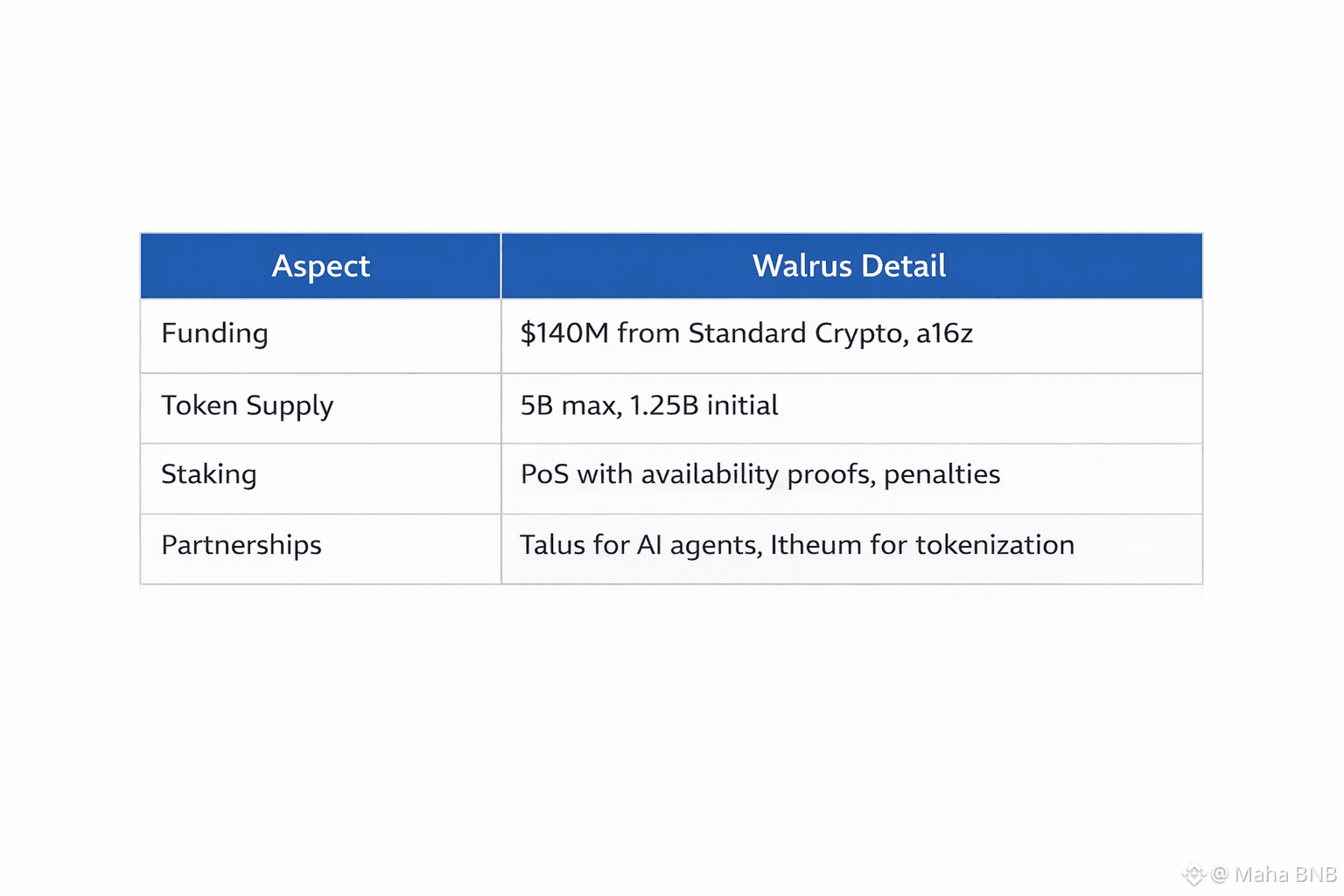
Speaking of staking, that’s how Walrus keeps its network secure. Users lock up WAL tokens to run nodes and earn rewards if they stay available. If a node goes down, it gets penalized. Each epoch, nodes commit to storage jobs and check up on each other. Token holders steer upgrades, voting on proposals tied to on-chain data.
WAL’s supply caps at 5 billion, with 1.25 billion in circulation at launch. The inflation model rewards people who stick around for the long haul, gradually dropping to keep things sustainable. Unlocks stretch all the way to 2033, so there’s no sudden dumping. WAL also lets users prepay for data streaming, making AI workflows faster by cutting latency.
Walrus Sites show off what’s possible. Developers can launch web apps with familiar tools, publish to Walrus, and get permanent URLs—no more worrying about servers. Resources store as Sui objects and can move between owners. If a node fails, the network just redistributes the data shards. There are already hosted examples: Flatland for interactive Sui apps, Snowreads for decentralized reading, and staking dashboards. It’s all fully on-chain.
So, why does Walrus matter? Centralized data hosts mean censorship and security risks, undermining trust in AI. Walrus flips that—storage gets decentralized, provenance verified by Sui anchors. Developers get an easier way to build data-heavy apps; enterprises get confidential data handling and can meet compliance needs with selective disclosure.
The impact goes beyond just storage. In DeFi, Walrus holds collateral proofs privately, making things more secure. Gaming platforms can host assets transparently, cutting down on cheating. AI models can train on tokenized datasets, citing their sources right on-chain. It’s a big shift—now, instead of hidden data and black-box models, you get transparent markets and real incentives for quality data.
Compared to the old guard like AWS, which banks on trusting a single provider (and risks outages), Walrus spreads the risk and backs everything up with cryptographic guarantees. Costs go down, thanks to efficient coding and less redundancy. And since Sui’s all about parallel execution, Walrus can handle petabytes of data without slowing down.
Even though Walrus started on Sui, it’s designed to be chain-agnostic, which opens the door for adoption across other blockchains. That makes it the kind of infrastructure multi-chain AI needs—where data moves smoothly, no matter the network.
Governance evolves through on-chain proposals, referencing stored data for transparency. Community votes, weighted by staked WAL, decide features like coding optimizations.
Challenges Walrus addresses: Data bloat on blockchains. By offloading blobs, Sui remains lean, with Walrus handling heavy lifting. Privacy gaps in open ledgers close via Seal, enabling enterprise entry.
Migrations underscore maturity. Over 250TB transferred to Walrus, proving enterprise readiness. This volume tests resilience, with zero reported losses.
Walrus rearchitects data infrastructure. It empowers builders to monetize information, verifies AI inputs, and decentralizes web hosting. On Sui, it unlocks scalable ecosystems, where data drives value without compromise.