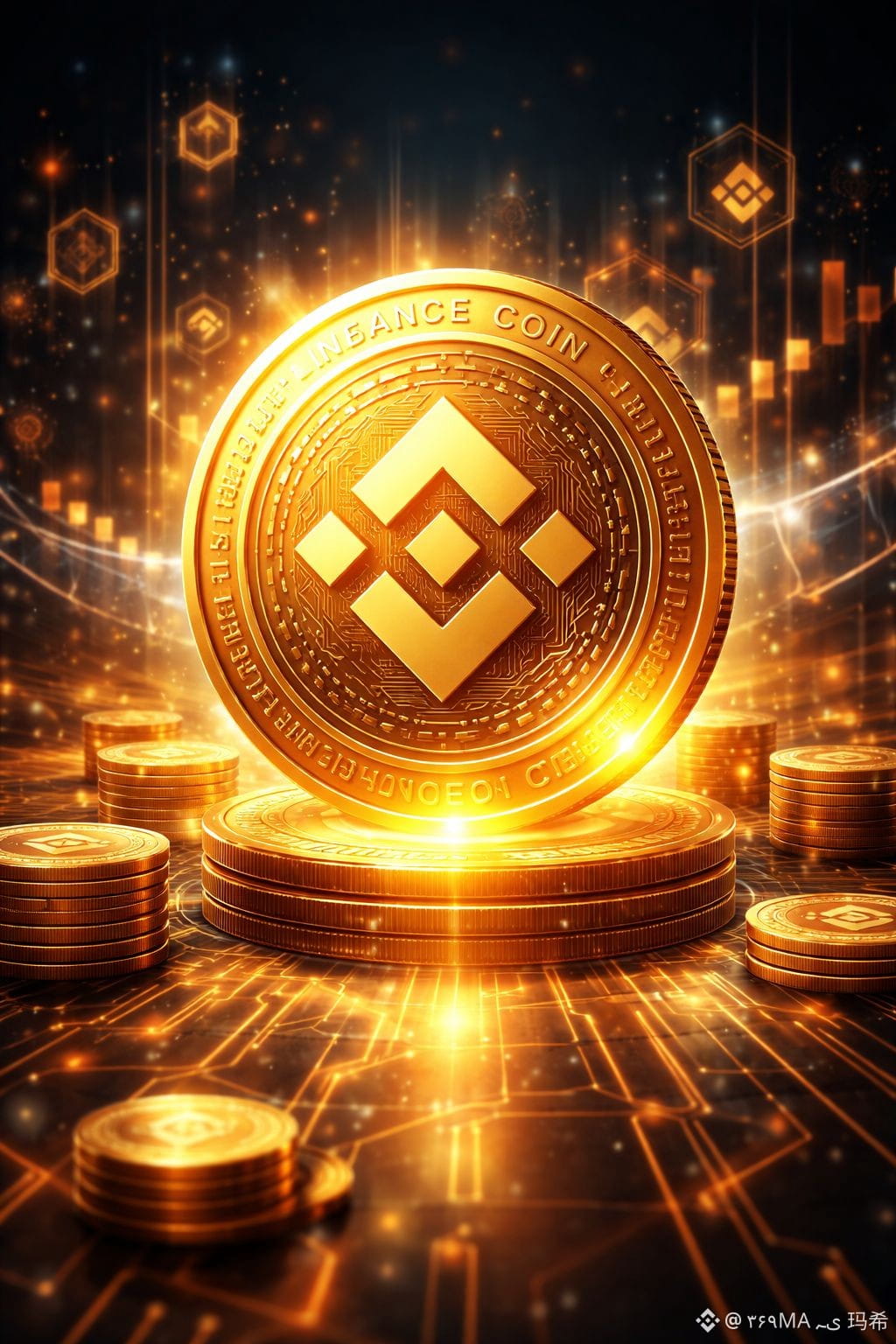
BNB Coin began as a simple utility token, but over time it has evolved into one of the most functionally dense assets in the crypto market. Its journey reflects a broader shift in the industry, from speculative trading toward real blockchain infrastructure.
When Binance launched BNB in 2017, its purpose was narrow. Users could pay trading fees at a discount on the Binance exchange. That alone gave BNB immediate demand, but it did not explain its long-term relevance. What changed everything was Binance’s decision to build an entire blockchain ecosystem around the token.
The introduction of Binance Chain, and later Binance Smart Chain, repositioned BNB as a core network asset rather than just an exchange perk. BNB became the gas token for transactions, smart contracts, and decentralized applications. This move placed Binance in direct competition with general-purpose blockchains like Ethereum, but with a different design philosophy.
Binance Smart Chain focused on speed and cost efficiency. Transactions are faster and fees are lower, which made the network attractive to developers and users priced out of other chains. This design choice came with trade-offs, particularly around decentralization, but it aligned with Binance’s goal of mass adoption rather than ideological purity.
One of BNB’s most distinctive features is its burn mechanism. Binance commits to regularly reducing the total supply of BNB based on network activity and exchange revenue. Unlike inflationary models, this creates a long-term scarcity dynamic. The burns are transparent and rule-based, which has helped build market confidence over time.
Beyond trading and fees, BNB now functions as a multi-purpose asset. It is used for staking, governance participation, liquidity provision, NFT platforms, gaming ecosystems, and payments. In many regions, BNB is accepted by merchants directly or through crypto payment gateways. This level of integration is rare among exchange-linked tokens.
Another critical aspect of BNB is its role in decentralized finance. The BNB Chain hosts thousands of DeFi protocols, ranging from lending platforms to decentralized exchanges. For many new users, this ecosystem serves as an entry point into DeFi due to its lower costs and familiar Binance branding.
BNB’s relationship with Binance remains both its strength and its risk. On one hand, Binance’s scale, liquidity, and technical resources provide unmatched support. On the other hand, regulatory pressure on centralized exchanges can indirectly impact BNB’s market perception. This tight coupling means BNB does not operate in isolation from corporate and regulatory realities.
Despite this, BNB has demonstrated resilience across multiple market cycles. It has survived exchange hacks, regulatory uncertainty, and intense competition from newer blockchains. Its continued relevance suggests that utility-driven tokens backed by real usage can endure beyond hype-driven narratives.
Looking forward, BNB’s future depends less on speculative interest and more on network adoption. As long as developers continue building on BNB Chain and users continue transacting, the token retains intrinsic demand. Its value proposition is tied to participation, not promises.
BNB Coin represents a practical model of how a token can evolve alongside its ecosystem. It is not just a store of value or a governance token. It is infrastructure, fuel, and incentive wrapped into a single asset. In a market often dominated by abstraction, BNB’s strength lies in its clear and consistent utility.