

In today’s rapidly evolving technological landscape, data has become the backbone of progress. From training AI models to running autonomous systems, data needs to be accessible, secure, and trustworthy. However, traditional storage solutions, often centralized, fall short when it comes to handling massive, unstructured datasets. This is where Walrus, a decentralized storage protocol developed by Mysten Labs, steps in.
Walrus is more than just a storage protocol; it’s built to address the challenges of modern data handling while preparing for the future of AI. Powered by the Sui blockchain, it offers a decentralized approach to storing and managing data, ensuring not only security and reliability but also the ability to monetize and govern data in a transparent way.
The Core Problem Walrus Solves
Decentralized storage has been a part of the Web3 ecosystem, but many protocols struggle with issues like scalability, high costs, and resilience. For example, full-replication systems—where data is copied across multiple nodes—lead to significant overhead, often requiring 10 times the original file size. Other approaches, though more efficient, can compromise data availability if certain nodes fail.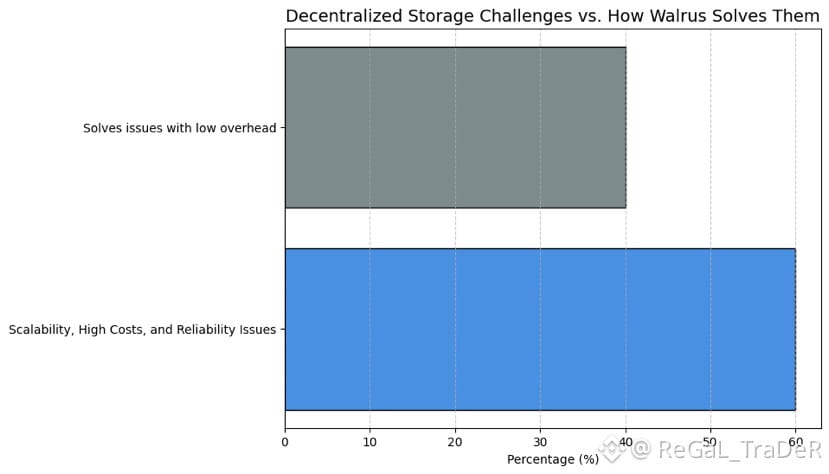
Walrus solves these issues by focusing on “blobs”—large binary files like images, videos, and datasets. Through its advanced erasure coding and integration with the Sui blockchain, Walrus ensures data remains available and reliable even when up to a third of nodes fail. Its replication overhead is just 4x-5x, making it cost-effective and fast, ideal for AI applications.
Technical Architecture: A Closer Look
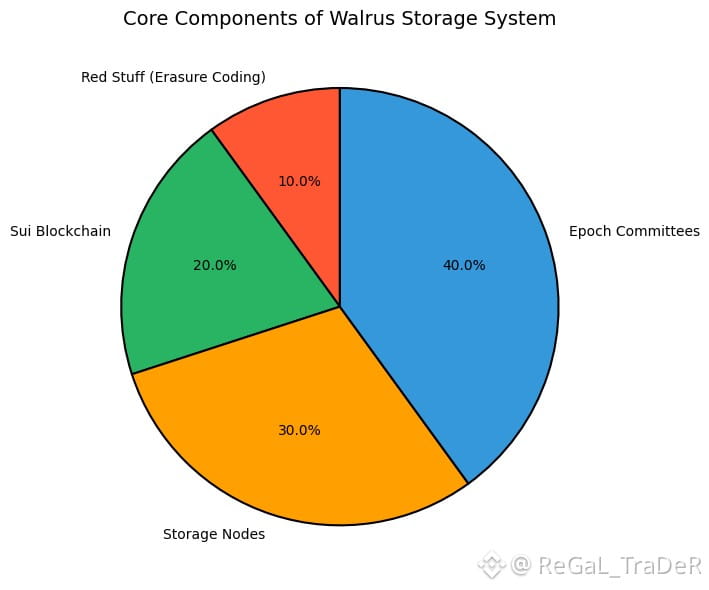
Walrus operates as a blob store but integrates deeply with the Sui blockchain for coordination, governance, and economic incentives. Here’s a closer look at its core components.
Encoding and Fault Tolerance with “Red Stuff”
At the heart of Walrus is its novel “Red Stuff” erasure coding system, designed to provide data redundancy. Unlike traditional methods, it generates an unlimited number of fragments that can be reconstructed from any sufficient subset. This system handles Byzantine fault tolerance, allowing it to operate even if a third of the network fails or acts maliciously.
Storage Nodes and Epoch-Based Committees
Walrus uses decentralized storage nodes selected via a delegated proof-of-stake (DPoS) mechanism. Nodes are grouped into committees that operate in fixed periods, or epochs, with each epoch incentivizing active participation. The native WAL token drives this ecosystem, ensuring fair distribution of rewards for storage and validation.
Integration with the Sui Blockchain
Sui’s blockchain acts as the backbone for Walrus, ensuring fast, reliable data storage and enabling decentralized data markets where users can monetize their data. Walrus’s combination of decentralized storage and blockchain technology makes it a unique solution for data integrity and availability, especially for AI-driven applications.
Security, Reliability, and Performance
Security is crucial in decentralized systems. Walrus uses Byzantine fault tolerance to ensure the integrity of data even if parts of the network fail. On top of that, Sui’s blockchain guarantees data integrity through on-chain availability proofs, making tampering nearly impossible. Walrus offers fast reads and writes, compatible with real-time applications, and its predictable cost model, based on storage epochs, ensures fairness across the network.
Ecosystem and Use Cases
Walrus is already gaining traction in key areas, especially AI, where it can securely store and manage large datasets with verifiable integrity. It’s also opening up new possibilities in the DeFi space, offering real-time transaction verification and preventing scams. The growing use of blockchain in content and media also makes Walrus a natural fit, allowing dynamic, monetizable experiences with verifiable ownership.
Challenges and Future Outlook
While Walrus shows promise, there are challenges to address, including tokenomics stability and scaling to petabyte levels. The mainnet launch will test its real-world efficiency, but early testnet success provides optimism.
Walrus is well-positioned to become a foundational piece of the decentralized internet. It bridges Web2 and Web3 by offering a reliable, cost-effective storage solution that meets the needs of today’s AI-driven world. As Walrus grows, it will be an essential tool for managing large datasets efficiently.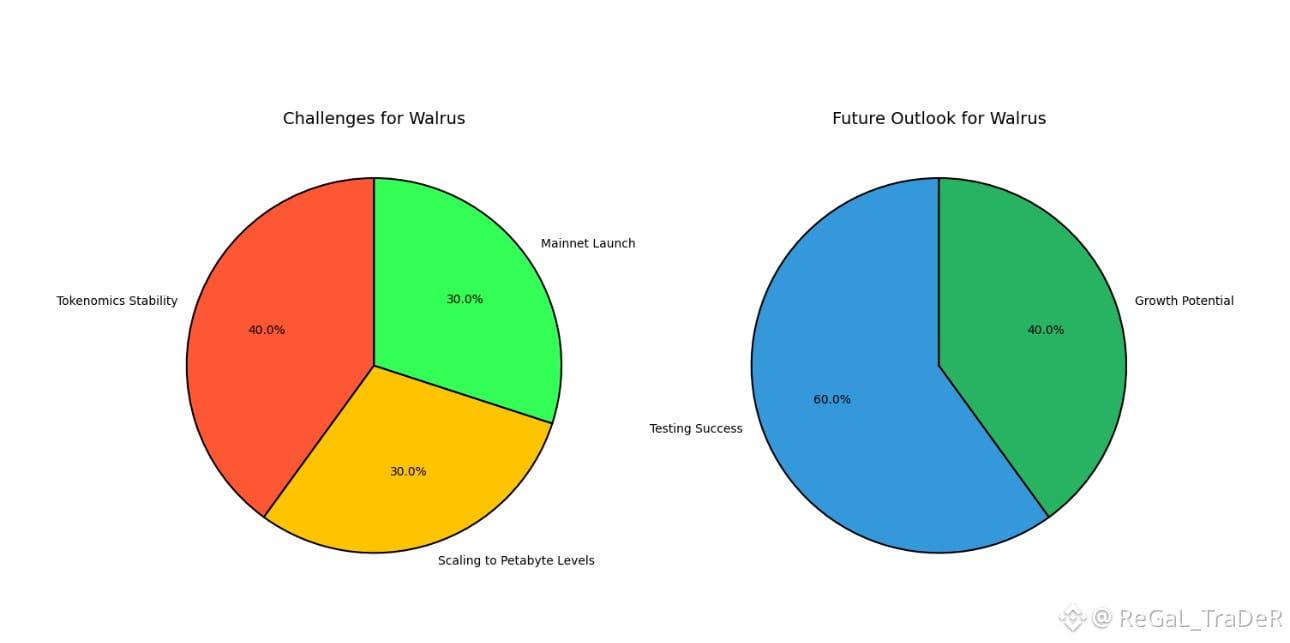
A Quiet Revolution in the Making
Walrus represents a thoughtful step forward in the evolution of data infrastructure. It’s not just about storing information differently—it’s about transforming how we think about data. By making data more accessible, reliable, and verifiable, Walrus is laying the groundwork for a new data economy. Its quiet, steady progress signals a future where decentralized storage is central to the digital world.