
For a long time, I treated stablecoin transfers as the least exciting part of crypto but also the most stressful. That sounds backwards, but anyone who actually uses USDT regularly knows what I mean. You’re not worried about volatility. You’re worried about everything else: fees changing, confirmations dragging, transactions stuck in that awkward “pending but not failed” state.
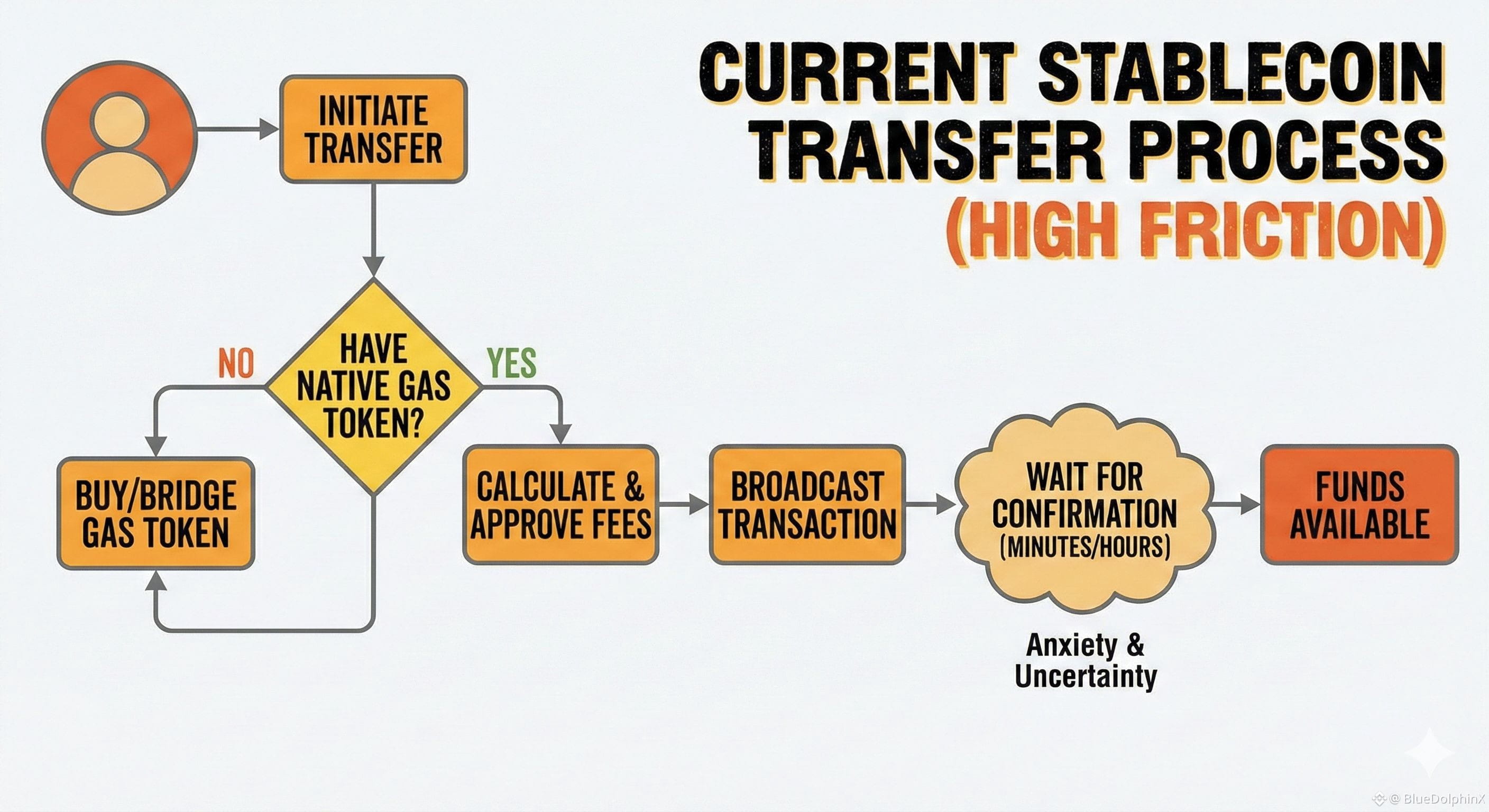
At some point I came across a that reframed it for me: stablecoins now account for roughly two-thirds of all on-chain transaction volume. That’s not speculation activity, that’s payments, remittances, treasury movement, real usage. Yet the infrastructure we use still behaves like stablecoins are an afterthought.
That’s the problem Plasma made obvious to me.
My first real interaction with Plasma wasn’t planned. I was moving USDT and expected the usual routine: estimate gas, adjust, wait, explain delays if needed. Instead, the transfer finalized almost immediately. No gas calculations. No sense of racing the network. The absence of friction was noticeable precisely because I’m so used to compensating for it.
Plasma is a Layer 1 designed around a simple idea: if stablecoins are doing most of the work, the chain should be optimized for them. Sub-second finality through PlasmaBFT changes how long you mentally “hold your breath” during a transaction. Gasless USDT transfers and stablecoin-first gas remove the small but constant decisions users are forced to make elsewhere.
The solution isn’t about adding more features. It’s about removing uncertainty.
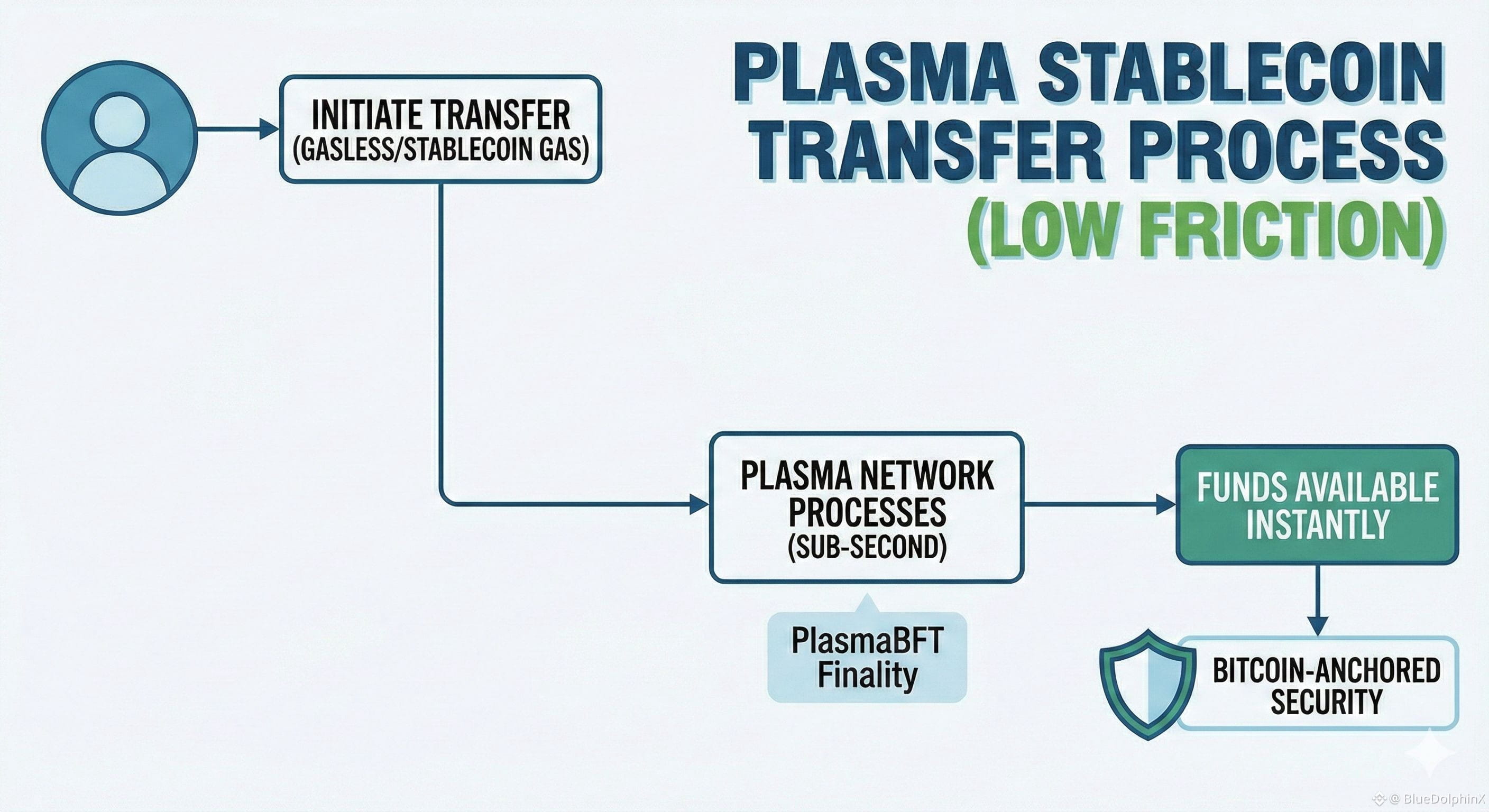
What also stood out to me is Plasma’s approach to security. By anchoring to Bitcoin, the network leans into neutrality and censorship resistance, qualities that matter far more when you’re talking about payments and finance than when you’re chasing experimentation. For institutions and users in high-adoption regions, reliability isn’t optional; it’s the baseline.
I’m not saying Plasma fixes everything. But it solves one very specific problem: stablecoins shouldn’t feel fragile to use. They should feel boring, predictable, and fast, the way money is supposed to move.
That’s why I’ve started paying attention to @Plasma and $XPL When responsibility on a network shows up quietly over time, you feel it before you can explain it.