
I figured this task would be a quick form fill and transaction sign like issuing a standard token elsewhere, but the compliance layer added unexpected steps right from the start.
I begin by logging into the Dusk dashboard via wallet connect with my Binance wallet. The interface loads cleanly and shows my connected address with a small green sync icon. Next I click the "Issuance" tab on the left sidebar. I select "XSC Compliant Security Token" from the asset type dropdown. Then I enter the details: asset name "TestRWA", symbol "TRWA", and initial supply of 500000 units. The form displays an estimated gas fee of 0.018 DUSK right below the supply field. I toggle on "Activate Phoenix Privacy Shield" and pause briefly to reread the tooltip text "This enables selective disclosure for regulatory audits while keeping transfers private."
Side note, I've seen similar tooltips in other privacy chains but this one felt more precise. After that I input two whitelist addresses for initial compliance testing and set a transfer cap of 10000 units per transaction using the number input field. The "Generate Compliance Proofs" button is highlighted in blue. Clicking it triggers a 4.2-second spinner with the message "Computing ZK proofs for Citadel compliance layer." During this wait the progress bar filled smoothly but the counter for compliance score jumped oddly from 92% to 95% before settling back at 94%.
At this point I hit a moderate uncertainty moment. After toggling the privacy shield and cap settings earlier there was no visual "saved" indicator or checkmark, so I second-guessed whether the changes auto-saved and reloaded the entire issuance page to verify. Thankfully the fields repopulated correctly but it broke my flow for about 30 seconds. A minor friction hit next when I hesitated before checking the "Explicit Acceptance" box because the warning modal popped up saying "Warning: Compliance rules will be enforced irreversibly and require governance approval for any later changes."
I approve the transaction and the wallet prompts for signature with the exact fee confirmation "0.018 DUSK + negligible network overhead." The confirmation modal appears after a short delay, showing "Issuance successful. Asset metadata locked. View in issued assets tab." I watch it close as the dashboard updates the issued assets count from 0 to 1 and the preview balance adjusts accordingly.
[Insert Visual 1 Here: Screenshot of XSC issuance form with Phoenix toggle active and compliance score at 94%]
That sequence made me reflect on how the explicit proof generation step adds reliability but also noticeable latency compared to non-compliant mints I've executed before. In my view the Citadel integration feels robust because it bakes regulatory checks directly into the issuance rather than bolting them on later, though the lack of auto-save feedback could snag users who expect instant persistence like in simpler dashboards. The whitelist entry required manual address pasting which slowed things more than anticipated.
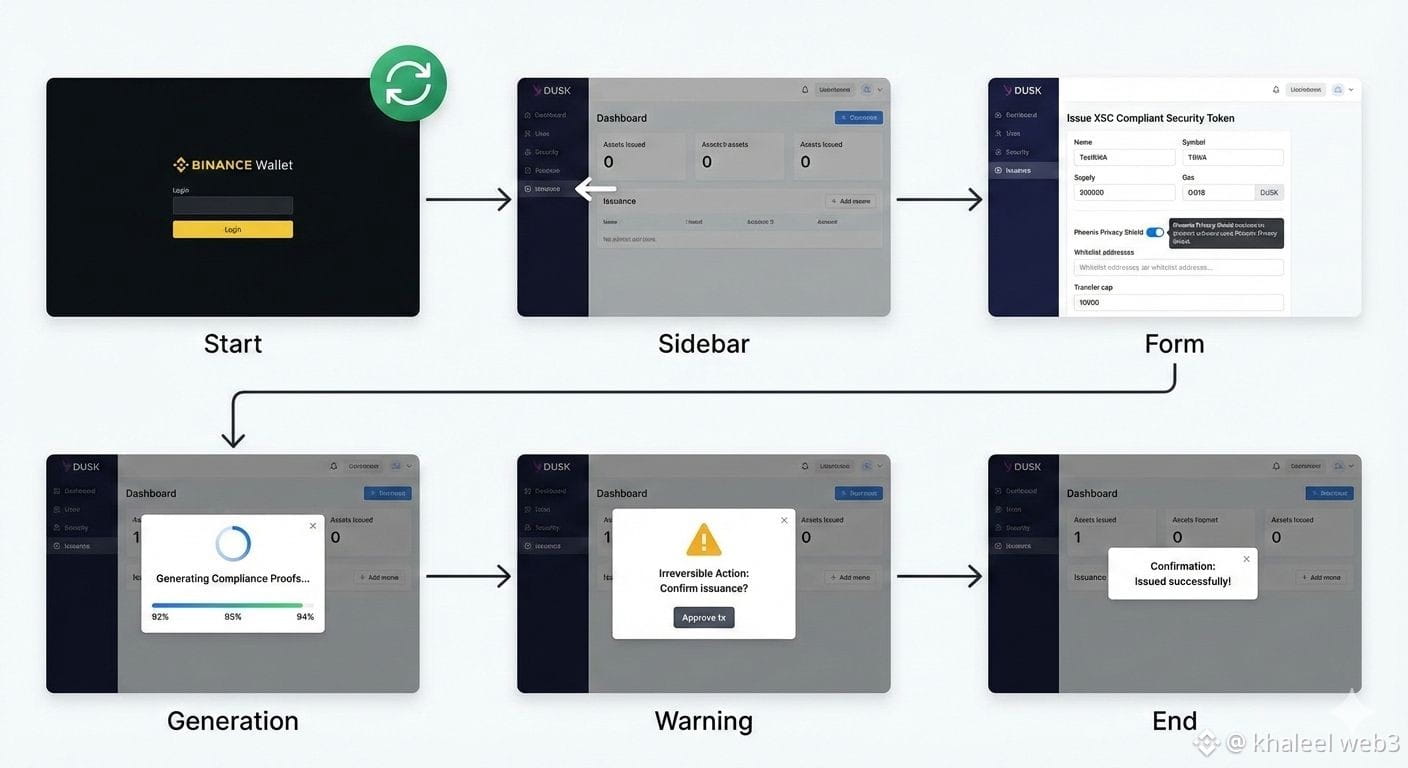
This reminded me of a 2022 gas fee spike during an ETH network congestion event where a similar issuance attempt failed midway and required restarting the whole process. Here the fixed low DUSK fee kept things predictable, but if network load increased during ZK proof computation the 4.2-second spinner might stretch longer and risk timeout like those old failures. Another hypothetical from my trades: imagine issuing during a period of heightened regulatory scrutiny similar to recent MiCA-aligned updates. The selective disclosure toggle would likely hold up well for audit trails without exposing full transaction details, unlike transparent chains where privacy add-ons often break compliance flows. A third scenario ties back to bear market staking attempts where silent failures went unnoticed until reload; that reload check I did here mirrors those moments exactly.
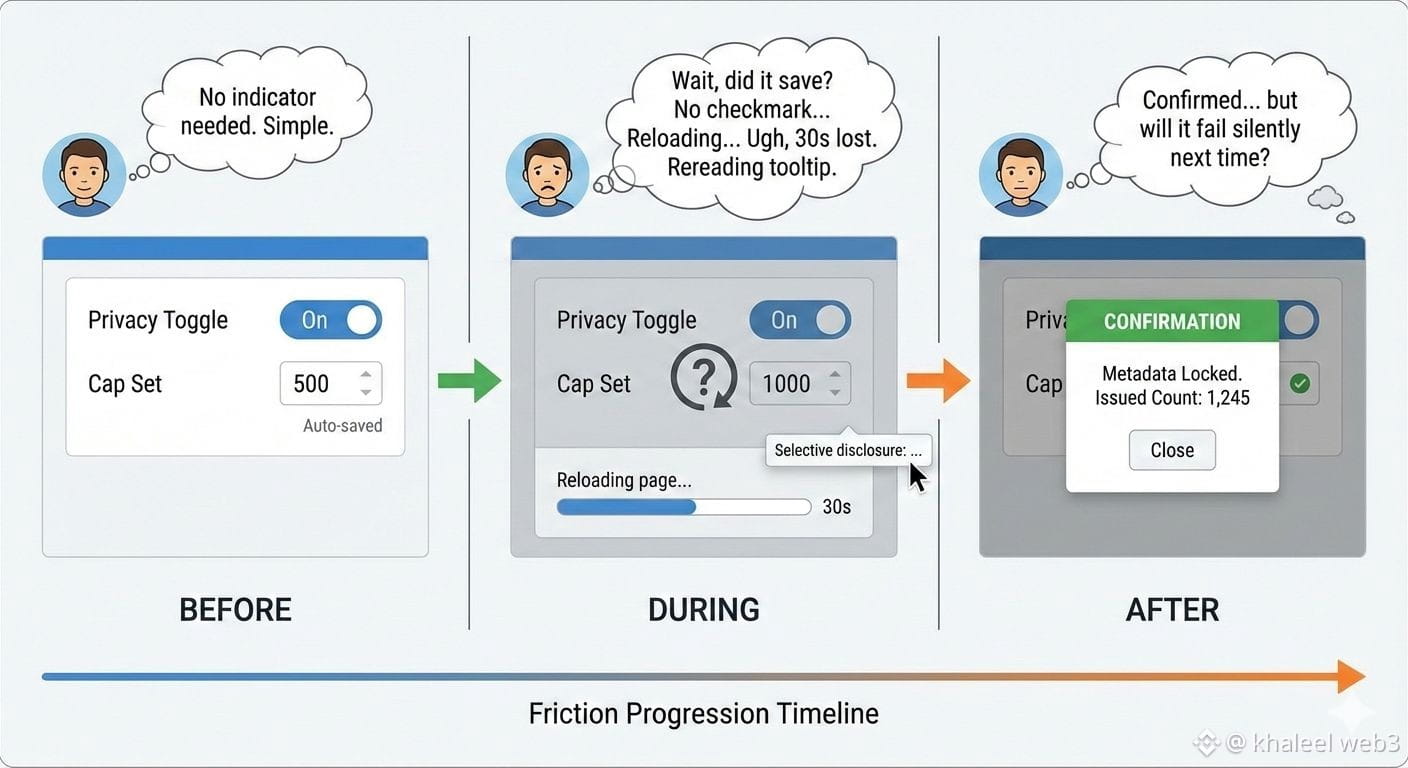
Looking ahead I wonder if future dashboard updates will add real-time proof status indicators or reduce the manual verification steps for repeated issuances. The irreversible warning modal lingers in my mind as a solid safeguard yet potentially overly cautious for iterative testing.
Has anyone else hit that exact 4.2-second proof spinner delay or needed to reload after toggling compliance settings? Did the whitelist cap input behave the same in your task flow? Share your step-by-step experiences or any UI quirks you noticed directly on Binance Square. I'm still turning over whether that compliance score fluctuation was just a display glitch or something deeper in the ZK calculation...
@Dusk #Dusk $DUSK