
#Plasma $XPL I’ll start with something that stuck with me the first time I dug into Plasma One: I was struck by how easy all the talk about “stablecoin banking” sounds on paper, until you pause and ask what that actually feels like for a real person trying to send value across borders or keep savings safe. Everything about money experiences texture: the quiet irritation of fees, the slow grind of onboarding, the anxiety when your local currency loses value. Plasma One is trying to stitch together those experiences into something that feels meaningful — not just a product slide deck.@Plasma 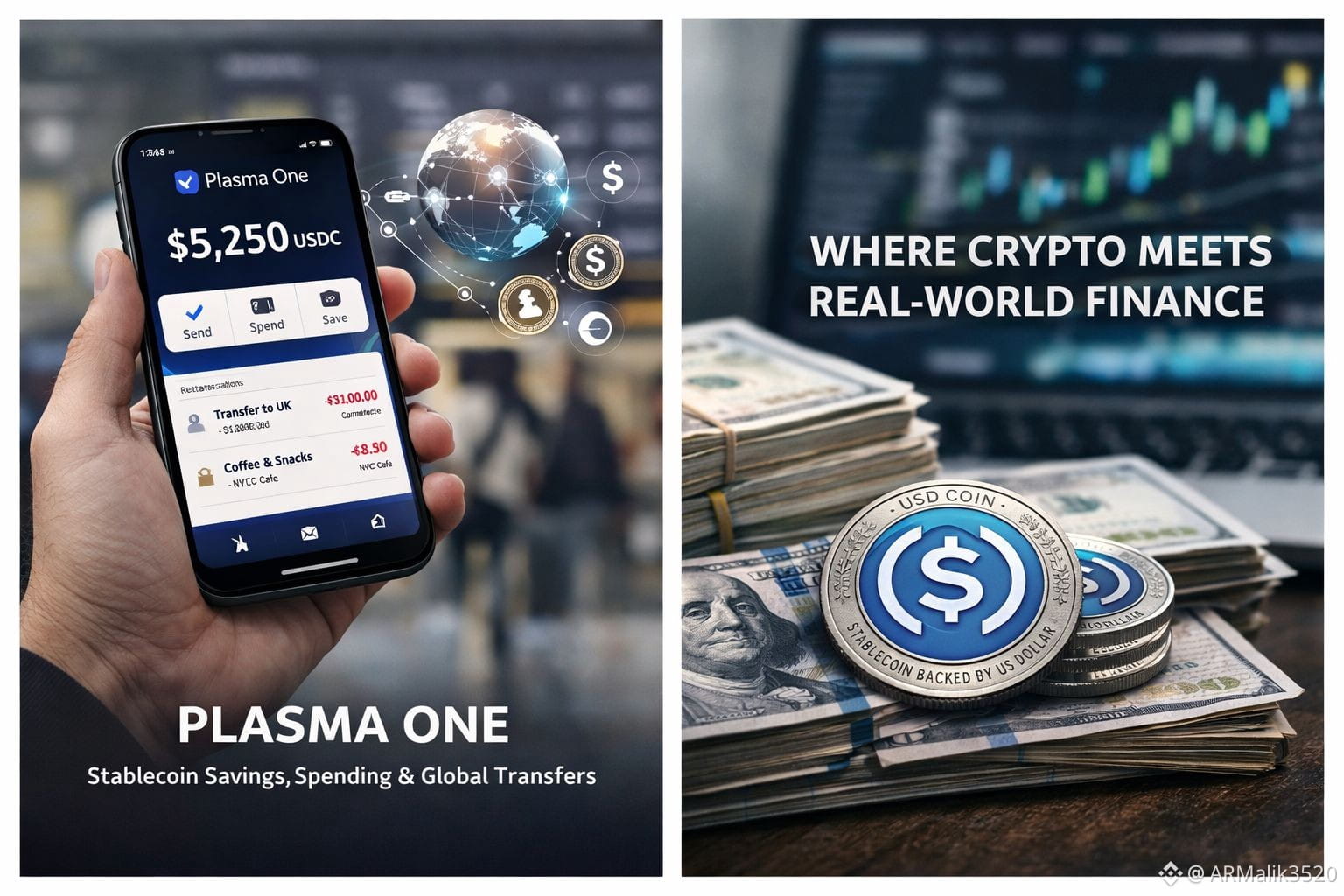
What Plasma One actually is is a stablecoin‑native neobank built by a company called Plasma, a blockchain project with a very explicit focus on making digital dollars not just a speculative asset but a usable everyday financial instrument. At its core, it promises three core functions in one place: you can save, spend, and send stablecoins — initially USDT — all from one app. If that description sounds straightforward, that’s because Plasma is betting that the real problem with stablecoins historically hasn’t been their price stability but how fragmented the user experience has been across wallets, exchanges, cards, and payment rails. On the surface, the flashy numbers are what draw attention. Plasma One advertises more than 10% annual yield on stablecoin balances while you’re holding them, and up to 4% cash back on spending with its card. Both figures are higher than what most traditional banks offer on savings accounts and even many crypto yield products today — a clear lure for users who’ve grown frustrated with single‑digit deposit rates. But the real story beneath those numbers is how Plasma plans to generate them. Unlike legacy banking where banks lend out deposits to earn interest, Plasma leverages an on‑chain ecosystem of decentralized finance protocols integrated into its own network to generate yield. That, in practice, means your stablecoin balance is plugged into liquidity and lending markets that can produce returns — though that also means your earning is linked to the health and usage of these on‑chain markets, not the guarantee of a regulated bank. 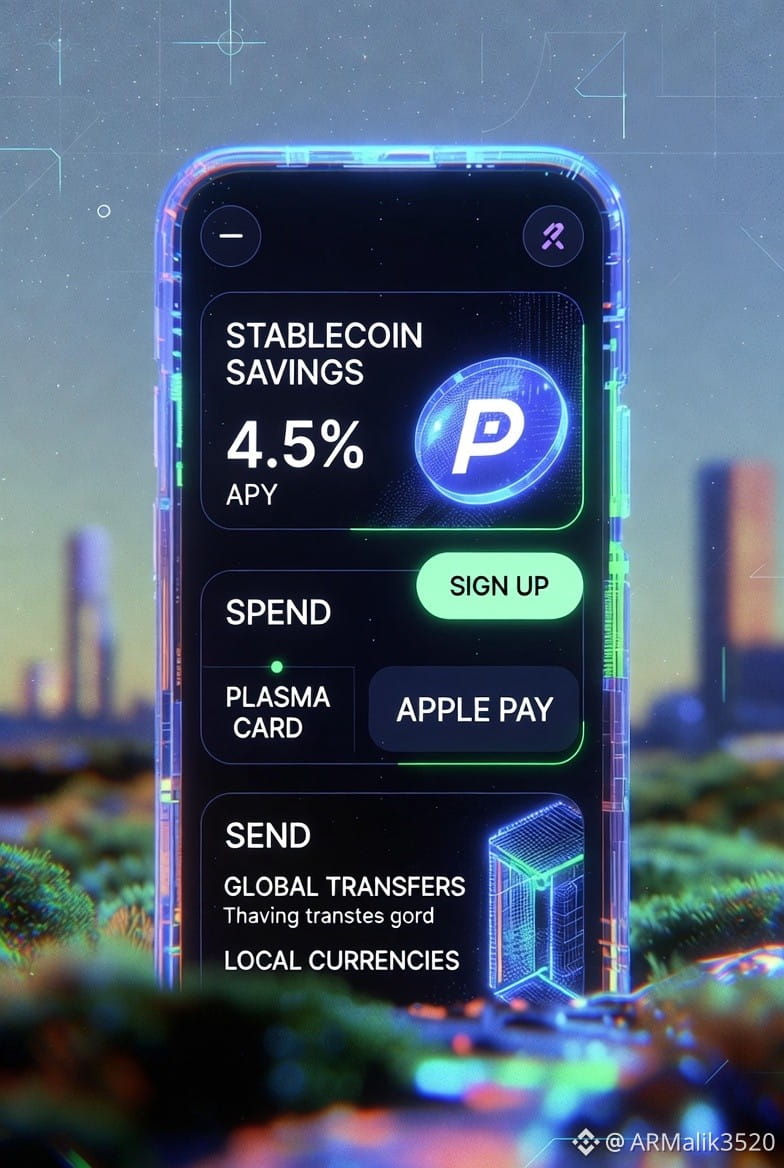 #traderARmalik3520



That difference matters. When you earn 10% yield from a bank, you usually have deposit insurance protecting your principal up to a point. With Plasma One, your funds are stablecoins you control, and the yield comes from risk‑weighted decentralized activity underneath, not a government backstop. If the underlying markets seize up or suffer a liquidity crunch, that yield can evaporate or worse — your access could slow, depending on how Plasma designs its mechanisms. That nuance is easy to miss when you first see “10%,” but it’s central to whether this model earns trust beyond speculative users.
Meanwhile, spending is where the traditional meets the digital. Plasma One issues both virtual and physical cards that can be used at more than 150 million merchants across over 150 countries, converting digital dollars into everyday purchasing power without forcing users to first convert into fiat. That’s a subtle but powerful shift: stablecoins are living inside a banking experience that feels familiar. It’s still a blockchain wallet under the hood, but the card experience is what most people will interact with daily. Earn rewards, spend your balance instantly, and see your savings continue to accrue yield until the very moment you swipe — that’s what Plasma is trying to achieve.
The third leg of the stool is global transfers. Within the app, you can send USDT to other users with zero fees and instant settlement on Plasma’s network roads. That removes one of the most persistent frictions in cross‑border money movement: cost. Traditional remittances can slice off 5–10% or more through fees and exchange spreads, whereas Plasma One’s stablecoin rails aim to compress that to near zero, at least inside the network. But here’s where an obvious counterpoint arises: the convenience of near‑free on‑network transfers is dependent on both sides being in the ecosystem. If you’re trying to send to someone outside Plasma One, or out to a local bank account, the usual rails and costs come back into play. That’s not a flaw but a boundary: the value is highest where Plasma’s rails are accepted and lowest where legacy systems dominate.
What Plasma One reveals, beneath the surface, is how practical stablecoins could become real alternatives to banking in parts of the world that need access to the dollar but lack robust financial infrastructure. Markets like Turkey, Argentina, and parts of the Middle East see everyday demand for stable currencies as hedges against local inflation and volatility. Plasma says it gathered real feedback from users in cities like Istanbul and Buenos Aires — places where people are not experimenting with crypto for fun but living with it because local money has failed them. This focus on real‑world necessity, not just digital speculation, gives the product a texture that’s easy to overlook in crypto media but hard to ignore when you think about everyday use.
Still, the ecosystem risks are real and deserve attention. The yield comes from DeFi, where rates can be volatile. The product isn’t a bank — your stablecoins are not FDIC insured or protected by any national safety net, and Plasma itself doesn’t custody them; you do. That’s empowering, but it puts the onus on the user to secure their private keys and understand the risk profile. And while zero‑fee transfers are compelling, those only apply within the network, and third‑party bridges or off‑ramps can still carry costs. None of that is a deal breaker, but it’s the texture that people who’ve been burned by overhyped crypto projects will ask about.
When you step back and connect this to broader patterns, Plasma One feels like part of a wider shift where digital finance tools are aimed not at replacing banks for wealthy users in high‑income countries but at serving people who have been poorly served by banking at all. That’s a quieter revolution but arguably more consequential. The idea that stablecoins could make banking services more accessible, cheaper, and more flexible — if this holds — suggests a future where financial rails are less about geography and more about connectivity. That’s not guaranteed, but the early signs suggest demand is real, not ephemeral.
Here’s the sharp observation I’m left with: Plasma One isn’t just a new app, it’s a living experiment in what stablecoins feel like when they start to behave like everyday money, not just speculative assets. That shift — from abstract digital tokens to practical financial lifelines — is where the future of money might actually be taking shape. If this ecosystem earns trust outside early adopters, it won’t just be another neobank; it might be the quiet foundation of a new kind of financial infrastructure.#BTC