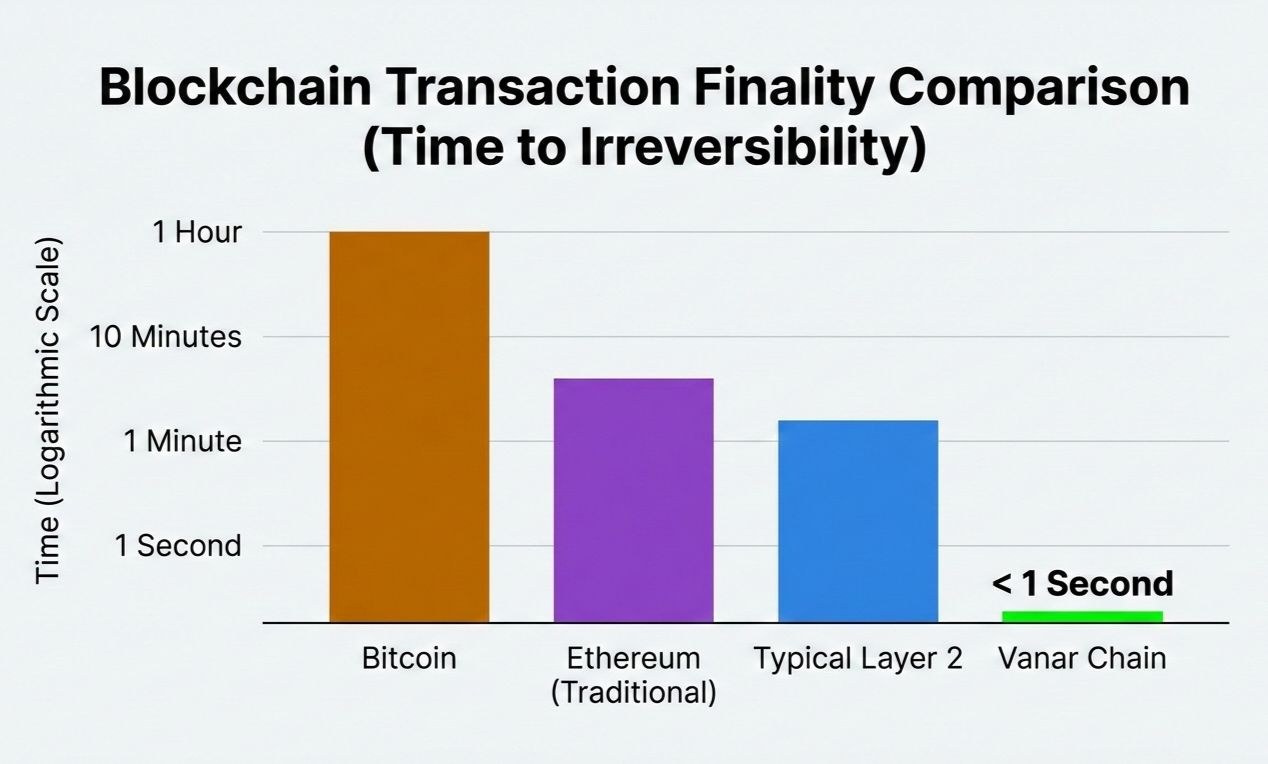
The idea of Web3 is that it is an internet that people own. But it has a problem. It can be really slow and hard to use. For a time people have had to wait a long time for things to happen on Web3. Sometimes they have to wait for minutes or even hours. This waiting is called latency. It is a problem because it stops a lot of people from using Web3. This is especially true for things like games and money where people need things to happen away. Web3 needs to be fast. Vanar Chain is trying to fix this problem. They have a way of doing things that they call "latency-first". This means they are focusing on making Web3 fast. They want to make it so that things happen in less, than a second. This fundamental shift is not just a technical upgrade; it's a redefinition of what it feels like to use a blockchain.
The Latency Bottleneck in Traditional Blockchains
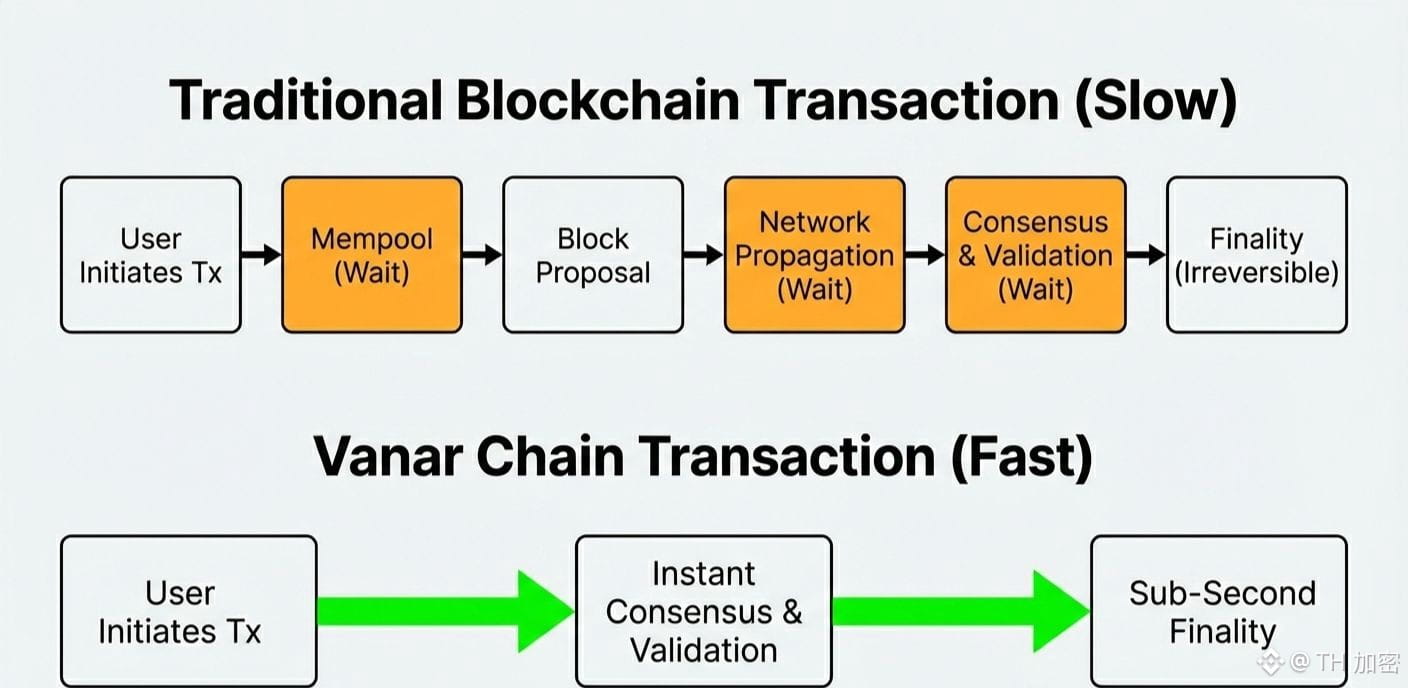
In blockchain terms, latency is the time between a user initiating a transaction and that transaction being irreversibly recorded on the chain a state known as "finality." On legacy networks, this process can be agonizingly slow due to network congestion and consensus mechanisms that prioritize other factors over speed. This delay breaks the flow of user interaction, making on-chain games feel unresponsive and financial trades vulnerable to price slippage.
As illustrated in the chart below, the difference in finality times across different blockchain generations is stark. While Bitcoin and older Ethereum models operate on the scale of minutes to hours for probabilistic finality, Vanar Chain is engineered to complete this process in under a second.