UpIn a digital landscape where data is both the most valuable asset and the most vulnerable, the challenge of secure, scalable, and cost-effective storage has become a defining factor for blockchain adoption. Traditional cloud storage providers dominate this space, but centralized control over data brings risks of censorship, opaque policies, and single points of failure. Early decentralized storage systems have also struggled to balance reliability with cost and performance. In this context, Walrus and its native WAL token emerge not as another speculative crypto project but as a purposeful attempt to build a programmable, decentralized storage layer designed to meet the demands of Web3, artificial intelligence, decentralized applications, and enterprises.
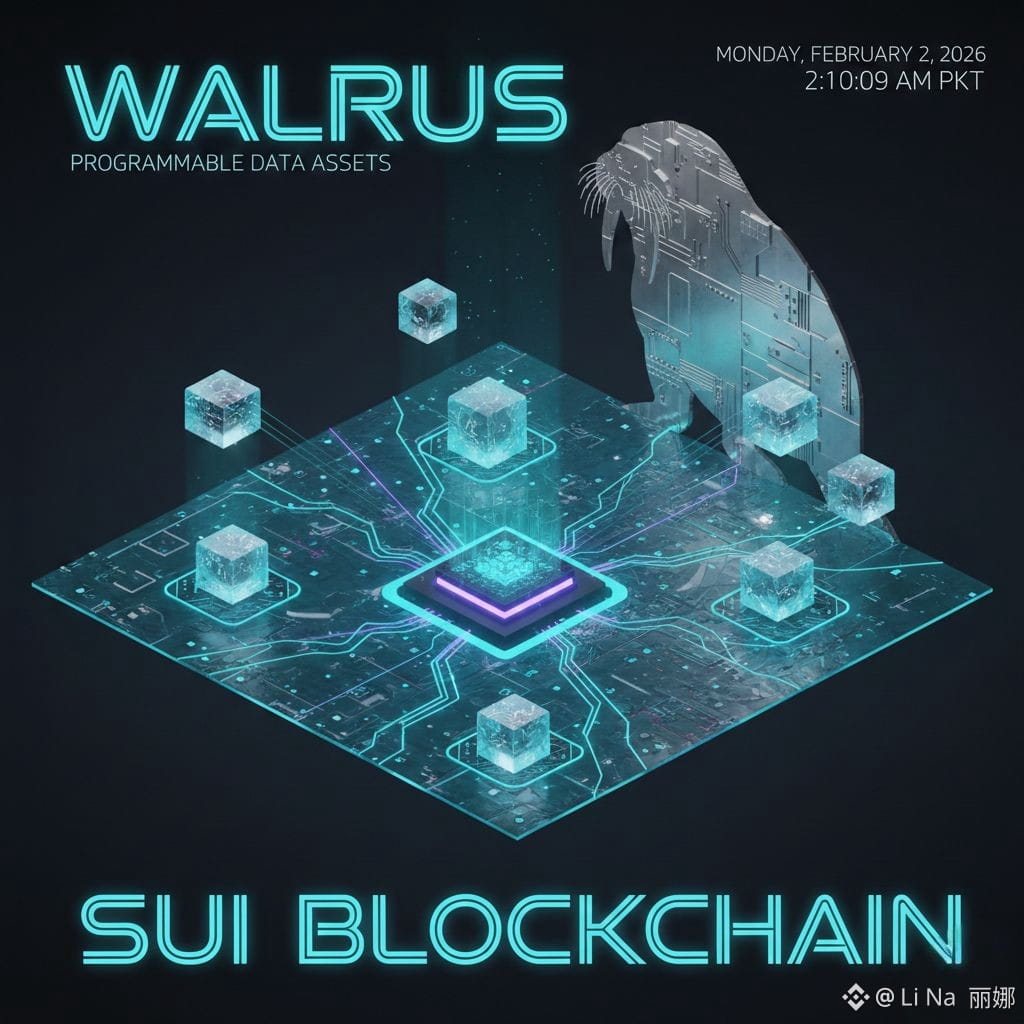
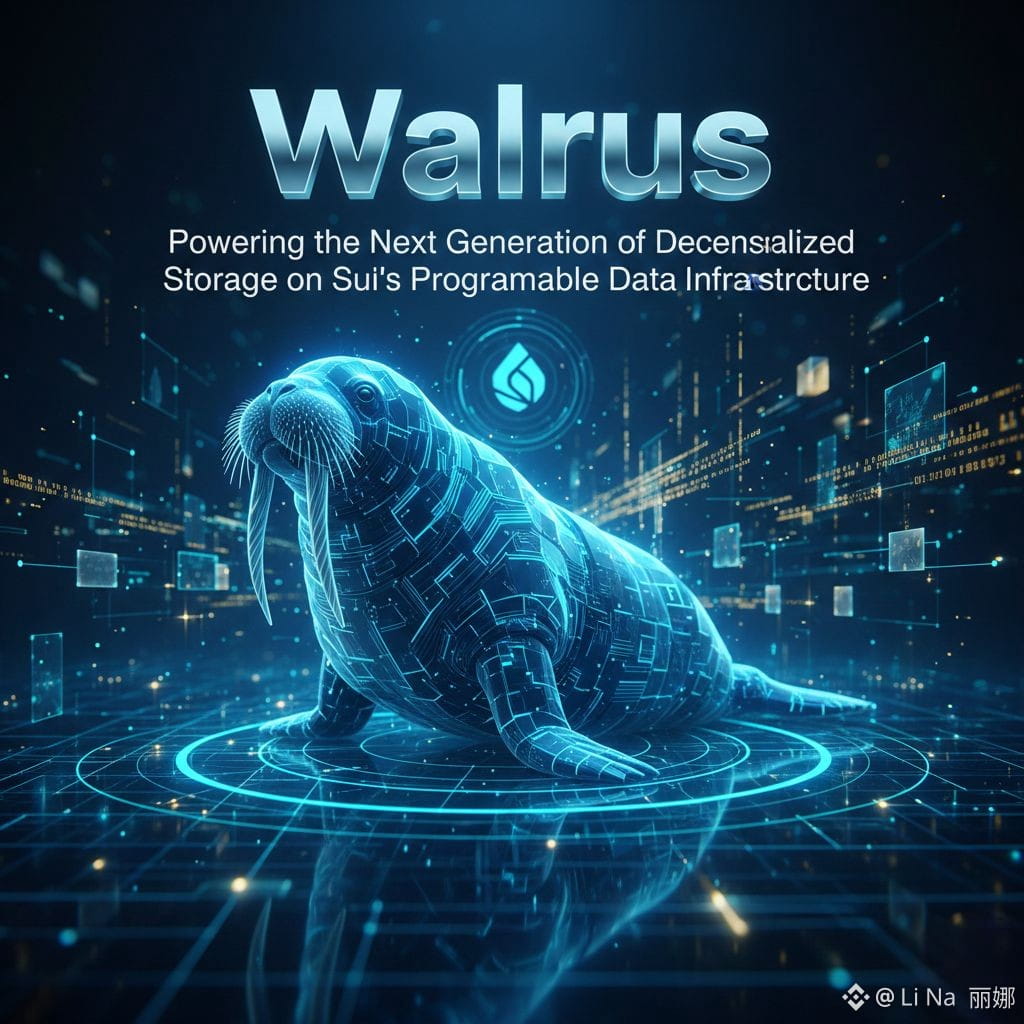
Walrus is a decentralized storage network built on the Sui blockchain. It is engineered specifically for storing large, unstructured data such as high-resolution media, datasets, or application binaries. The protocol uses a custom erasure coding algorithm to slice data into encoded fragments and distribute them across a network of storage nodes. This allows the original data to be reconstructed even if some fragments are unavailable. This approach reduces storage overhead compared to full replication while maintaining resilience and reliability. Metadata and coordination for storage, retrieval, and ownership are handled through smart contracts on Sui, which also manage payments and state tracking.
The WAL token is at the center of the Walrus ecosystem. It functions as the currency for storage services, allowing users to pay fees in WAL to upload and maintain their data. WAL also plays a key role in securing the network through a delegated proof-of-stake model. Token holders can stake or delegate their tokens to storage operators who provide the resources to host data. Operators earn rewards based on storage fees and network incentives, creating an economic system that aligns performance with compensation. WAL holders can also participate in governance, influencing fee structures, slashing conditions for underperforming nodes, and future protocol developments.
Walrus stands out for its programmable storage model. Data on the network is treated as a native on-chain asset with associated logic and rules. Developers can build applications that interact with stored data objects, updating or transferring them according to on-chain conditions. This capability supports use cases such as decentralized websites, interactive NFT galleries, and smart contract-driven archives. It is also suitable for AI development, where large datasets and model checkpoints require verifiability and durability while integrating with decentralized workflows.
The mainnet launch of Walrus in March 2025 marked a significant step in realizing this vision. It transitioned the protocol from testnet experimentation to a live, production-ready network, enabling programmable storage for developers and users. Before the launch, the project secured substantial institutional backing through a private token sale, demonstrating confidence in the technology and its market potential.
Economic incentives are further strengthened through Proofs of Availability, where on-chain certificates confirm that storage nodes are reliably serving data. Combined with staking rewards and future penalties for underperformance, this system ensures that data availability is both verifiable and incentivized. This alignment of token economics with storage performance supports the network’s long-term sustainability and encourages responsible participation.
Compared to legacy decentralized storage platforms such as IPFS or Arweave, Walrus focuses on programmability, smart contract integration, and cost efficiency for large data volumes. Traditional systems are better suited for static archival storage with high redundancy and costs that are impractical for frequent or interactive access. Walrus’s integration with Sui allows data to be dynamically used and economically engaged, creating opportunities for new types of decentralized applications.
Real-world applications for Walrus include hosting heavy media and asset files with on-chain verifiability, archiving critical blockchain data, providing enterprise-grade decentralized storage solutions, and storing AI datasets and model parameters in a verifiable manner. Each of these uses benefits from the protocol’s resilience, scalability, and programmatic control over data.
While the decentralized storage landscape is competitive, Walrus’s deep integration with Sui and its focus on programmable data assets make it a unique solution in the Web3 ecosystem. Its architecture addresses both technical storage challenges and economic incentives needed for long-term network participation. As demand grows for decentralized, verifiable, and cost-effective storage driven by AI, media, and blockchain applications, Walrus could become a foundational platform for the next generation of decentralized applications.