Walrus (WAL) is the native token of the Walrus protocol, a project built with a clear focus on long-term utility rather than short-term trends. In a space often driven by hype cycles, Walrus stands out by addressing practical problems that matter as blockchain adoption grows. Its core mission is simple but ambitious: give users better control over their data and financial interactions through privacy-first design and decentralized infrastructure.
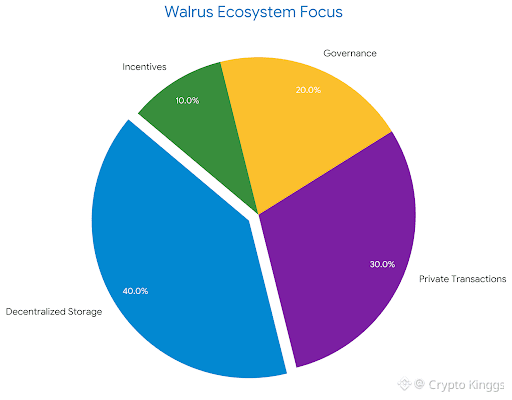
At the protocol level, Walrus supports secure and private blockchain-based interactions. WAL is used across the ecosystem for staking, governance, and access to decentralized applications. These applications are designed to function without forcing users to expose more information than necessary. As more activity moves on-chain, concerns around transparency, tracking, and data misuse continue to rise. Walrus treats privacy as a default setting, not an optional feature, which gives it strong relevance in the current Web3 landscape.
A defining feature of the Walrus protocol is its decentralized storage system. Traditional cloud storage depends on centralized providers that control access, pricing, and availability. This model creates risks such as censorship, single points of failure, and unpredictable costs. Walrus offers an alternative by distributing data across a decentralized network. It uses erasure coding to break large files into smaller fragments, adds redundancy, and stores them across multiple nodes. Even if some nodes fail, the original data can still be recovered. Blob storage allows the protocol to handle large volumes of data efficiently, making it suitable for real-world applications rather than small experimental use cases.
The protocol runs on the Sui blockchain, which provides the speed and scalability required for both financial transactions and data-heavy workloads. Sui’s architecture enables fast execution and low latency, which helps Walrus maintain a smooth user experience even as usage grows. For developers, this means they can build decentralized applications that rely on large datasets, media storage, or frequent interactions without compromising performance. For users, it translates into lower costs and faster confirmations.
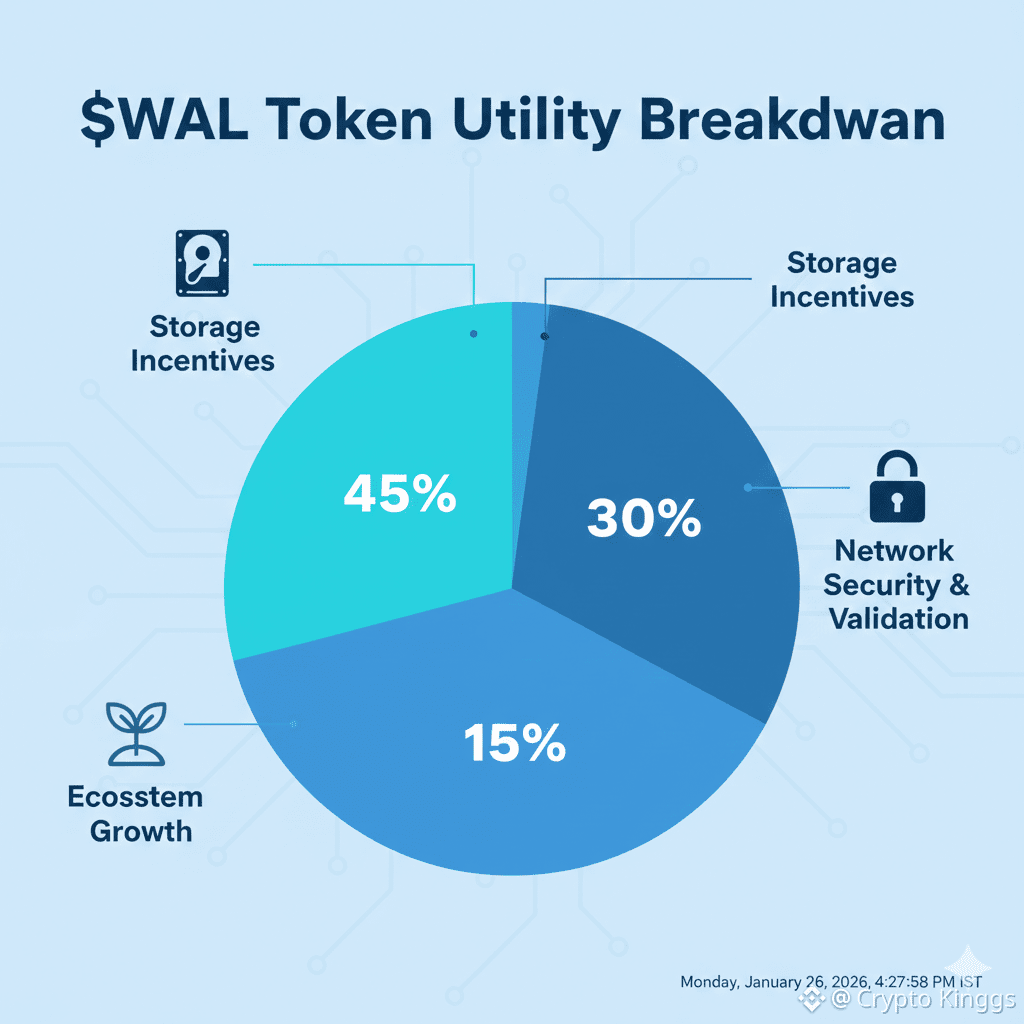
WAL plays a central role in aligning incentives throughout the ecosystem. Staking allows token holders to help secure the network while earning rewards, encouraging long-term participation instead of short-term speculation. Governance is another key use case. WAL holders can vote on protocol upgrades, economic parameters, and development priorities. This community-driven approach ensures that Walrus evolves in line with the interests of its users rather than a centralized decision-maker. WAL is also used within applications built on the protocol, tying token demand directly to real activity.
From an adoption perspective, Walrus is positioned to serve a broad audience. Individual users can benefit from private transactions and secure data storage. Developers gain access to a decentralized storage layer that integrates smoothly with blockchain logic. Enterprises exploring Web3 infrastructure may find Walrus appealing as a censorship-resistant and cost-efficient alternative to traditional cloud services. This versatility gives the project a strong foundation for sustainable growth.
Walrus does not promise instant transformation. Instead, it focuses on building reliable infrastructure that can support the next phase of Web3 adoption. Its emphasis on privacy, decentralized storage, and scalable performance reflects a mature approach to blockchain development. For users and builders who value control, ownership, and long-term usefulness, Walrus and the WAL token represent a project designed to grow steadily alongside the broader decentralized ecosystem.@Walrus 🦭/acc #walrus $WAL