
Ethereum was not created by accident, nor was it created to compete with Bitcoin. Ethereum was born because the early crypto world had a problem that no one was seriously solving. Bitcoin proved that money can exist without banks, but it also showed very clearly that blockchain technology, in its first form, was limited. Bitcoin was secure, powerful, and revolutionary, but it was rigid. It was never designed to support complex logic, applications, or automated systems beyond simple value transfer. As the crypto ecosystem started growing, developers realized that every new idea required a new blockchain, new rules, and new limitations. Innovation was slow, fragmented, and inefficient. This is where the idea of Ethereum began.

In 2013, a young programmer named Vitalik Buterin, who was deeply involved in Bitcoin development and writing for Bitcoin Magazine, noticed something others ignored. He saw that blockchain could be much more than digital money. He asked a question that changed the entire industry: what if blockchain could be programmable? What if developers could build applications directly on-chain instead of modifying Bitcoin every time? What if trust could be replaced by code? This single question became the foundation of Ethereum.

Vitalik proposed Ethereum as a general-purpose blockchain, not limited to one use case. His vision was simple yet revolutionary: a decentralized world computer where anyone could deploy code that runs exactly as written, without censorship, downtime, or third-party control. This concept introduced smart contracts, self-executing agreements that automatically enforce rules without lawyers, banks, or intermediaries. Once deployed, these contracts cannot be changed, manipulated, or stopped. This was something the traditional financial and internet systems could never offer.

Ethereum was officially introduced through its whitepaper in late 2013. Soon after, a group of talented individuals joined the vision, including Gavin Wood, Joseph Lubin, Anthony Di Iorio, Charles Hoskinson, and others. Each co-founder played a critical role, whether in technical architecture, funding, governance, or ecosystem growth. In 2014, Ethereum conducted one of the earliest public crowd sales in crypto history, allowing people from around the world to support the project and become part of its future. By July 2015, Ethereum officially launched, marking a new era for blockchain technology.
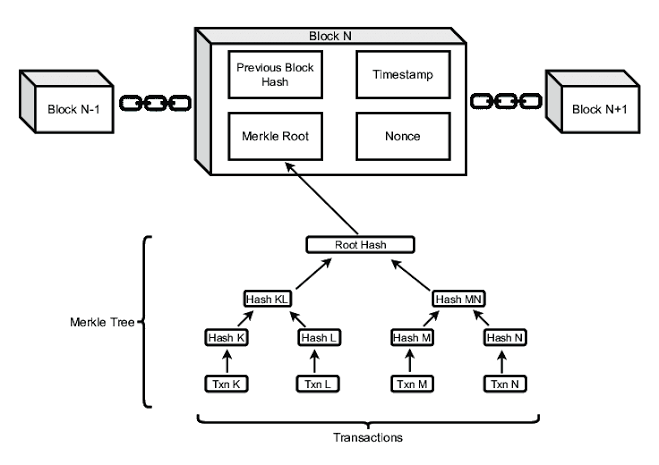
The real reason Ethereum was created was not speculation or fast profits. It was created to remove intermediaries from digital agreements and systems. Traditional platforms rely on centralized authorities that control data, money, access, and rules. Ethereum replaced trust with transparency and automation. Smart contracts made it possible for financial systems, marketplaces, games, organizations, and identities to exist without centralized ownership. This transformed blockchain from a static ledger into a living platform.

Ethereum introduced decentralized applications, known as dApps, which run on blockchain instead of centralized servers. These applications cannot be shut down by governments, companies, or individuals. Ethereum also introduced programmable money, allowing finance to respond to logic instead of emotions. From this innovation emerged entirely new industries. Decentralized Finance allowed users to lend, borrow, trade, and earn without banks. NFTs introduced true digital ownership, changing art, gaming, and media. DAOs enabled decentralized governance, allowing communities to make decisions collectively through code rather than centralized leadership.

Ethereum’s journey was not smooth. As adoption increased, the network faced congestion, high gas fees, scalability challenges, and security issues. Critics questioned whether Ethereum could survive its own success. Instead of collapsing, Ethereum evolved. It transitioned from Proof of Work to Proof of Stake, reducing energy consumption and improving long-term sustainability. Layer-2 solutions were introduced to improve scalability and reduce costs. Ethereum was designed to adapt, not remain static, and this flexibility is one of its greatest strengths.
Today, Ethereum is no longer just a blockchain. It is the backbone of Web3. Thousands of projects, tokens, and platforms exist because Ethereum made them possible. It acts as a settlement layer for decentralized finance, a foundation for digital ownership, and a global platform for permissionless innovation. Without Ethereum, the modern crypto ecosystem would look completely different. There would be no mature DeFi markets, no global NFT economy, and no real decentralized governance models.

Ethereum matters because it shifted the narrative. It proved that blockchain is not only about money but about freedom, transparency, and programmable trust. It showed the world that code can replace institutions, and open systems can compete with centralized giants. Ethereum is not perfect, but it is necessary. It represents the moment when blockchain stopped being an experiment and became infrastructure.

This is why Ethereum was created. This is who built it. This is the reason it still stands strong today. And this is why its story will continue to shape the future of the digital world. $ETH