
The first thing that felt off wasn’t an error.
It was the quiet.
A USDT receipt appeared before anyone asked for it. One line, clean enough to trust, sitting there like paperwork that arrived early and assumed you were ready. No pending state to babysit. No soft edge to lean on. Just settled, sub-second finality landing as if the moment had already passed.
Someone stared at the screen a second longer than usual.
“Already?” “…or is that just the view?”
Nothing was wrong. That’s what made it uncomfortable.
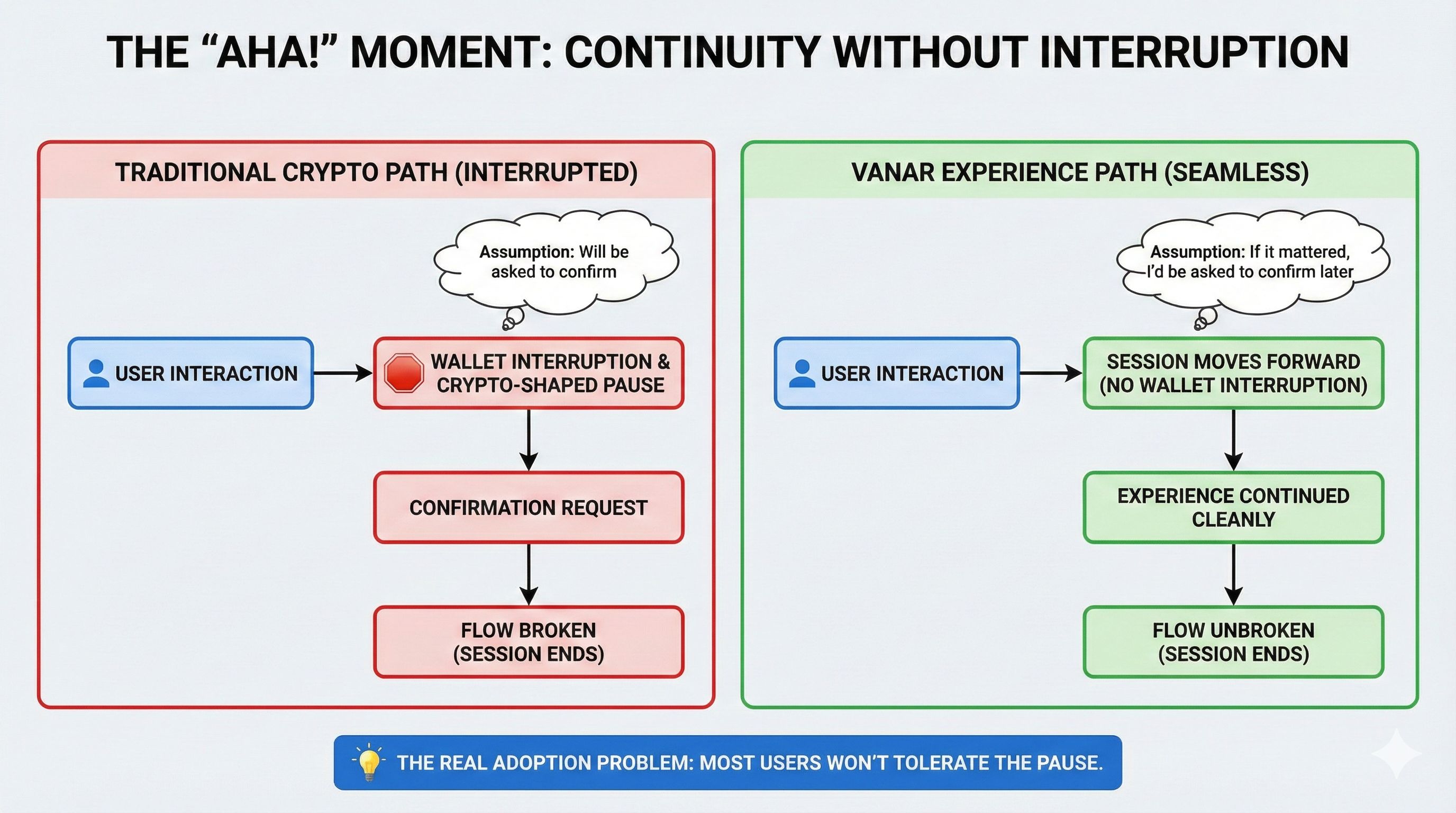
In most payment flows, speed buys you time. Finality stretches just enough for people to catch up, line things up, decide who owns the next move. This one didn’t. The decision had already happened. The system behaved as if the question was closed, the way deterministic finality does on Plasma.
Humans didn’t.
A dashboard refreshed. Once. Then again. Not because anything failed, but because the moment arrived before the habit did. Someone hovered over a checkbox and didn’t click it yet. Another tab opened. The receipt looked finished, but nobody wanted to be the first to say it out loud in a stablecoin-native settlement flow.
“That was fast,” someone said, not as praise.
What changed wasn’t velocity. It was where responsibility landed.
When settlement closes without a buffer, the work doesn’t disappear. It moves. Accounting drifts behind execution. Ops starts reacting instead of preparing. The questions don’t go away; they arrive late. You feel it in the posture of the room, people leaning in, not because something broke, but because the system already moved on under handoff-ready finality.
On Plasma Network, payments don’t ask whether the workflow is ready. The receipt is not a suggestion. It’s a fact that shows up on time and refuses to wait for context, the way stablecoin-first execution does on Plasma.
Another payment lands. Then another. The cadence doesn’t change to accommodate hesitation. Stablecoin settlement keeps closing with the same indifferent rhythm, finality without retries, settlement certainty behaving like it expects downstream systems to keep up—Plasma doesn’t slow to negotiate.
“We’ll reconcile it in a minute.”
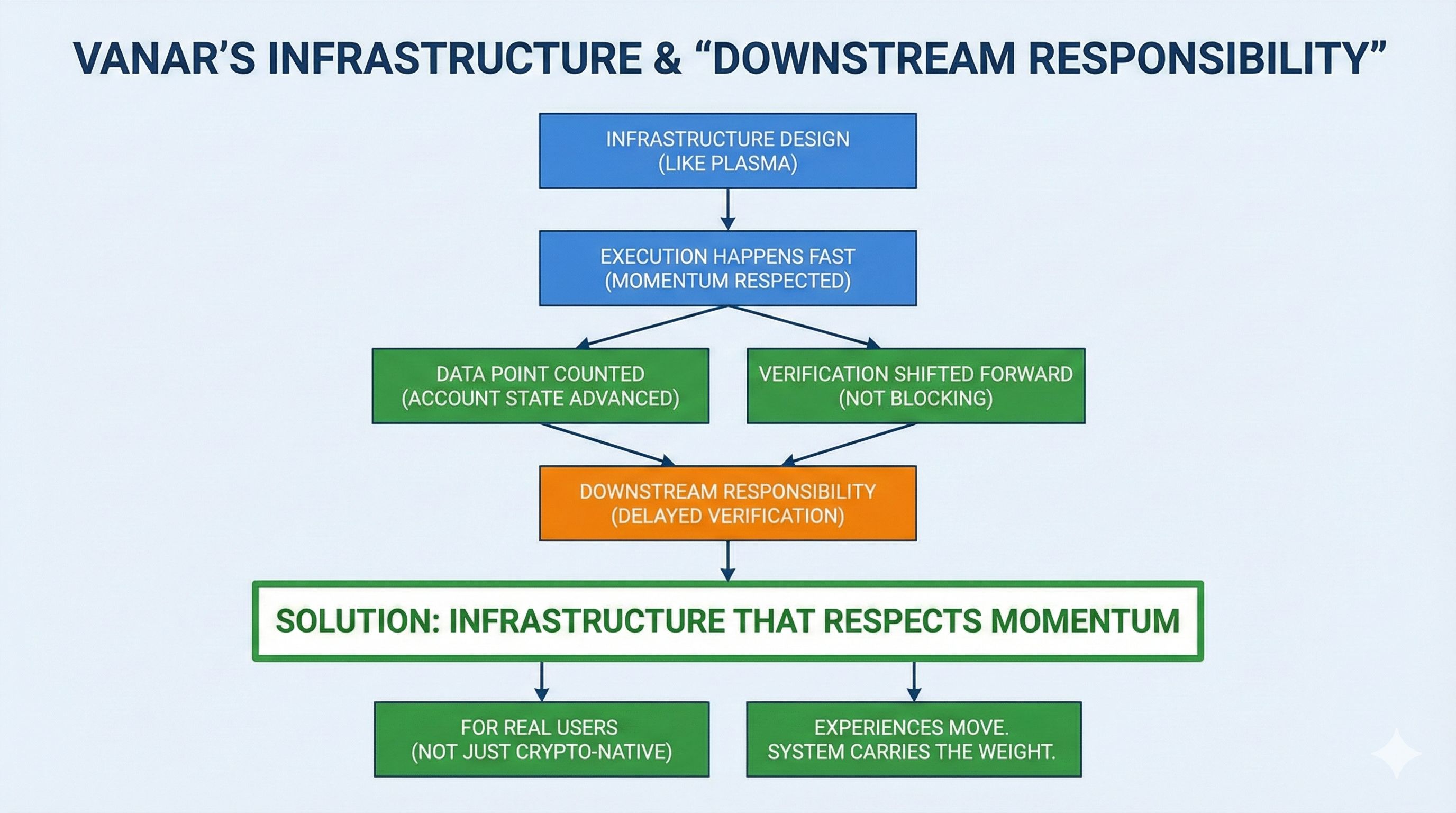
That sentence appears late in systems like this. Not because reconciliation is hard, but because the minute never forms cleanly. By the time someone reaches for it, the next receipt has already arrived, and the next after that. The stack grows quietly, not as backlog, but as decisions deferred past the moment they mattered most in payment-first Layer 1 traffic.
This is where the shape of the system becomes visible not through features, but through what isn’t there. No pause to “get ready.” No extra beat to line up tabs. Just the work continuing as if coordination already happened, and the chain refusing to slow down to be helpful, the way Plasma Network behaves under production payment traffic.
People adapt.
They stop asking, “Did it go through?” because that question answers itself too quickly. They start asking different ones.
“Which timestamp are we using?” “Who owns this now?” “Why does it feel like we’re always catching up?”
Retail or institution, the pressure rhymes. Different volumes, same sensation. The cost isn’t fees. It’s attention. It’s the moment you realize the system has already closed the loop you were about to inspect, Plasma having already moved responsibility forward.
Nothing failed. Nobody got paged. The room just kept watching.
Time just moved forward without permission, Bitcoin-anchored neutrality keeping the ledger indifferent to hesitation.
You can feel it when someone reaches for a second check that no longer exists. When a habit built around waiting finds nothing to wait on. When certainty arrives before consensus, and consensus has to chase it on Plasma Network.
The system doesn’t explain itself. It doesn’t warn you that this will feel different. It keeps settling. Stablecoin traffic keeps landing. Finality keeps closing on schedule, indifferent to whether the humans downstream are ready to name what just happened on Plasma.
Someone finally clicks the checkbox.
Another receipt appears.
The posture changes again, less hovering, more acceptance. Not comfort. Adjustment.
Because the system isn’t going to ask.
This will happen again.