
I observed that most blockchain software is written as if the chain were hostile by default. Developers don’t just send transactions—they bargain with the network. Timeouts, retries, fee escalation logic, fallback queues. According to my perspective, this behavior isn’t accidental; it’s an adaptation to volatility disguised as resilience.
What caught my attention with @Plasma is how stablecoin-first gas quietly removes this entire layer of defensive engineering. When execution cost becomes predictable in stable terms, software no longer treats the chain as a dynamic adversary. I noticed that transaction logic simplifies not because developers are careless, but because the environment stops demanding negotiation.
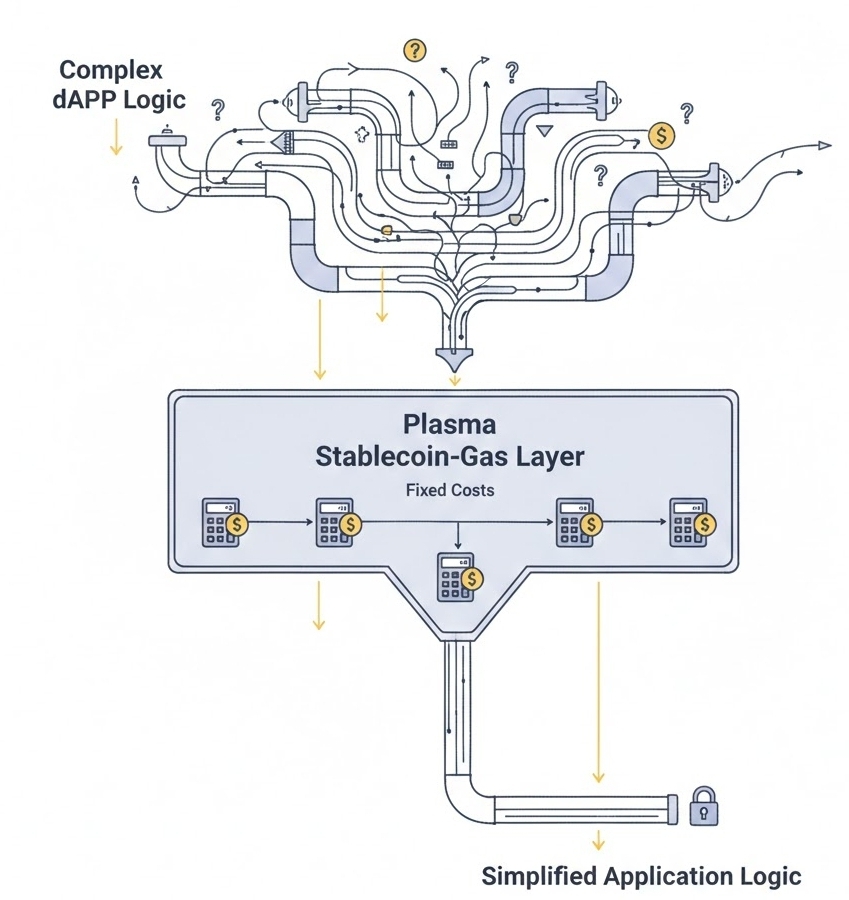
I thought about this like a railway system. Traditional chains force trains to constantly renegotiate track access based on congestion pricing. @Plasma , instead, fixes the rails and stabilizes the schedule. The result isn’t just smoother transport—it’s different routing logic altogether. Applications can assume continuity rather than prepare for disruption.
From what I’ve observed, Bitcoin-anchored security reinforces this behavior psychologically as much as technically. There’s an implicit trust boundary: execution is neutral, fees aren’t weaponized, and the operator’s discretion is minimized. That changes how systems are architected upstream, long before users ever touch a wallet.
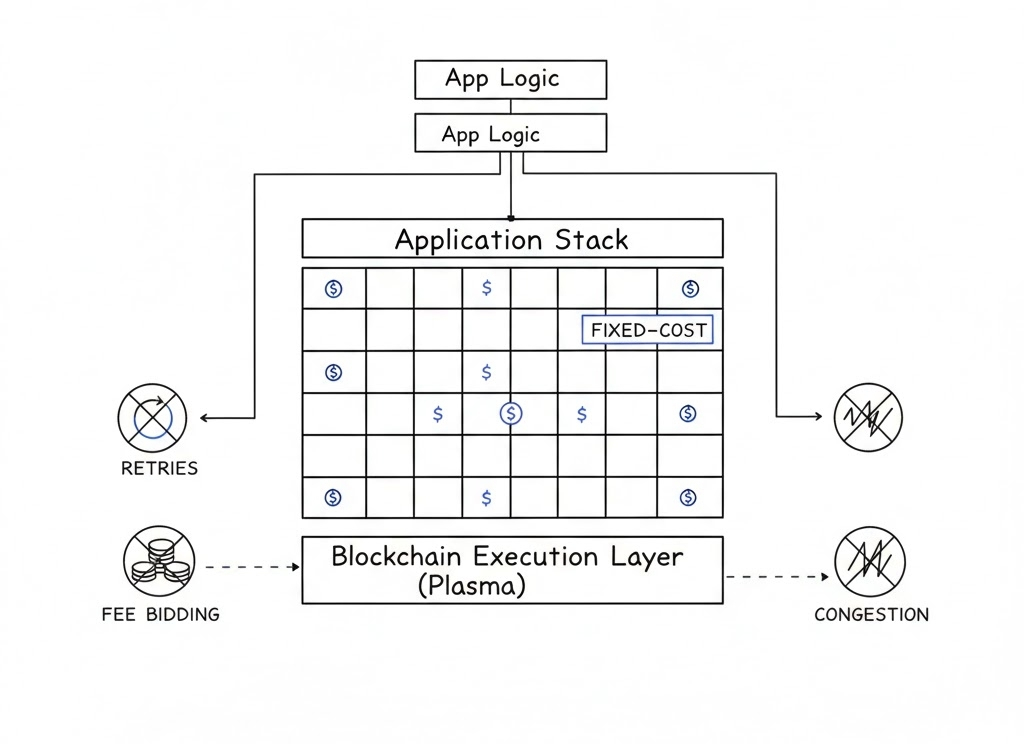
In the long run, according to my reasoning, @Plasma real impact may be that software stops encoding fear. When infrastructure becomes boringly reliable, creativity shifts from survival mechanics to actual product design. That’s not a performance upgrade—it’s a cognitive one.