
Crypto has always loved complexity. New chains arrive with long feature lists, layered roadmaps, and promises to reinvent everything at once. Yet after all these years, one of the simplest actions in finance still feels unnecessarily stressful on-chain. Sending stablecoins should feel boring. Instead, it often feels fragile.
Plasma starts from that frustration rather than from ambition. It does not try to be everything. It does not try to impress you with possibilities. It asks a quieter question: what would blockchain look like if moving digital dollars was treated as the core product instead of a side effect?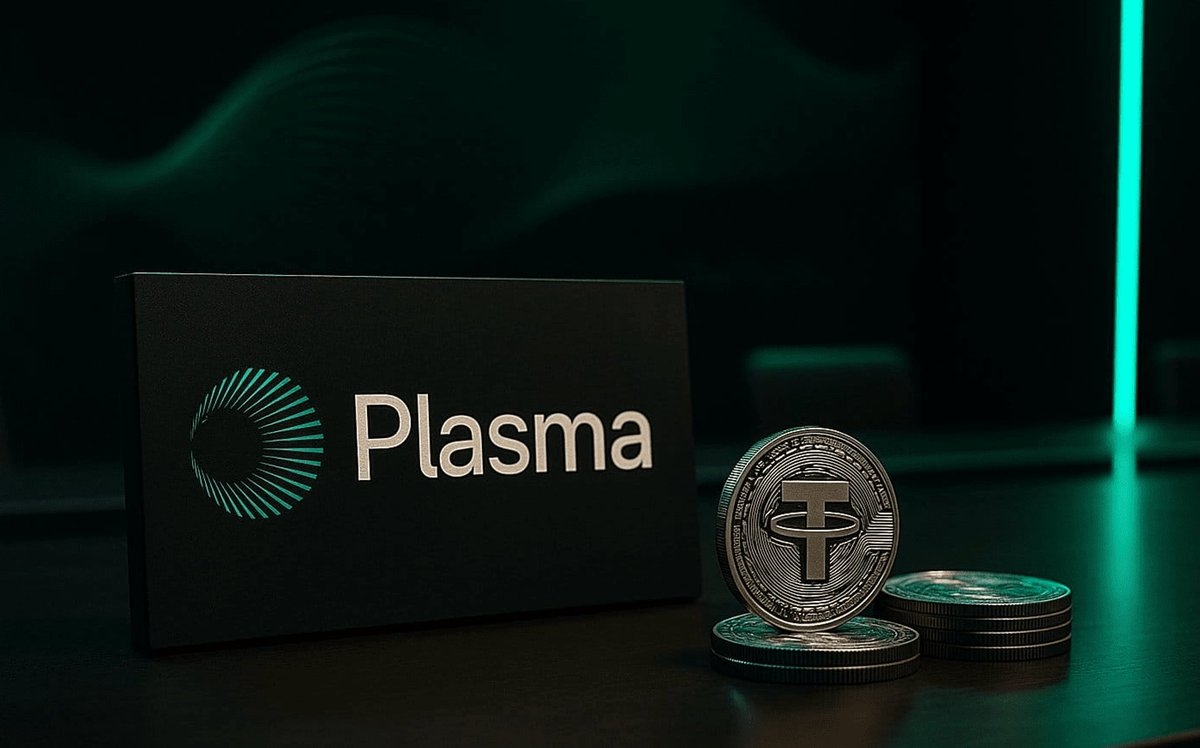
That question shapes every decision Plasma makes.
The Hidden Cost of “Just How Crypto Works” Most people in crypto have learned to tolerate friction. You want to send USDT, but first you need a native token. You check gas. You double-check the network. You wait. If the transaction stalls, you refresh and hope. None of this feels catastrophic, but none of it feels natural either.
For developers and traders, this becomes routine. For normal users, it becomes a reason to leave.
Plasma does not accept this as normal. Instead of asking users to adapt to infrastructure, it adapts infrastructure to how people already think about money. Stablecoins are the unit of account, so stablecoins are treated as first-class citizens. Gas abstraction and stablecoin-based execution remove the need for users to understand the mechanics underneath.
When friction disappears, behavior changes. People stop hesitating. They stop planning transfers around fees. They stop thinking about wallets as something dangerous. Money starts behaving like money again.
Designing for Settlement, Not Storytelling
Many Layer 1 networks are built as open-ended playgrounds. They aim to support every possible use case and trust that payments will work well enough along the way. Plasma flips that logic. It treats settlement as the foundation and allows other activity only insofar as it does not compromise reliability.
This focus creates discipline. Fewer moving parts. Fewer assumptions. Fewer reasons for the system to behave differently tomorrow than it does today.
In payment infrastructure, predictability matters more than novelty. A system that works the same way every day quietly earns trust. Over time, that trust compounds in ways marketing never can. Finality That Feels Invisible
Speed is often misunderstood in blockchain. It is not about headline numbers. It is about certainty. When a transaction confirms quickly and cannot be reversed, systems can automate around it. Accounting becomes simpler. Risk shrinks. Confidence grows.
Plasma’s deterministic finality is designed with this reality in mind. Transactions settle fast enough that users stop watching screens. That moment when you stop checking is the real benchmark of performance.
This is especially important for remittances and business payments, where delays are not just inconvenient but costly. Plasma treats finality as a requirement, not a feature.
Familiar Tools, Conservative Security
Plasma does not force developers to abandon what already works. EVM compatibility through a modern Rust-based execution layer allows existing tooling and contracts to migrate without friction. Builders do not need to relearn everything just to gain better settlement performance.
At the same time, Plasma avoids reckless experimentation at the security layer. By anchoring its design to conservative, well-understood assumptions, it prioritizes longevity over short-term optimization. Payments infrastructure does not get infinite retries. It has to work the first time.
This balance between familiarity and restraint is rare in crypto, where novelty often outruns caution.
XPL as Infrastructure Equity
The role of XPL is easy to misunderstand if you expect spectacle. It does not demand attention. It secures the network, aligns validators, and governs parameters that keep settlement reliable. In many cases, users may barely notice it.
That is not a weakness. It is a sign of maturity.
In traditional finance, most people never think about the rails that move money. They only notice when those rails fail. Plasma positions XPL as infrastructure equity rather than a promotional token. Its value accrues from usage, not excitement.
Why Quiet Systems Often Win
Crypto culture rewards noise. Projects that shout the loudest often attract the most attention. But attention is not the same as adoption. Many loud systems break under real-world pressure because they were never designed for repetition at scale.
Plasma moves in the opposite direction. It reduces promises so it can repeat performance. It limits scope so it can maintain consistency. It accepts slower recognition in exchange for long-term relevance.
If stablecoins continue to be the dominant product of crypto, then the chains that move them most efficiently will matter more than the chains that offer the most features. That shift favors infrastructure that fades into the background.
Plasma is not trying to convince you of anything. It is trying to remove reasons for doubt. If it succeeds, users will not argue about it. They will simply rely on it.
And in a space built on ambition, that quiet reliability may end up being the most radical idea of all.