
Understanding Compliance in Real-World Asset Tokenization
Real-world assets (RWAs) include things like real estate, commodities, invoices, or financial instruments that exist outside the blockchain but are represented digitally on-chain. When these assets are tokenized, they fall under existing legal and regulatory frameworks. This means platforms handling RWAs must meet requirements related to identity verification, ownership rights, disclosures, and transaction monitoring.
Compliance by design means building these regulatory considerations directly into the blockchain infrastructure and applications from the start, rather than adding them later. This approach reduces legal risk and helps platforms operate more smoothly across different jurisdictions. For RWA platforms, compliance is not optional. Regulators expect clear audit trails, controlled access, and mechanisms to enforce rules such as who can hold or trade certain assets. Without these features, tokenized RWAs may not be legally recognized or usable at scale.
How Vanar Supports Regulatory-Friendly RWA Platforms
Vanar is designed to support compliance-focused use cases by offering a flexible and controlled blockchain environment. Its architecture allows developers to implement permissioned features where required, such as restricting access to certain smart contracts or limiting participation to verified users. This is important for RWAs that must only be available to approved investors or institutions.
Vanar’s smart contract framework also supports transparent record-keeping. Every transaction involving an RWA token can be recorded on-chain, creating an immutable history that regulators, auditors, or partners can review if needed. This level of transparency helps meet reporting and compliance obligations without relying on fragmented off-chain records.
In addition, Vanar can integrate with external compliance tools, such as identity verification providers or asset registries. This allows RWA platforms to link on-chain tokens with real-world legal documentation, ownership records, or compliance checks. By enabling these integrations, Vanar helps bridge the gap between blockchain systems and traditional regulatory processes.
Benefits of a Compliance-First Approach on Vanar
Building RWA platforms with compliance in mind offers practical advantages. First, it increases trust among institutions, asset issuers, and users. When compliance rules are clearly enforced at the protocol or application level, participants have more confidence that assets are handled responsibly and within legal boundaries.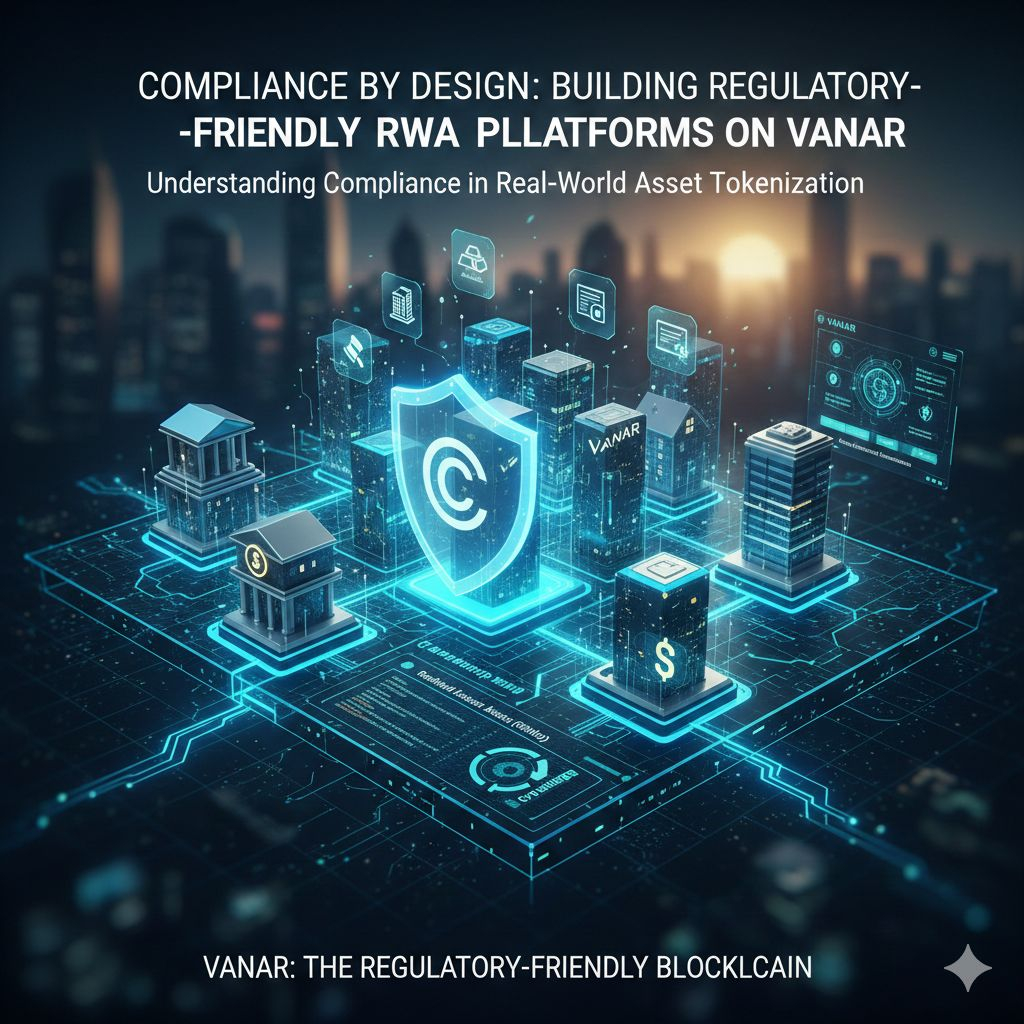
Second, compliance by design reduces operational risk. Platforms built on Vanar can automate certain regulatory requirements, such as transfer restrictions or reporting triggers, through smart contracts. This lowers the chance of human error and simplifies ongoing compliance management as regulations evolve.
Finally, a regulatory-friendly foundation makes it easier to scale. As RWA platforms expand into new markets or jurisdictions, having compliance mechanisms already embedded in the system allows for faster adaptation. Rather than redesigning infrastructure, teams can adjust rules and permissions within the existing framework.
By supporting controlled access, transparency, and integration with real-world compliance processes, Vanar provides a practical environment for building RWA platforms that align with regulatory expectations. This compliance-first approach helps ensure that tokenized real-world assets can operate sustainably within the broader financial and legal ecosystem.
