
Vanar Chain starts as a feeling before it becomes a design. A lot of people want the benefits of Web3 but they do not want the stress that often comes with it. They want to click and see something happen. They want the cost to feel fair. They want the system to feel stable enough that they can relax. I’m looking at Vanar as a Layer 1 that is trying to meet that human need. They’re aiming for real world adoption with a focus on consumer scale use cases like gaming entertainment brand experiences and connected digital worlds. The story is not only about technology. It is also about trust and what it takes to earn it when the audience is not a small group of crypto natives but everyday people who simply want a smooth experience.
The idea stage usually begins with a painful observation. Web3 often asks users to accept surprises. Fees can rise at the worst moment. Confirmations can feel slow when attention spikes. Wallet onboarding can feel like a ritual where one wrong step can cost you. If It becomes normal for a user to feel anxious before they act then adoption slows down. Vanar takes that friction seriously and builds around the belief that consumer adoption will not arrive through education alone. It will arrive when the product feels natural. This is why the project frames itself around the next billions of users. It is a big claim but it points to a clear direction. Reduce friction until the chain becomes invisible and the experience becomes the focus.
That direction leads to a major choice. Vanar chooses to be a Layer 1. This is not a cosmetic decision. It is a decision to own the base rules and to carry the responsibility of performance and security. When a project builds on another base layer it inherits congestion and fee pressure. That can be acceptable for some kinds of apps. But Vanar is targeting scenarios where many small actions must happen at scale without users thinking about gas or waiting. Gaming and consumer apps are unforgiving. If a button feels delayed the user assumes the product is broken. If a fee feels unpredictable the user hesitates. If a process feels complicated the user leaves. A Layer 1 gives Vanar room to shape the system around that reality.
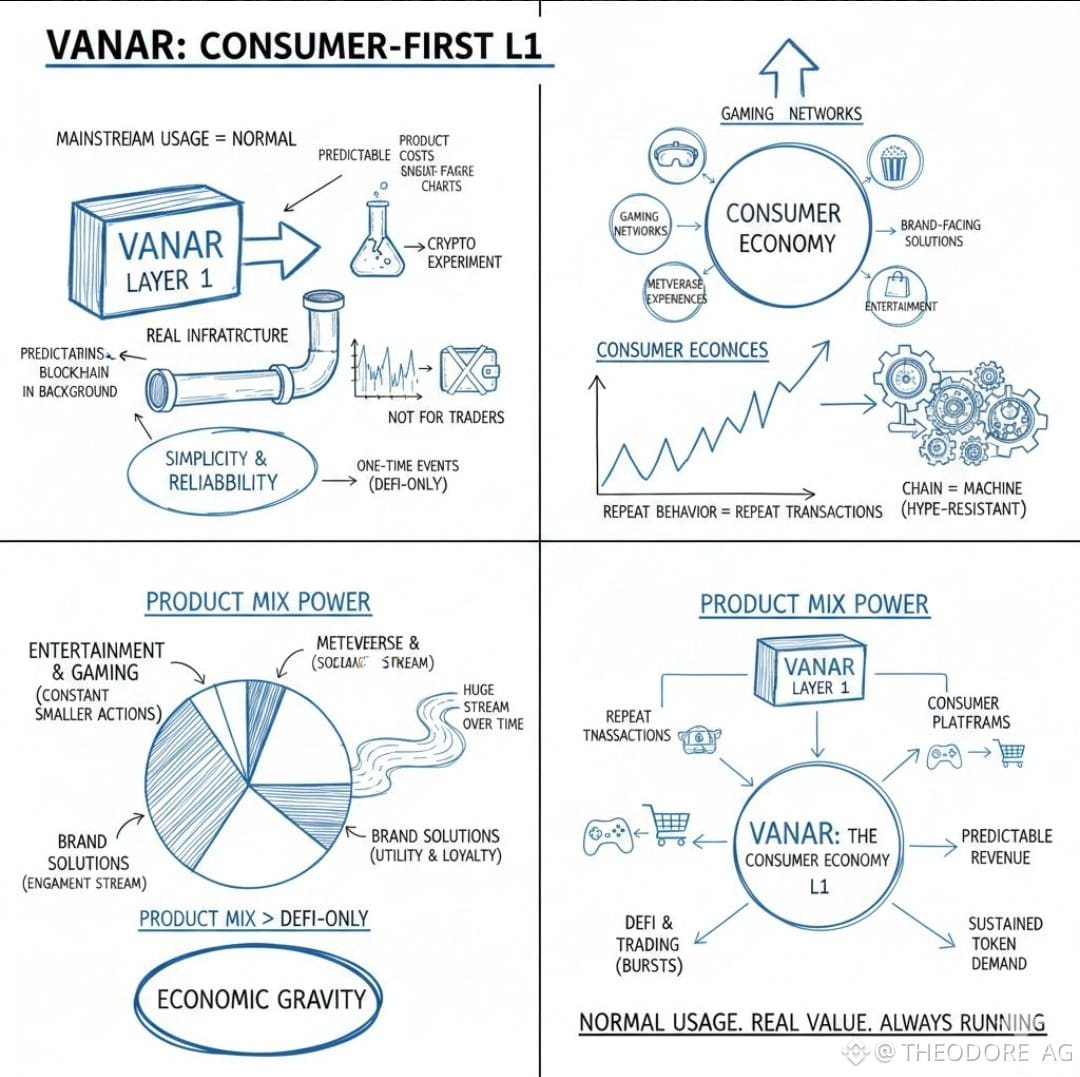
From there the next question is how builders will actually build. Vanar leans into EVM compatibility because it lowers the barrier for developers. That matters because ecosystems grow through shipping. Builders want familiar tooling and patterns. They want documentation that is direct. They want to deploy and test without re learning everything. EVM compatibility is less about ideology and more about speed. It says we want developers to arrive and begin building quickly. If It becomes easier to launch a product here than elsewhere then that creates gravity. Over time gravity becomes an ecosystem.
Now step into how the system is meant to function in practice. At the user level the chain should feel fast and consistent. A user initiates an action and the network confirms it quickly enough that it feels like a normal app response. At the app level the chain must handle a high volume of interactions without turning busy moments into chaos. At the infrastructure level nodes must stay reliable and RPC services must stay stable because user experience depends on those invisible rails. If the rails shake the whole product shakes. This is why performance targets like block time and throughput are not abstract numbers. They are part of the emotional experience. Fast confirmations reduce doubt. Stable behavior reduces fear.
The most distinctive design choice Vanar emphasizes is fixed fees. A lot of networks treat fees as a live auction. When demand rises the highest bidders move first and everyone else waits. That can be efficient in a narrow economic sense but it is harsh for consumer adoption. A user should not need to make a pricing decision just to do something simple. A studio should not need to fear that a marketing moment will become too expensive to run. A brand should not need to explain to customers why a small action suddenly costs much more. Fixed fees aim to change that dynamic by keeping the typical cost predictable in fiat terms. The purpose is to make budgeting possible and to make everyday usage feel calm.
But fixed fees create their own responsibilities. A stable fee experience needs a method for translating value over time. That method depends on a pricing reference and update logic. The update cadence must be consistent. The inputs must be resilient. The process must be transparent enough that users and builders do not feel trapped inside a black box. If It becomes unclear how fee values are adjusted then trust erodes. If it becomes too dependent on a narrow group then the system feels fragile. So the fixed fee choice is both a comfort feature and a governance challenge. It is a promise that must be protected by clear rules and visible accountability.
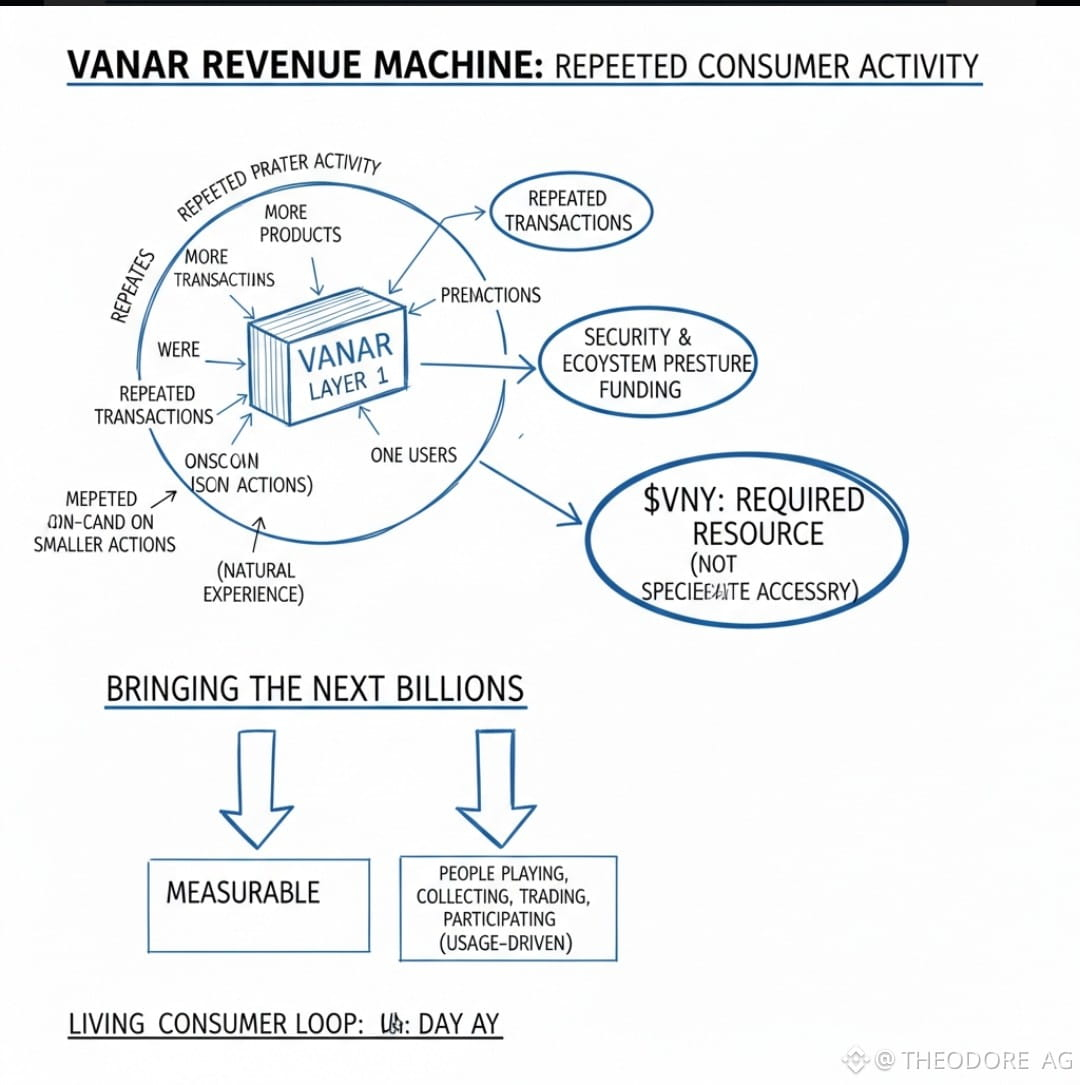
VANRY sits at the center of this machine. It powers fees and it supports the incentive structure that keeps the network running. In any Layer 1 the token is not just an asset. It is a functional component of network life. It connects usage with security and with participation. If VANRY only matters as a price chart then the network becomes hollow. If VANRY matters because people are genuinely using it to pay for actions and to support network participation then it becomes part of a living economy. This is where real adoption changes the tone of the project. When usage is real the token becomes less like a narrative and more like fuel.
Consensus and decentralization are where ideals meet reality. Early networks often start with tighter control so the chain can be stable during the fragile launch phase. That can reduce operational risk. But long term credibility requires broader participation. It requires a validator set that is not dominated by one entity. It requires governance that feels consistent and fair. They’re building toward a path where decentralization increases over time. The honest truth is that this is a journey with tension. Move too slowly and the community doubts the promise. Move too quickly and reliability can suffer. The way Vanar handles this path will shape how builders judge it. If It becomes easier to trust the base layer because participation is broad and transparent then the ecosystem strengthens.
Vanar also speaks about a wider product approach across multiple mainstream verticals. Gaming and entertainment are the most obvious match because they create high frequency actions and large user bases. Metaverse and digital identity experiences also fit because they rely on ownership and portability. Brand solutions fit because brands want measurable campaigns and smooth user journeys. AI oriented layers are a newer direction in many ecosystems. The hard part is keeping it grounded. If a chain adds advanced layers that increase complexity then it must also increase clarity and safety. Any intelligent layer that touches user data must be careful with privacy boundaries. Any automation layer must be auditable. Any on chain reasoning approach must be verifiable. If It becomes too complex for builders to trust then the adoption story slows. If it becomes simple and transparent enough to be reliable then it can unlock new kinds of applications that were difficult before.
A long project explanation needs progress metrics that keep the team honest. The first metric is reliability. Network uptime matters. Node stability matters. RPC uptime matters. If users cannot connect then nothing else matters. The second metric is user experience under load. Confirmation time in real conditions matters. Transaction success rate matters. The third metric is fee predictability because fixed fees are central to the promise. The measurement is not just average cost. It is cost stability during busy periods and during volatile market moves. The fourth metric is real adoption. Daily active addresses matter but retention matters more. Returning users matter. Real applications that keep users engaged matter. We’re seeing across Web3 that short bursts can be manufactured but long term habit cannot. The fifth metric is ecosystem health. How many independent teams ship. How many contracts deploy. How diverse the validator set becomes over time. How much of the activity comes from real products rather than circular incentive behavior.
Risks must be treated with respect because the future always has sharp edges. Centralization risk is real in the early phases of many networks. It can create doubts about censorship resistance and resilience. Fee reference risk is real in any fixed fee model because pricing inputs can be attacked or questioned. Complexity risk grows as layers and products expand because every new component adds surface area for bugs and exploits. Market risk is human. Gaming and entertainment are demanding and trend sensitive. People will not stay because a chain is fast. They stay because the product is fun or meaningful or useful. Regulatory and compliance risk also exists when a chain targets real world brands and consumer scale programs. If It becomes unclear how data is handled or how user protections work then mainstream partners hesitate. So progress requires not only shipping features but also building safety and transparency into the culture of the project.
Now imagine a future roadmap that follows from these choices. The near term is about boring excellence. Keep the network stable. Keep confirmations consistent. Keep developer onboarding smooth. Keep fixed fees behaving the way they promise to behave. This is the phase where the chain proves it can carry everyday traffic without drama. The next phase is credibility through openness. Expand validator participation. Strengthen governance transparency. Make decentralization visible through measurable changes. Encourage independent builders with tools and documentation that reduce time to ship. The later phase is scale and depth. Support more consumer verticals with specialized tooling. Strengthen identity and ownership flows. Improve account abstraction style onboarding so people can enter without fear. Build stronger bridges and security practices only when they can be defended. Expand the AI and automation stack only when it is auditable and safe. If It becomes clear that each new layer is built with restraint and verification then confidence grows.
Through all of this the human goal stays the same. Reduce the fear. Reduce the friction. Increase the sense that the system is fair and predictable. I’m not saying any chain can guarantee the future. But I can say the design philosophy here is readable. It is trying to make Web3 feel less like a test and more like a home. They’re trying to build a place where the next person does not need to be brave to participate. We’re seeing the industry slowly learn that mainstream adoption is not won by shouting. It is won by making the experience calm enough that people stop thinking about the infrastructure at all.
And that is the quiet hope at the heart of Vanar Chain. If the team keeps turning big promises into small reliable moments then trust becomes routine. When trust becomes routine people build. When people build communities form. When communities form the chain stops being a concept and starts being a living place. If It becomes that kind of place then the most important outcome is not a headline. It is the moment a new user enters and feels nothing alarming at all. Just a smooth step forward. Just a simple sense that they belong.