I have been digging deep into Fogo and the more I study it the more I see how different its focus really is. This is not another general purpose chain trying to do everything. It is an SVM Layer 1 built specifically to make decentralized trading feel as smooth as a centralized exchange. From the beginning the goal has been simple in theory but difficult in practice: remove latency friction and bot advantage while keeping everything on chain.
The Origin Story Rooted In Trading Pain
Fogo was born from real frustration inside crypto markets. I have seen how traders constantly deal with slow confirmations unpredictable fees and aggressive MEV bots, especially during peak volatility. Even strong chains struggle when activity spikes. The team behind Fogo looked at this problem from a high frequency trading perspective. They asked why on chain markets could not match the efficiency of traditional finance hubs that rotate liquidity across global regions twenty four hours a day.
 The vision formed around building on the Solana Virtual Machine while stripping away the bottlenecks that limit performance. Instead of accepting global latency as a permanent cost, they designed a system that optimizes for sub second execution and deep order book performance. What excites me most is that they are not chasing marketing numbers. They are engineering specifically for serious trading flow.
A Team Built From Market Veterans
When I look at the people involved I see traders and engineers who understand how milliseconds translate into money. The leadership includes professionals with backgrounds in high frequency trading firms, major banks, and crypto infrastructure groups. Their experience ranges from market structure research to oracle development and performance client engineering.
I feel that this background changes everything. Rather than building theory driven products, they are solving problems they personally faced. The culture reflects that mindset. It is focused on execution speed, fair matching, and reducing extractive behavior. Instead of loud promises, the emphasis is on tools that function under stress.
Strategic Funding And Structured Growth
The project secured early backing through a seed round followed by a community focused token agreement round that valued the network at one hundred million dollars. What stands out to me is how the funding was directed. The capital supported performance optimization, validator preparation, and ecosystem incentives rather than flashy campaigns.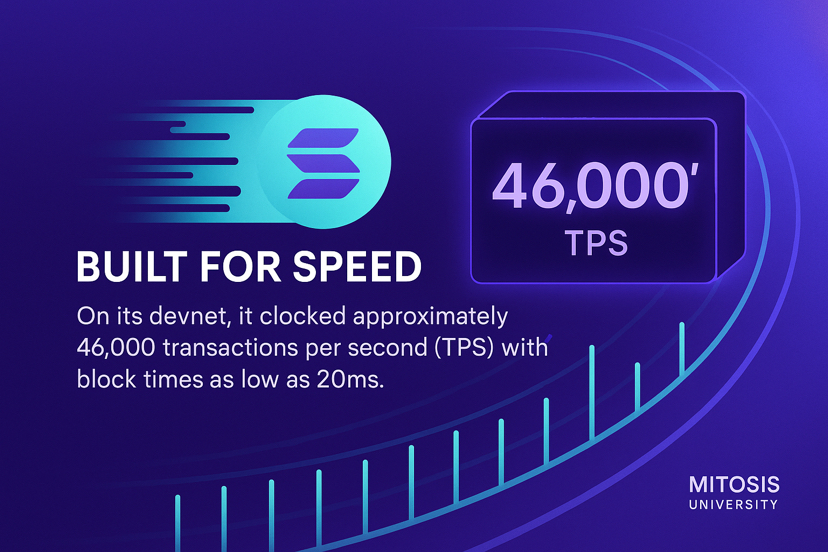
Development followed a structured path. Devnet went live first, then testnet opened for stress testing, and mainnet launched in mid 2025. The token generation event arrived in January 2026 along with an airdrop for early contributors. From my perspective this rollout felt deliberate rather than rushed.
Core Technology Focused On Execution
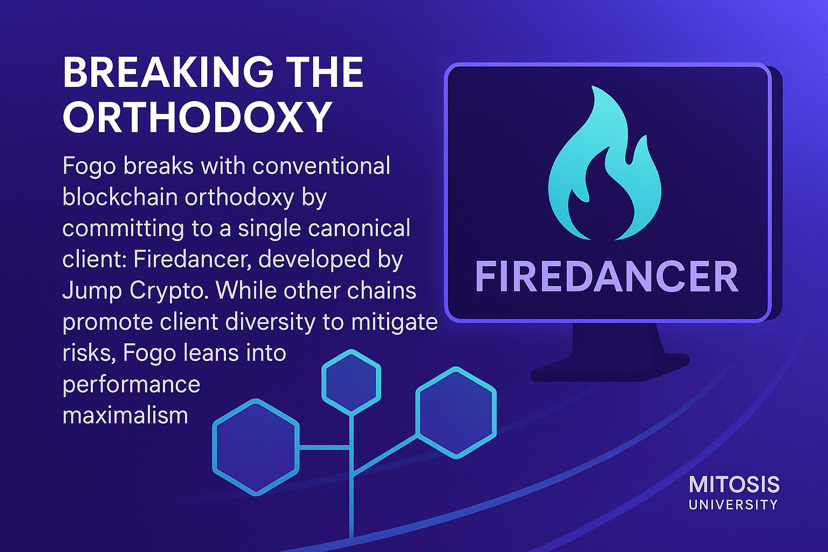
The technical backbone of Fogo is a pure Firedancer client running on the Solana Virtual Machine. This allows instant compatibility with existing Solana tools while removing performance drag caused by mixed client environments. Developers can migrate applications without rewriting entire systems, which lowers friction for adoption.
One feature I find particularly interesting is multi local consensus. Validators cluster into geographic zones such as Tokyo London or New York. This design mirrors traditional financial centers and reduces cross continent latency. Blocks can finalize in under forty milliseconds in zone mode with around 1.3 second confirmations. If any zone experiences issues the network safely reverts to a slower global mode.
The validator set begins in a curated structure to maintain quality and alignment. Over time governance and stake weighting increase decentralization. Native order books and integrated oracle feeds reduce fragmentation. Gas sponsorship through paymaster systems allows applications to abstract fees away from users. Altogether it feels engineered for professional throughput.
Mainnet Performance And Early Adoption
After mainnet launch in 2025 the network demonstrated sub second finality under real load. By early 2026 the token began trading across dozens of markets with billions in daily volume at peak activity. Circulating supply sits around 3.7 billion out of nearly 10 billion total tokens.
What I notice is that usage is not theoretical. Perpetual trading platforms are active, staking participation is growing, and developers are deploying applications using familiar SVM tooling. Instead of struggling with outages during bursts of demand, the network has handled spikes with stability so far.
Real World Usage In Daily Trading
Using Fogo feels closer to a centralized exchange experience while remaining on chain. Traders connect wallets to decentralized trading interfaces and execute orders with extremely low latency. Sub forty millisecond block production enables fast arbitrage and efficient order matching. Gas sponsorship reduces friction for retail users.
I see institutions experimenting with colocated validator setups for latency sensitive strategies. Liquidity providers benefit from reduced sandwich risk due to structural protections. Developers leverage SVM compatibility to deploy automated market makers derivatives platforms and oracle driven strategies without extensive migration costs.
Expansion Plans And Strategic Direction
The roadmap focuses first on stabilizing and scaling the validator network. Additional geographic zones are expected as activity expands. Ecosystem grants aim to attract structured products derivatives protocols and professional market making infrastructure.
Longer term the goal appears to center on becoming the preferred execution layer for tokenized financial assets and advanced derivatives. Governance mechanisms will mature as more stakeholders participate in zone selection and network upgrades. The direction feels aligned with institutional adoption rather than retail speculation alone.
Long Term Outlook For Fogo
Looking ahead I see strong upside if performance driven narratives continue gaining attention. If total value locked and trading volume scale into the billions, the token economy could benefit significantly from network usage. Of course macro cycles and competition remain risks, but the focus on physics level optimization and trading specific architecture gives it a distinct identity.
In my view Fogo represents a serious attempt to bridge traditional finance execution standards with decentralized infrastructure. The big question I keep asking myself is whether traders and institutions will fully migrate once they experience consistent low latency on chain. If they do, this network could become a foundational layer for the next generation of global financial markets.