
Fogo enters the Layer-1 landscape with a clear technical posture. As a high-performance blockchain utilizing the Solana Virtual Machine, it aligns itself with a design framework known for speed, parallel execution, and composability. This choice signals ambition. High-throughput architecture is not a neutral feature; it implies an intention to support demanding applications, potentially including on-chain financial markets where latency, determinism, and scalability are essential. Yet the long-term durability of such a network depends less on execution speed and more on the structure of its economic incentives.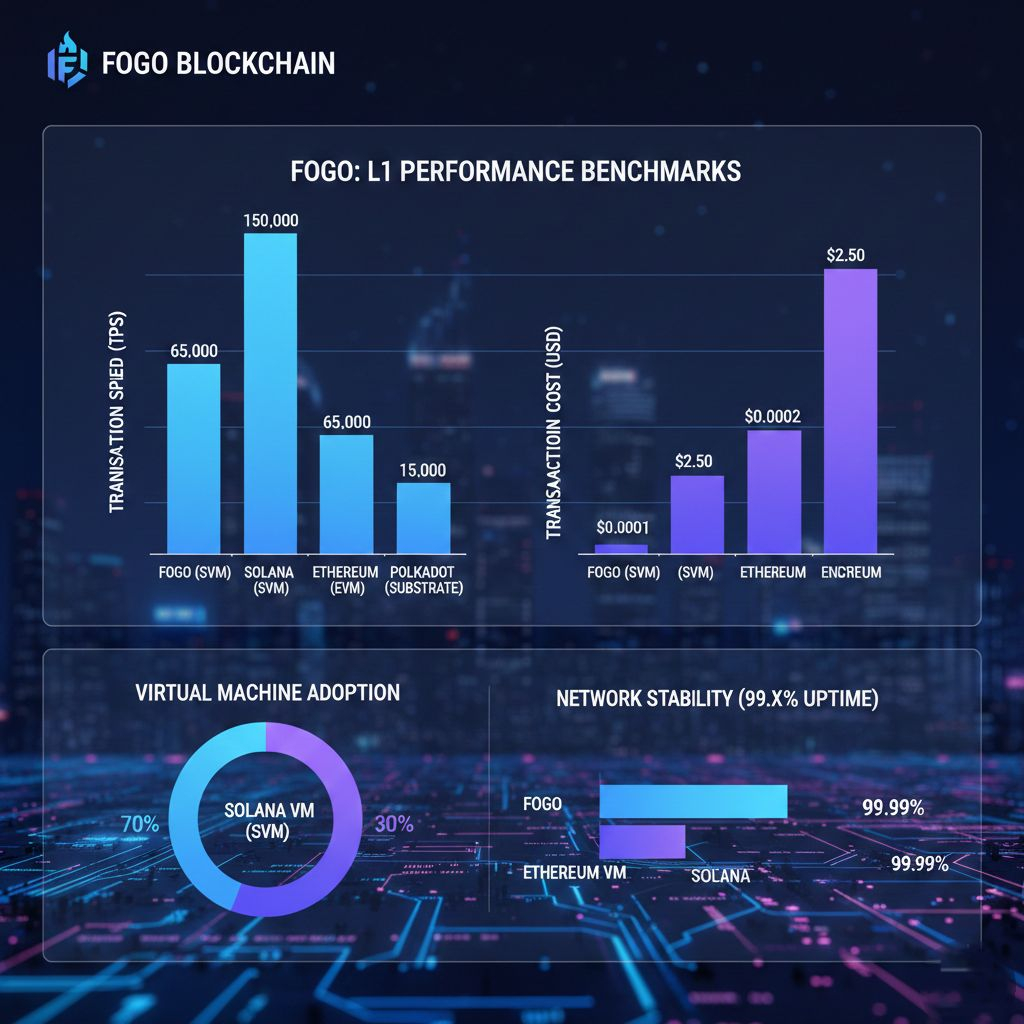
Blockchains are often evaluated through surface metrics: transactions per second, finality time, developer tooling, ecosystem growth. These indicators matter, but they do not define systemic resilience. The deeper architecture of a network is encoded in its token distribution. Token distribution is product design. It shapes who holds power, who absorbs volatility, who secures the network, and who ultimately extracts value. For a chain aspiring to underpin financial infrastructure, this distribution is not a peripheral concern; it is foundational.
Financial markets function on aligned expectations. Participants must believe that the rules of the system are stable and that incentives are structured to minimize structural imbalances. If a Layer-1 network’s token supply is concentrated among early stakeholders with predefined liquidity timelines, the system may inherit persistent sell pressure. Markets are forward-looking. Unlock schedules, vesting cliffs, and allocation asymmetries are quickly priced into collective behavior. Even if no immediate selling occurs, the anticipation of it can influence liquidity depth, volatility patterns, and staking participation.
For a network like Fogo, built on a virtual machine optimized for performance, the contrast becomes striking. Technical efficiency reduces friction for developers and can attract sophisticated applications. Order books, derivatives protocols, and other financial primitives require predictable execution environments. But predictable execution alone does not compensate for unpredictable supply dynamics. If the token that secures and governs the network is structurally pressured by recurring unlock events, builders must factor that instability into their risk assessments. Infrastructure intended to support markets cannot itself become a source of persistent economic uncertainty.
This tension reveals why token distribution must be treated as an architectural decision rather than a fundraising outcome. A widely distributed token base can foster organic staking, community governance legitimacy, and longer-term alignment between users and validators. Conversely, heavy concentration among entities whose primary objective is capital rotation may create cycles of expansion and contraction disconnected from real network usage. Over time, such cycles can erode trust, particularly in financial contexts where reliability is paramount.
None of this suggests that early capital or team allocations are inherently detrimental. Complex infrastructure requires sustained investment. The critical issue is balance and pacing. If emission schedules, unlock timelines, and incentive programs are structured without regard for market absorption capacity, the network may become dependent on continuous inflows of new buyers to offset structural outflows. That dependency transforms growth from organic adoption into a liquidity treadmill.
Fogo’s integration of the Solana Virtual Machine lowers barriers for developers familiar with that ecosystem, potentially accelerating application deployment. This compatibility is strategically significant. It reduces friction at the software layer and invites experimentation. However, ecosystem growth built on unstable economic foundations risks fragility. Developers building financial applications require confidence that the base layer token will not experience recurrent shocks driven by predictable supply events. Validators require assurance that staking rewards are not offset by downward price pressure originating from distribution mechanics. Users require confidence that governance will not be dominated by a narrow set of concentrated holders.
Financial systems are fundamentally about trust, even when decentralized. In traditional markets, institutional frameworks provide guardrails against destabilizing behaviors. In blockchain networks, tokenomics perform that function. Distribution patterns encode expectations about governance stability, economic sustainability, and incentive alignment. When those patterns generate continuous sell pressure, they compromise the neutrality and reliability expected of financial infrastructure.
The evaluation of a high-performance Layer-1 like Fogo, therefore, cannot end with benchmarks of throughput or latency. Engineering challenges can be solved iteratively. Economic misalignment, once embedded, compounds over time. Markets internalize it, participants adapt to it, and volatility becomes structural rather than incidental. A blockchain designed to support financial markets must ensure that its token behaves less like a short-term venture instrument and more like a durable coordination asset.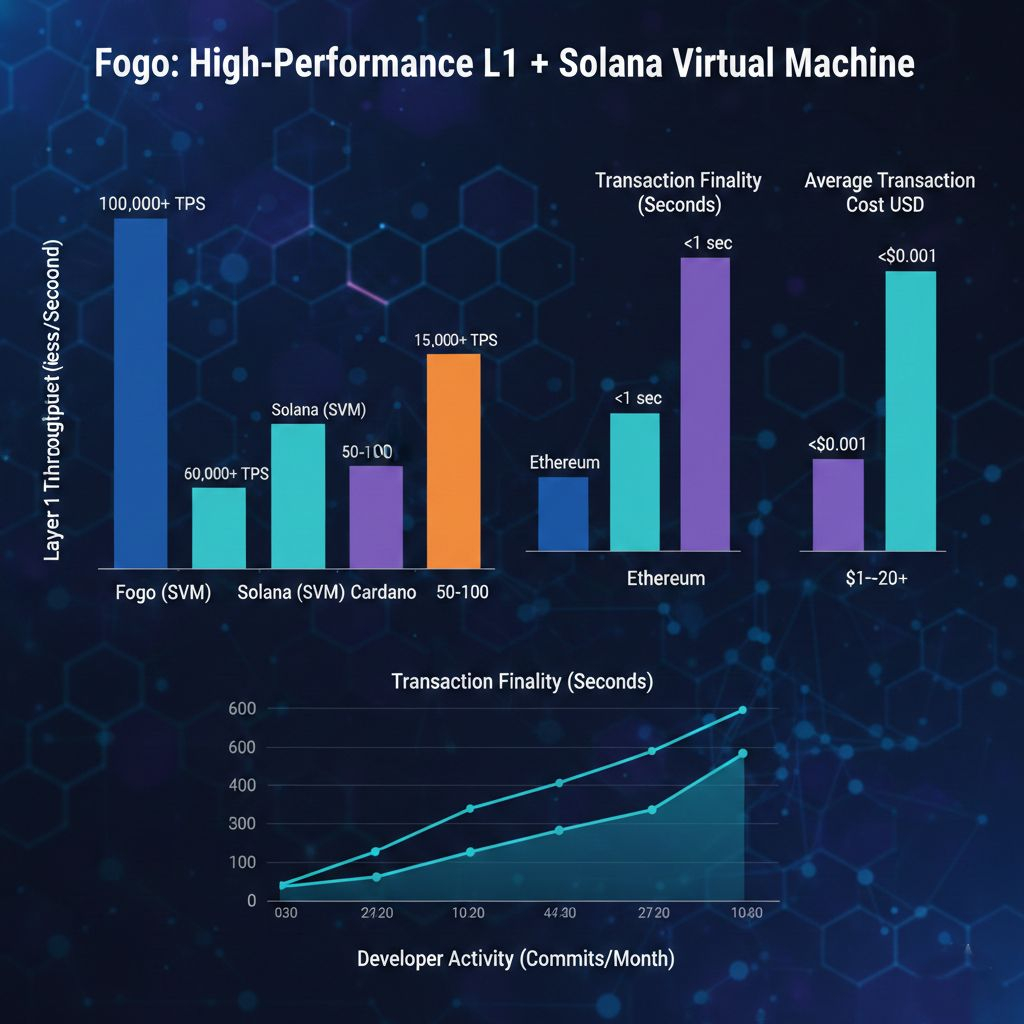
In this light, the central challenge facing any emerging financial Layer-1 is not merely scaling computation but stabilizing incentives. Token distribution is product design because it defines the long-term behavioral equilibrium of the network. If ownership structures create persistent pressure to exit rather than incentives to participate, the chain’s technical sophistication cannot compensate. Performance may attract attention, but alignment sustains systems. For Fogo, as for any infrastructure aspiring to underpin on-chain finance, the architecture of incentives will ultimately determine whether speed translates into stability or into strain.
