
I first ran into $WAL while scanning through a few mid-tier blockchains that seemed quietly active but rarely made headlines. It wasn’t flashy, and it didn’t come with viral memes or aggressive marketing campaigns. Yet, there was a methodical feel to the project, the sort of thing that feels like someone is quietly building rather than chasing hype.
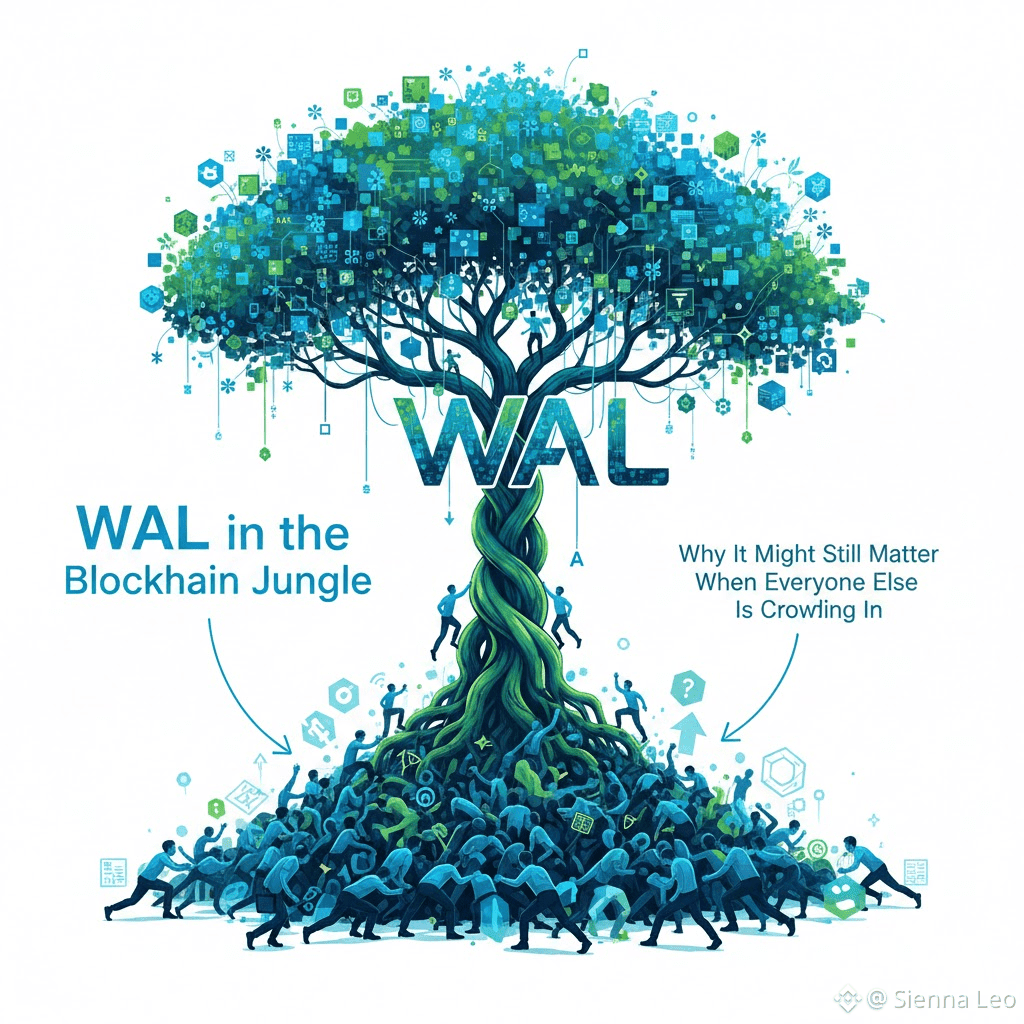
At its core, WAL is a blockchain platform designed for decentralized applications with a focus on efficient transaction processing and straightforward smart contract functionality. Its development started as a response to the congestion and high fees on older blockchains. Early adopters appreciated its lightweight architecture and the clarity of its design choices—less about novelty, more about reliability.
Where WAL currently stands is interesting. In a crowded ecosystem where Ethereum, Solana, and countless Layer 2 solutions dominate attention, WAL has carved a niche that isn’t about flashy features but about stable, predictable operation. Developers who care more about clarity of documentation and lower overhead than trendy consensus models have found it quietly useful. Its appeal isn’t mass adoption; it’s the kind of platform that fits a specific workflow or project type.
Looking forward, WAL’s trajectory will likely depend less on token hype and more on practical adoption. It could continue to serve as a stable playground for developers who need a functional, efficient blockchain without the noise of constant updates or experimental protocols. Realistically, it won’t suddenly replace the major platforms, but it could steadily grow in communities where simplicity and consistency matter more than headline-grabbing performance benchmarks.
There are clear limitations. WAL is smaller, so liquidity and ecosystem support can be sparse. Partnerships, developer tools, and integrations lag behind larger chains. Security is always a concern; smaller chains sometimes lack the audit scrutiny of bigger players, which can make early-stage projects riskier. These aren’t hypothetical—anyone exploring WAL has to factor in that being “different” often means “fewer eyes on the code.”
Yet there’s a quiet strength here. WAL’s relevance comes from being usable and dependable rather than flashy. In an ecosystem that often rewards the loudest or the fastest, having a space that prioritizes clarity and reliability is a kind of understated advantage. Its future isn’t about exploding into the mainstream—it’s about remaining a quietly viable option for specific developers and projects who value those traits.
In the end, WAL feels like a calm corner in a crowded room: it doesn’t shout for attention, but if you spend time there, you realize it has its own logic and purpose.