

As blockchain architecture shifts toward modularity, many assumptions that once went unquestioned are being exposed. Execution, consensus, and settlement are increasingly separated, but one layer is still routinely underestimated: data availability. Walrus Protocol exists because modular systems break down the moment data availability is treated as an afterthought.
In monolithic blockchains, data availability is implicitly bundled with execution. If a block is produced, the data is assumed to be accessible. Modular systems remove that guarantee. Execution environments no longer control where data lives or how it is served. This creates a new category of risk that cannot be solved with faster nodes or better compression. It requires a dedicated availability layer.
Walrus was designed specifically to fill this gap. Its role is not to execute transactions or interpret state, but to ensure that the raw data required to verify those actions remains accessible to anyone who needs it. Without this guarantee, rollups and modular chains become trust-based systems, relying on assumptions that data will be served honestly and consistently.
What distinguishes Walrus is its insistence on decentralization at the availability layer itself. Many systems still depend on a limited set of providers to host or serve data. This introduces hidden centralization and creates single points of failure. Walrus distributes data across a network in a way that preserves availability even when individual participants fail or exit.
This matters because data availability failures are silent failures. When data is withheld, users cannot independently verify state transitions. Fraud proofs become impossible. Finality becomes meaningless. The system may appear functional while its guarantees have already collapsed. Walrus addresses this risk directly by making availability an explicit, protocol-enforced property.
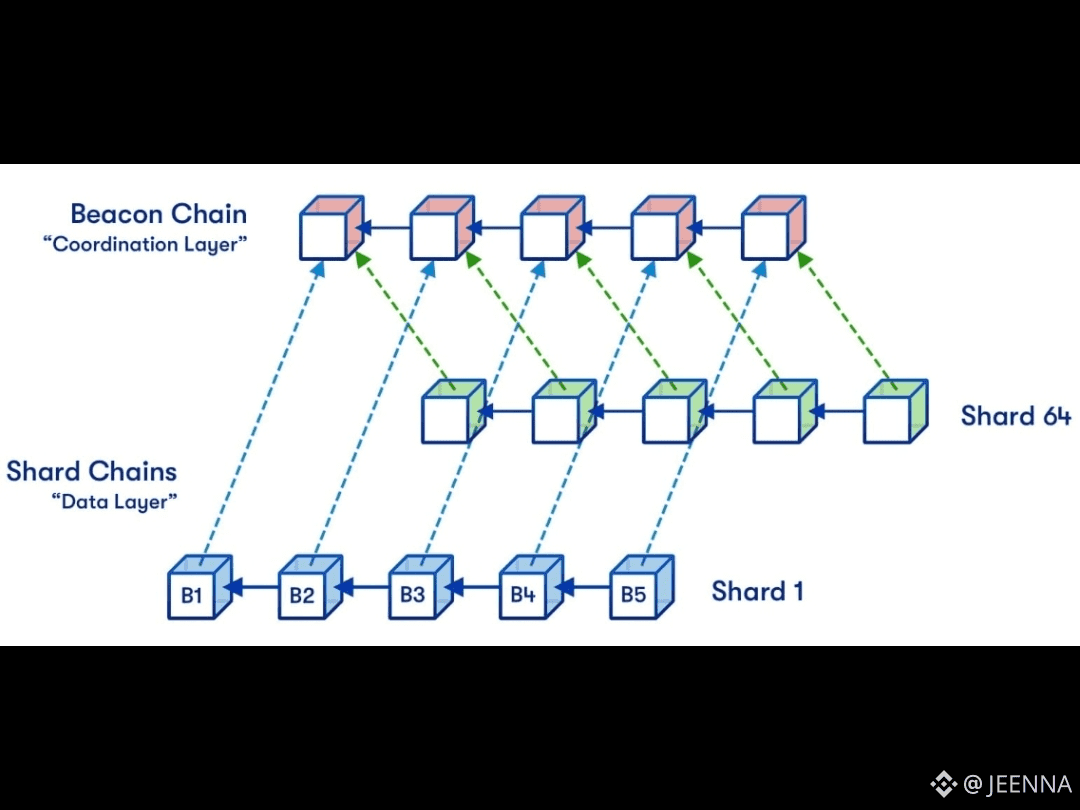
Another important aspect of Walrus is its alignment with rollup security models. Rollups inherit security from their base layers only if data is available. Without guaranteed access to transaction data, even the strongest execution logic cannot be trusted. Walrus strengthens rollups by removing uncertainty around data retrieval and reconstruction.
Recent progress in modular blockchain design has made this issue more visible. As more execution environments emerge, the need for neutral, decentralized data availability becomes unavoidable. Walrus positions itself as shared infrastructure rather than a competitive execution layer. It does not dictate how chains execute; it ensures they can be verified.
There is also a long-term sustainability angle. Data must remain accessible not just at the moment of execution, but over time. Historical verification, audits, and dispute resolution all depend on long-lived data availability. Walrus treats durability as a core requirement, not an optimization.
The market often focuses on what users can see: transactions, applications, interfaces. But the integrity of those systems depends on layers users never interact with directly. Walrus operates in that invisible space, securing the foundation that modular blockchains rely on.
As modular architectures continue to mature, data availability will no longer be assumed. It will be demanded. Walrus is building infrastructure that acknowledges this reality and provides guarantees that modular systems cannot function without.

