

Blockchain had been being equated with transparency and trust over the years. Dusk Foundation is proving that wrong--noisily establishing an infrastructure that is privacy-first and regulatory institutions and users can actually use. Such a change can characterize the survivor of the following wave of the crypto.
The Turning Point that Reorientated the Discussion.
A compliance head of a financial company made it plain a few years ago:
Decentralization is not frightening us. Exposure does.
The reason why blockchain, with all its breakthroughs, continues to be unable to break into regulated finance and mainstream infrastructure is that single line. The key was expected to be transparency. Rather it was the friction.
And here is where Dusk Foundation adopts a very unlike position, one that is less ideology-driven and has more practical approach.
What would happen when complete transparency is no longer the end?
When Transparency Begins to Work against you.
Radical, public blockchains did it by making financial activity visible to all people indefinitely. Early on, that was a feature. It demonstrated that intermediaries were unnecessary in systems.
But when actual money, actual enterprises, and actual legislations came to the scene, the negative aspects became more difficult to overlook.
On most blockchains today:
The financial behavior is boundless.
Real time leakage of trading plans.
Competitors are exposed to corporate activity.
Supervision is based on ex post compliance.
None of that is similar to the functioning of finance in the real world. And institutions were not being obstinate when they were resisting--they were being realistic.
A More Grounded View of Trust
the less obvious, though perhaps the more true, premise of Dusk Foundation begins:
Privacy does not interfere with trust. It makes trust usable.
Dusk does not make people choose between secrecy and compliance, instead, the privacy is directly incorporated into the system, without eliminating the accountability.
Transactions are privative in nature.
It is always possible to check.
The exposure occurs when it is required--and verifiable.
This is not a matter of concealing the activity. It has to do with the manipulation of exposure so as to reflect how the society actually operates.
Why is This Shift Important at this Moment?
Time is a factor, and the way Dusk is entering the business is at a time when the industry is transforming rapidly.
The theory of regulation has shifted to enforcement.
Institutions desire blockchain effectiveness with no reputational risk.
The users are realizing that there is a cost to public forever.
The days of denying those truths are over. Networks that fail to provide privacy and evidence are not going to scale up to niche applications.
Between Show Everything and Prove What Matters.
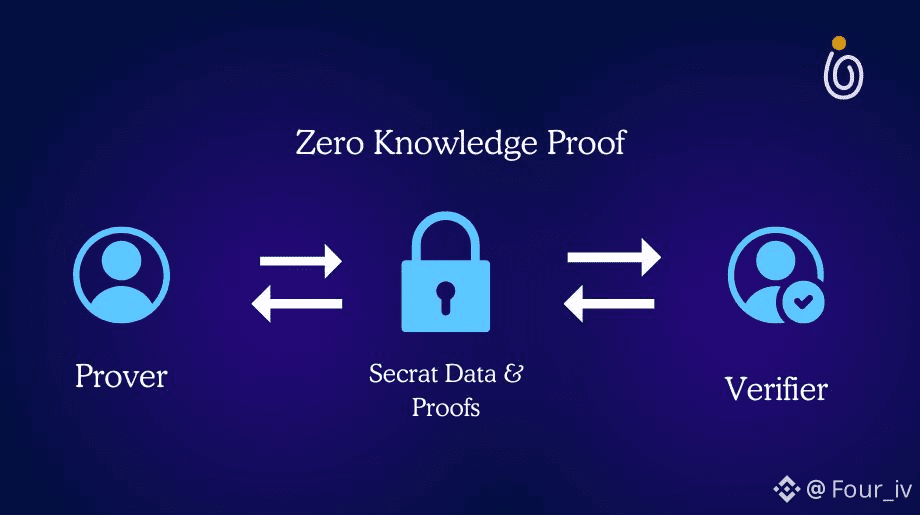
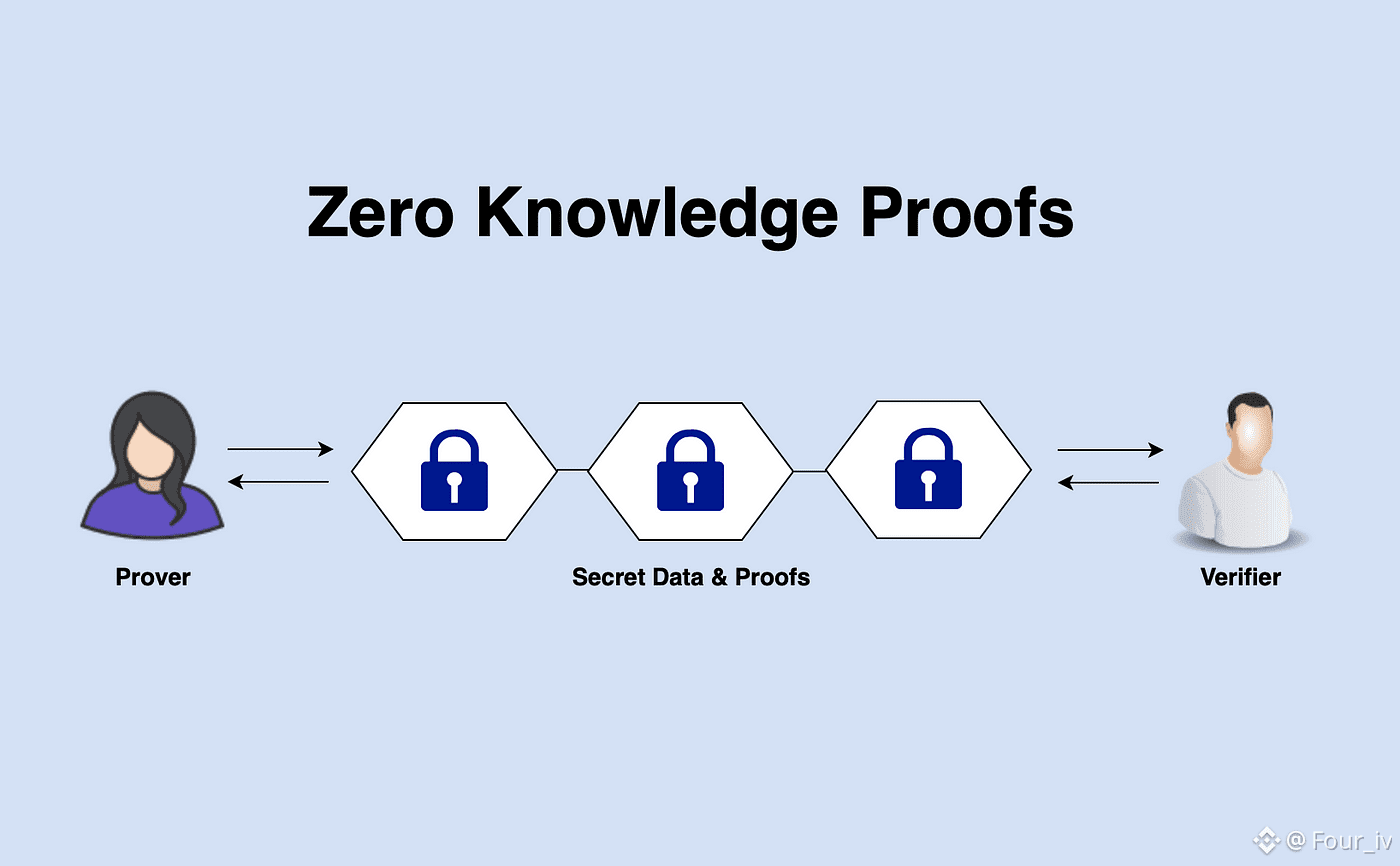
The fact that Dusk uses zero-knowledge cryptography is significant, but the change is conceptual.
It is not about becoming universal.
It is discriminatory verifiability.
Dusk is asking, instead of, do all people see all, whether, whether the right parties, could attest to the right facts, without needless exposure.
Such a little difference opens a great deal:
Regulators will be able to check compliance.
Sensitive information can be safeguarded in institutions.
The users are not subjected to permanent transparency.
Confidence is replaced with belief.
The Human and Market Impact
This design ideology goes beyond whitepapers.
In the case of institutions, it provides a plausible on-chain channel that does not breach fiduciary duty.
To developers, it allows financial products that are more like real markets, rather than experiments.
To users, it has brought back the things that blockchain had silently removed: discretion.
It is infrastructure that minimizes friction, and not ideology, that tends to reward markets. Privacy-compliant systems might not produce the most attention-grabbing headlines - but they are moving in the right direction in terms of where capital and adoption is actually going.
That's not a guarantee. Nevertheless it is a pointer that is worth listening to.
The Next Step in Radical Transparency.
The initial chapter of blockchain showed that transparency might be effective.
The following chapter must demonstrate that privacy is a trustworthy issue.
Dusk Foundation is not offering any perfection or claiming that there is no regulation. It is doing the more difficult work of creating systems that will accept the legal, social, and human constraints without compromising decentralization.
The blockchain is unlikely to achieve its futures in a more noisy, speedy, and visible form.
It will be quieter. More deliberate. And far more human.
And, as long as that is the direction that the industry takes, privacy will no longer be a choice.
It'll be the standard.
