

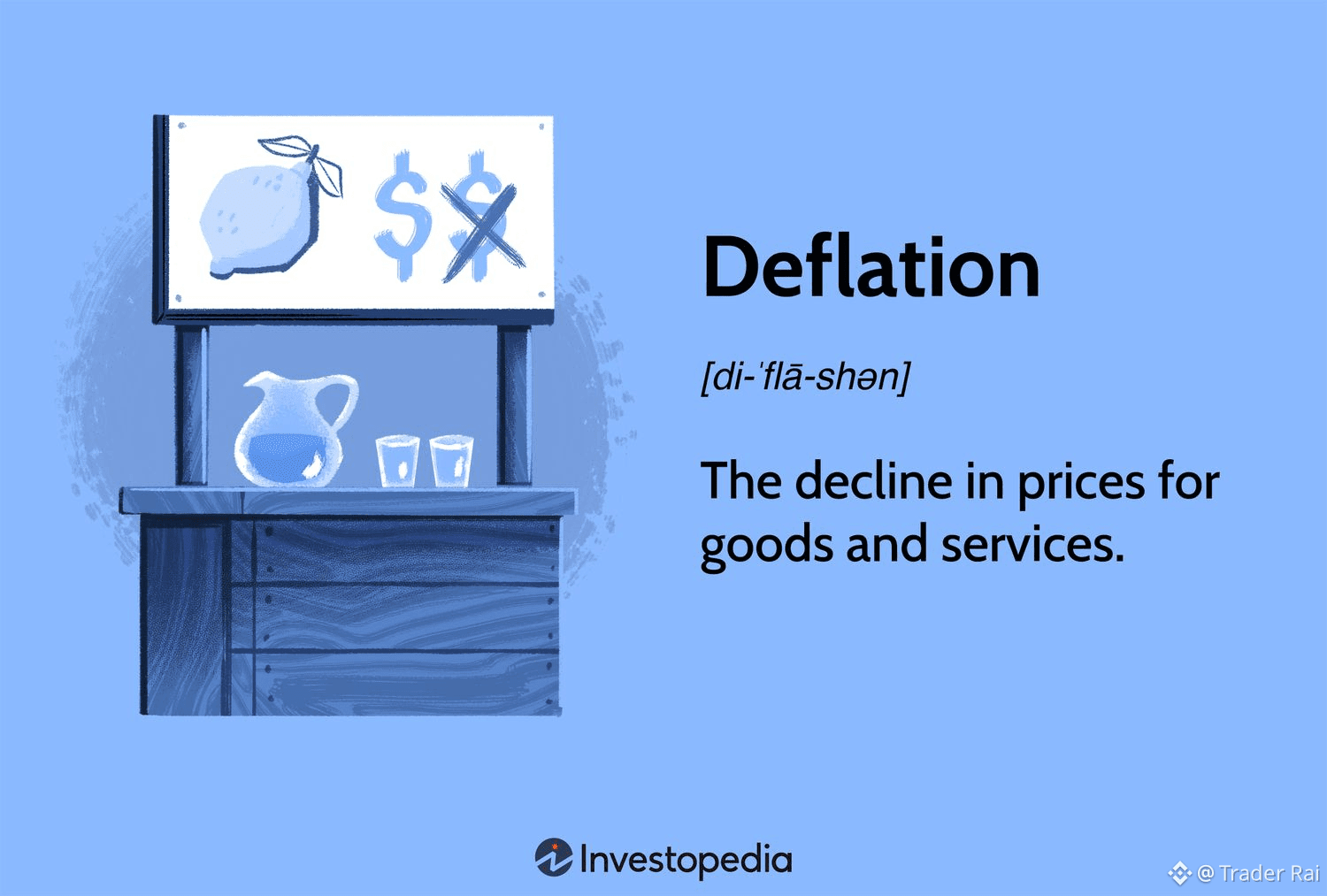
Deflation refers to a sustained and broad-based decline in the general price level of goods and services across an economy. In simple terms, deflation means that prices are falling over time and each unit of currency gains purchasing power.
At first glance, this might sound like a good thing. After all, who wouldn’t want their money to buy more tomorrow than it does today?
However, history and economic research show that persistent deflation can quietly damage an economy, slowing growth, increasing unemployment, and destabilizing financial systems. While inflation often dominates headlines, deflation is just as important to understand—especially because its dangers tend to appear gradually, not suddenly.

Understanding Deflation in Simple Terms
Deflation occurs when prices across many sectors of the economy consistently fall rather than rise. As prices decline, the purchasing power of money increases. A fixed amount of cash can buy more goods and services than before.
In the short term, consumers may feel wealthier. Essentials become cheaper, and savings appear more valuable. But when deflation persists, behavior begins to change in ways that hurt the broader economy.
If people expect prices to keep falling, they may delay purchases, waiting for even better deals. When this mindset spreads across households and businesses, overall demand weakens. Lower demand forces companies to cut prices further, reduce production, and eventually reduce their workforce.
This creates a self-reinforcing cycle that can be difficult to break.
Common Causes of Deflation
Deflation does not appear randomly. It usually emerges from deeper economic forces.
One major cause is weak aggregate demand. When consumers and businesses reduce spending—due to uncertainty, high debt, or economic shocks—companies struggle to sell their products. To attract buyers, they lower prices, which can push the economy into deflation.
Another driver is excess supply. Technological progress and efficiency gains can lower production costs and increase output. If supply grows faster than demand, prices naturally fall. While productivity gains are generally positive, they can still contribute to deflation if demand does not keep pace.
A strong national currency can also trigger deflationary pressure. When a currency appreciates, imports become cheaper. Domestic producers face tougher competition from foreign goods, forcing them to cut prices. At the same time, exports become more expensive for international buyers, reducing demand for local products.
Finally, deflation can follow financial crises. When banks tighten lending and credit dries up, spending slows sharply. This reduction in money circulation often leads to falling prices.
Deflation vs. Inflation: Two Opposite Forces
Deflation and inflation describe movements in the general price level, but they move in opposite directions.
Inflation refers to rising prices and declining purchasing power. Deflation refers to falling prices and increasing purchasing power.
Their underlying causes also differ. Deflation is often associated with weak demand, oversupply, technological efficiency, or financial contraction. Inflation is usually driven by strong demand, rising production costs, supply shortages, or expansionary monetary policy.
The economic consequences are very different. Deflation discourages spending and investment, reduces corporate profits, and increases unemployment. Inflation, when moderate, encourages spending and investment, but when excessive, it erodes savings and creates uncertainty.
For this reason, most modern economies aim for low, stable inflation, not zero inflation and certainly not deflation.
How Economies Try to Fight Deflation
Deflation is difficult to reverse once expectations become entrenched. A well-known example is Japan, which experienced decades of very low inflation and periodic deflation, resulting in slow growth and stagnant wages.
To combat deflation, policymakers rely on monetary and fiscal tools.
Central banks typically lower interest rates to make borrowing cheaper and encourage consumption and investment. When interest rates approach zero, central banks may turn to quantitative easing, injecting liquidity into the financial system by purchasing assets.
Governments can also use fiscal policy to stimulate demand. Increased public spending, infrastructure projects, and tax cuts put more money into the economy, encouraging consumption and investment.
The goal of these policies is to restore confidence, increase demand, and prevent prices from continuing to fall.
Potential Benefits of Deflation
Deflation is not entirely negative in the short term.
Lower prices can improve living standards, especially for consumers with stable incomes. Essentials become more affordable, and purchasing power rises.
Businesses may benefit from lower input costs, such as cheaper raw materials or energy. Deflation can also encourage saving, since money retains or increases its value over time.
However, these benefits are usually temporary and limited, especially when deflation becomes persistent.
Risks and Long-Term Downsides of Deflation
The long-term risks of deflation far outweigh its short-term advantages.
When consumers delay spending, economic activity slows. Businesses earn less revenue and respond by cutting wages, reducing investment, or laying off workers. This increases unemployment and further weakens demand.
Deflation also increases the real burden of debt. While prices and incomes fall, the nominal value of debt remains unchanged. This makes loans harder to repay for households, companies, and governments, increasing the risk of defaults and financial instability.
Over time, deflation can trap an economy in a cycle of low growth, weak demand, and declining confidence.
Final Thoughts
Deflation represents a sustained decline in prices and a rise in the purchasing power of money. While it may initially seem beneficial, persistent deflation can discourage spending, increase debt burdens, suppress wages, and raise unemployment.
For this reason, most modern economies prefer controlled inflation over falling prices. Understanding deflation is essential for investors, traders, and long-term planners, especially in a world shaped by economic cycles, monetary policy, and evolving financial systems.
In both traditional finance and crypto markets, recognizing deflationary signals can provide valuable insight into risk, opportunity, and long-term stability.
