

In the crypto world, it is easy to get tired of big promises. Every week there is a new project that claims it will change everything, fix everything, and move faster than everything else. Most people who have spent some time here have learned to look past the noise and search for something calmer and more practical. Walrus is one of those projects that does not feel like it is trying to shout. Instead, it feels like it is trying to build something that can be used, slowly and properly, by people who actually need it.
Walrus is not only a token. WAL is the working part of a larger system called the Walrus protocol, which lives on the Sui blockchain. At its heart, this protocol is about two things that are often talked about but rarely handled well together: privacy and storage. It tries to give people a way to move data and value in a way that is not owned by a single company, not easy to censor, and not built on empty words. This is not a story about chasing trends. It is more like a story about solving a very old problem with new tools.
Why Privacy and Storage Still Matter
If you look at how the internet works today, most of our data lives in a few big places. Photos, documents, videos, and even personal messages are stored on servers owned by companies we do not control. For daily life, this feels convenient. But it also means access can be limited, changed, or taken away. It also means privacy depends more on promises than on real structure.
Blockchain was supposed to change some of this. It gave us systems that do not need one owner. But when it comes to storage and private use, many blockchains still struggle. They are good at keeping small pieces of data like balances and transactions, but not so good at holding large files or sensitive information in a way that feels natural and safe.
Walrus steps into this gap. It does not try to replace everything. Instead, it focuses on building a base layer where data can be stored in a distributed way and where interactions can stay private when they need to be. This is not about hiding things for the wrong reasons. It is about giving people control over their own information again.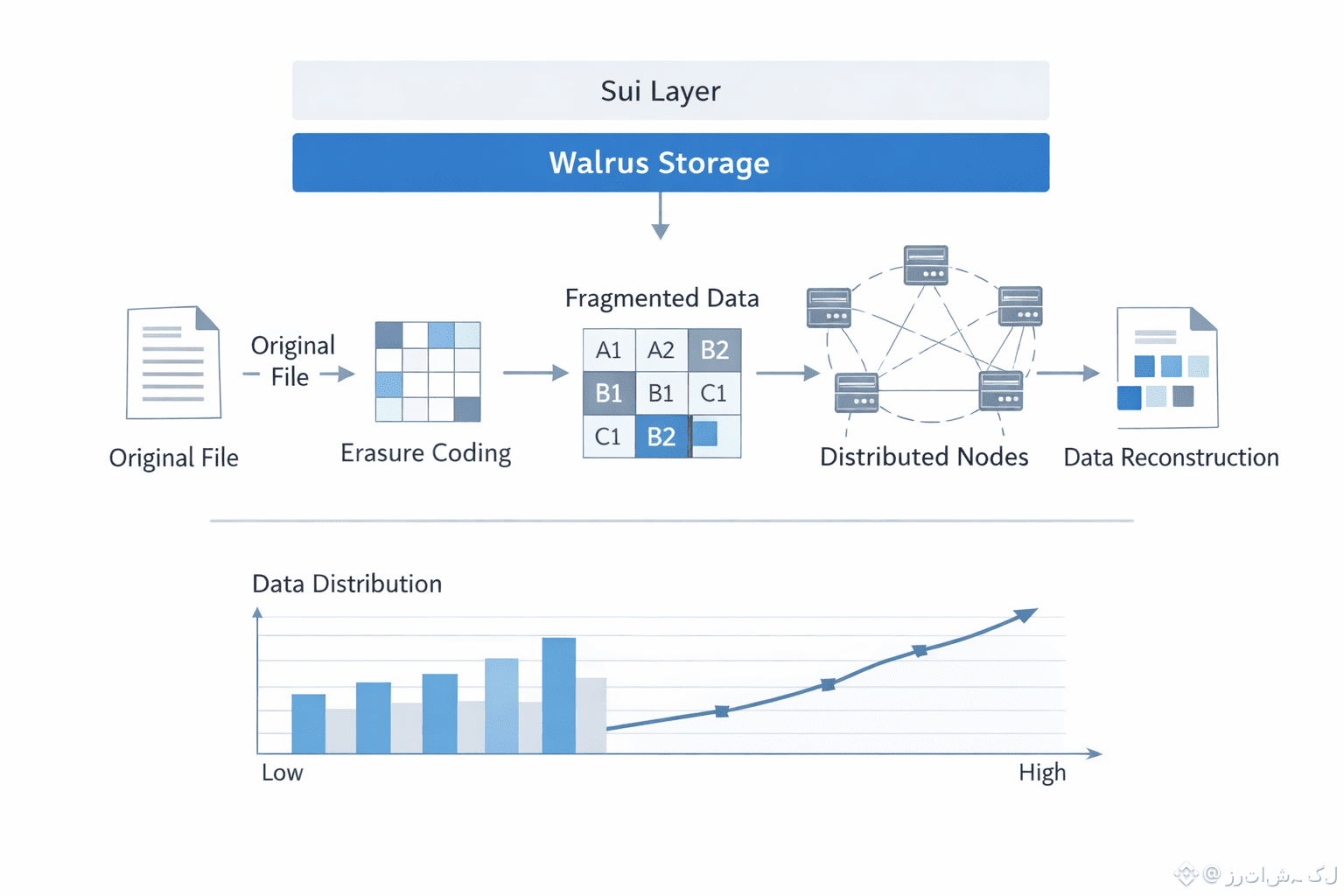
The Idea Behind Walrus
The Walrus protocol is built on Sui, a blockchain known for its speed and flexible design. On top of that, Walrus adds a storage system that uses something called erasure coding and blob storage. These words sound complex, but the idea is simple. Instead of putting one full copy of a file in one place, the file is broken into pieces and spread across many places. Even if some pieces disappear, the file can still be rebuilt.
This approach has two big effects. First, it makes storage more resistant to failure and censorship. There is no single point that can be shut down. Second, it can be more cost-efficient, because the network does not need to keep many full copies of the same thing.But Walrus is not only about files. It is also about how people interact with applications. The protocol supports private transactions, governance, and staking. This means users can take part in the system, help guide it, and earn from it, without turning everything they do into public spectacle.
WAL as More Than Just a Token
In many projects, the token feels like an extra layer added at the end. In Walrus, WAL is more like a tool that keeps the system moving. It is used for paying for storage, for taking part in governance, and for staking. This gives the token a clear role inside the ecosystem instead of being just a symbol to trade.
When someone stores data on Walrus, they are using real resources from the network. WAL is the way they pay for that use. When someone wants to have a voice in how the protocol changes, WAL is the way they show commitment. When someone stakes, they are helping to secure and support the system, and in return they share in its growth.This creates a simple but strong loop. Use creates value. Value supports the network. The network becomes more useful, and that brings more use. It is not fast or flashy, but it is the kind of structure that can last.
A Different View on DeFi
Decentralized finance often focuses only on numbers. Yields, pools, and charts take center stage. Walrus feels a bit different because it is not only about moving tokens around. It is about building a place where data and applications can live in a more honest way.
Imagine a developer who wants to build an app that stores user files, messages, or records. On most blockchains, they still need to rely on traditional servers for the heavy data. With Walrus, they can keep this inside a decentralized system from the start. The user does not have to trust one company. The developer does not have to worry about one hosting provider pulling the plug.This changes the shape of what DeFi and Web3 apps can be. It makes them feel less like experiments and more like real tools.
Living on Sui
Choosing Sui as the base layer is not an accident. Sui is designed to handle many transactions quickly and to manage different types of data in a flexible way. This fits well with what Walrus is trying to do.
The storage layer of Walrus does not fight against the blockchain. It works with it. Transactions that manage access, ownership, and payments can stay on-chain, while the heavy data itself is handled by the storage network. This balance keeps things efficient without losing the benefits of decentralization.
Over time, this kind of structure could become normal for many apps. Walrus is not alone in this direction, but it is one of the projects that is trying to build it in a careful and thoughtful way.
Censorship Resistance as a Quiet Feature
People often talk about censorship resistance in dramatic ways. In practice, it is more quiet and more important than it sounds. It means that no single group can decide what is allowed to exist.Because Walrus spreads data across many nodes and uses erasure coding, it becomes very hard to remove something completely. There is no main server to target. This does not mean everything should be stored forever without thought. It simply means that control is not in one pair of hands.
For journalists, researchers, or even normal users who care about long-term access to their own data, this matters more than price charts ever will.
Governance That Feels Close to the Ground
Governance is another word that often sounds bigger than it is. In Walrus, governance is tied to WAL in a direct way. People who hold and stake the token can take part in decisions about how the protocol changes.This is not a perfect system, and no governance model is. But it at least connects use, responsibility, and voice. Those who care enough to stay and support the network are the ones who help shape it.
Over time, this can lead to a culture where changes are slower but more considered. In infrastructure projects, that is usually a good thing.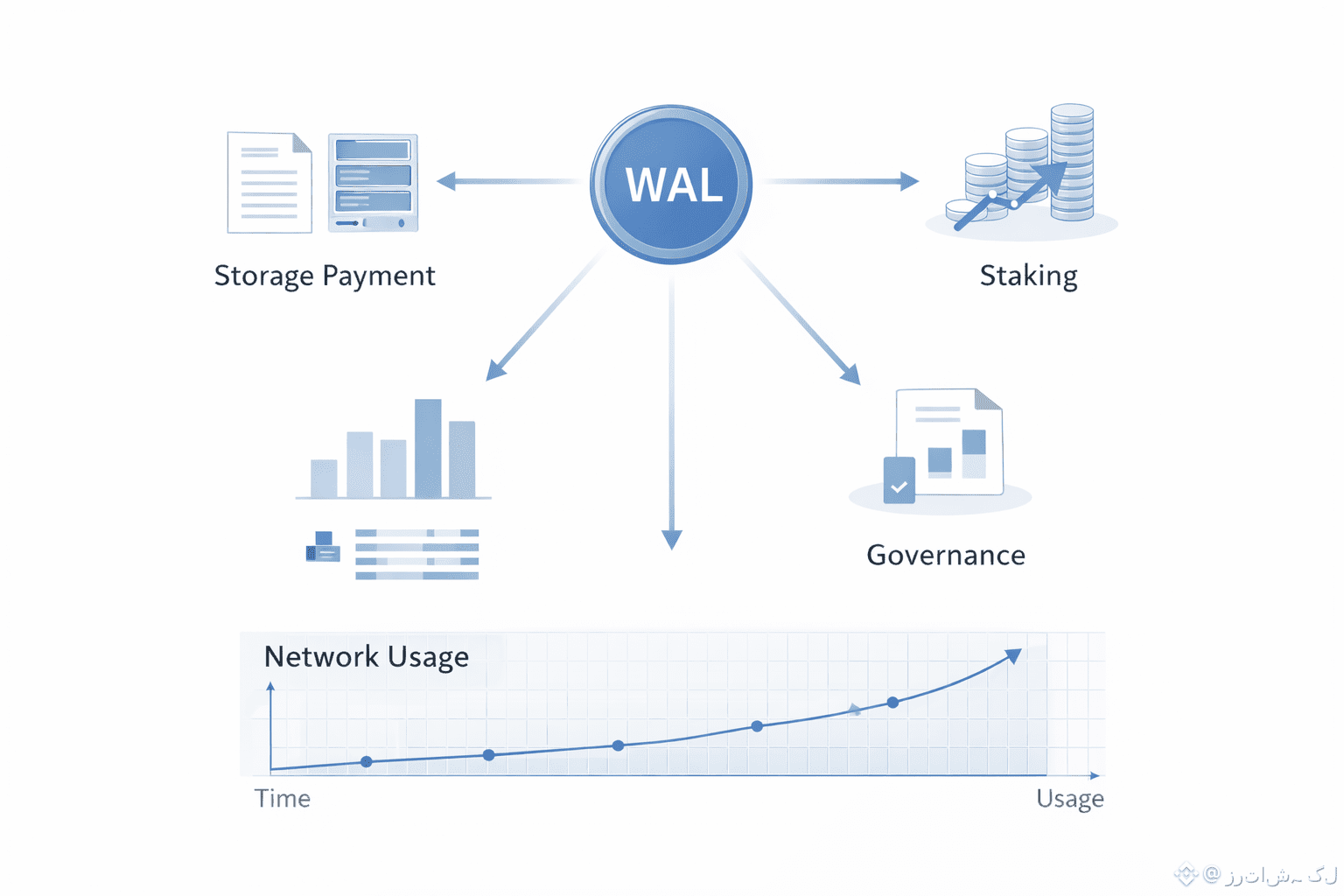
Staking as a Form of Patience
Staking in Walrus is not just about earning. It is also about showing that you believe the system should keep running and improving. By locking tokens and supporting the network, stakers help keep everything stable.
In return, they earn rewards, but more importantly, they become part of the long-term story. This kind of patience is not very popular in crypto, but it is often what separates systems that last from systems that fade.
Who Is Walrus Really For
It is easy to say “everyone,” but that is rarely true. Walrus feels especially useful for developers who want to build apps that handle real data. It also makes sense for teams and individuals who want a decentralized alternative to cloud storage without giving up on performance or cost.For normal users, the benefit might come more quietly. They may not even think about Walrus directly. They will just use apps that feel more respectful of their data and more reliable over time.
In that sense, Walrus is more like a road or a bridge than a shop. You do not go there for fun. You go there because it makes many other things possible.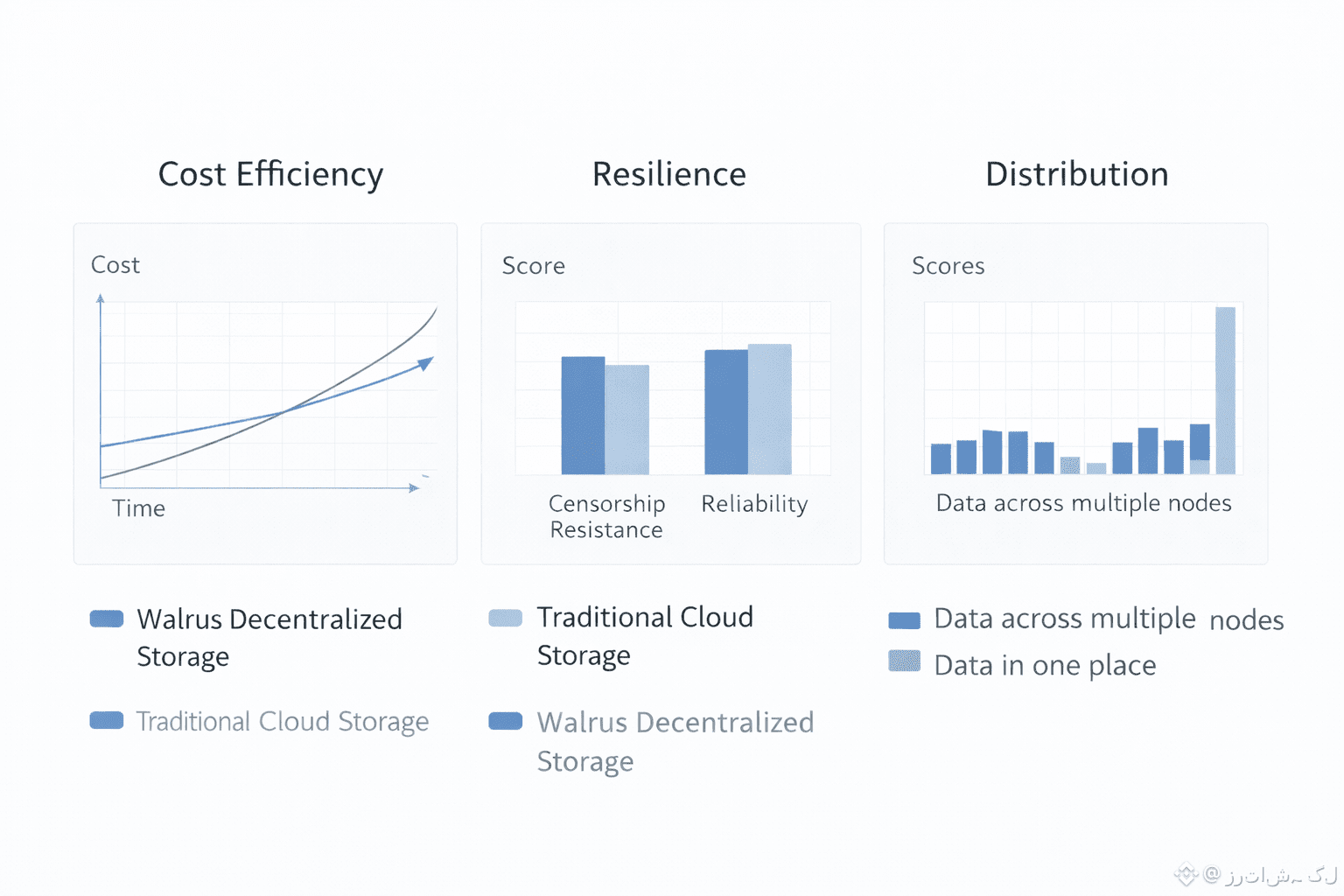
A Slower, More Honest Kind of Growth
There is no reason to pretend that Walrus will change everything overnight. Infrastructure rarely works that way. It grows as more people find real reasons to use it.
The important part is that the reasons exist. Storage that is decentralized, private transactions, tools for governance and staking, and a token that actually does something inside the system. These are not stories. They are parts of a working design.If Walrus succeeds, it will probably not be because of one big moment. It will be because, step by step, more developers and users decide that this way of building makes sense.
Closing Thoughts
Walrus does not feel like a project built for noise. It feels like a project built for use. In a space that often moves too fast, that is a refreshing change.
WAL, as a token, is not trying to be a symbol of dreams. It is trying to be a tool. The protocol around it is not trying to replace the internet. It is trying to fix one of its quiet weaknesses.
Sometimes, that is how real progress looks. Not loud, not dramatic, but steady and practical. If the future of Web3 needs better ways to store data, protect privacy, and build applications that people can trust, then Walrus is at least walking in the right direction. And in the long run, walking in the right direction matters more than running in circles.

