
Most conversations about blockchain scalability begin and end with execution. Faster consensus, parallel processing, higher throughput. Yet as networks mature and applications grow beyond experimentation, a different constraint emerges—data. Blocks can be produced quickly, smart contracts can execute efficiently, but if the underlying data cannot be stored, retrieved, and verified reliably over time, the system degrades. This is the precise problem space Walrus Protocol is designed to address.
Walrus starts from a sober observation: execution is transient, data is permanent. Once a transaction is finalized, the long-term value of a blockchain depends on whether its data remains available and verifiable years later. Many systems implicitly outsource this responsibility to off-chain actors, archival nodes, or centralized storage providers. That shortcut works at small scale, but it introduces hidden trust assumptions that surface only when networks are stressed, reorganized, or challenged.
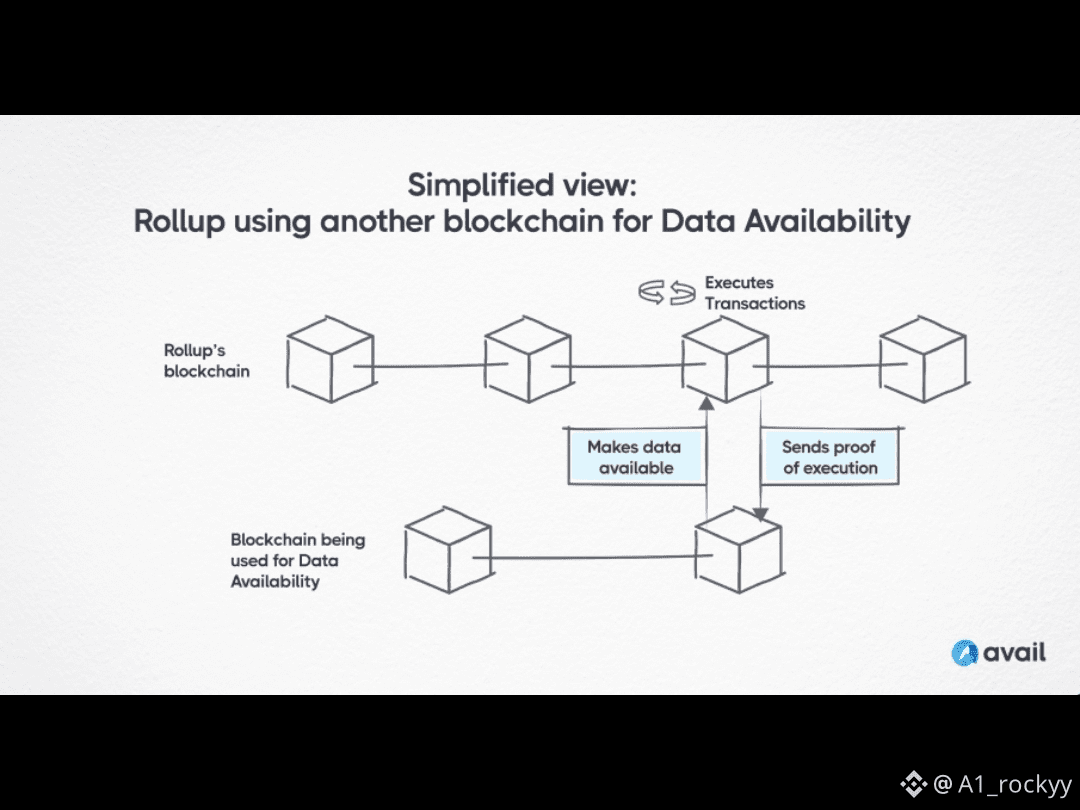
The architectural choice Walrus makes is to treat data availability as independent infrastructure rather than a side effect of consensus. By decoupling computation from storage, Walrus allows blockchains and applications to scale execution without overloading nodes with unsustainable data burdens. This separation is not cosmetic; it is structural. It acknowledges that forcing every participant to store everything forever is neither decentralized nor practical.
A critical aspect of Walrus is verifiability. Storing data is trivial; proving that data is available and unaltered is not. Walrus is engineered around cryptographic guarantees that allow participants to verify data availability without trusting a single storage provider. This transforms data from something assumed to exist into something provably persistent. For applications operating in production environments, that distinction is existential.
The implications become clear when considering real-world workloads. Rollups, data-heavy decentralized applications, and on-chain coordination systems generate volumes of data that exceed what monolithic blockchains were designed to handle. Without a specialized data layer, these systems either centralize storage or accept degradation over time. Walrus provides an alternative path, where scalability does not require sacrificing decentralization or auditability.
Another often-missed dimension is long-term state access. Blockchains are not just real-time systems; they are historical ledgers. If historical data becomes inaccessible or prohibitively expensive to retrieve, the network loses its credibility as a source of truth. Walrus addresses this by designing for durability fro7m the outset. Data is not optimized away once it is old; it remains part of a verifiable storage system that applications and validators can rely on.
Importantly, Walrus does not attempt to replace blockchains or impose new execution models. It integrates as infrastructure, complementing existing networks rather than competing with them. This positioning reflects a clear understanding of how systems evolve in practice. Execution layers innovate quickly; data layers must be stable, conservative, and predictable. Walrus optimizes for the latter.
There is also a governance implication embedded in this design. When data availability is controlled by a small subset of actors, power accumulates silently. Decisions about pruning, access, and pricing shape who can participate and who cannot. By decentralizing data availability, Walrus distributes that power more evenly across the network, reinforcing the original trust assumptions blockchains were meant to uphold.
As the industry moves from prototypes to infrastructure, the narrative around scalability is shifting. Speed alone is no longer persuasive. Reliability, persistence, and verifiability are becoming the metrics that matter. Walrus aligns with this shift by focusing on what breaks systems at scale, not what demos well in benchmarks.
In this context, Walrus Protocol is less about innovation and more about correction. It addresses a structural imbalance that emerged as blockchains prioritized execution over storage. By reframing data as first-class infrastructure, Walrus contributes to a more realistic foundation for decentralized systems—one where growth does not erode integrity.

