
what I wanted to discuss today is something that I have been thinking about in the recent past how Walrus works are actually driven by $WAL in a sustainable manner. In my personal experience ripping the protocol mechanics apart, the token is a key focus of coordinating the incentives among the nodes, the delegators, and the users. 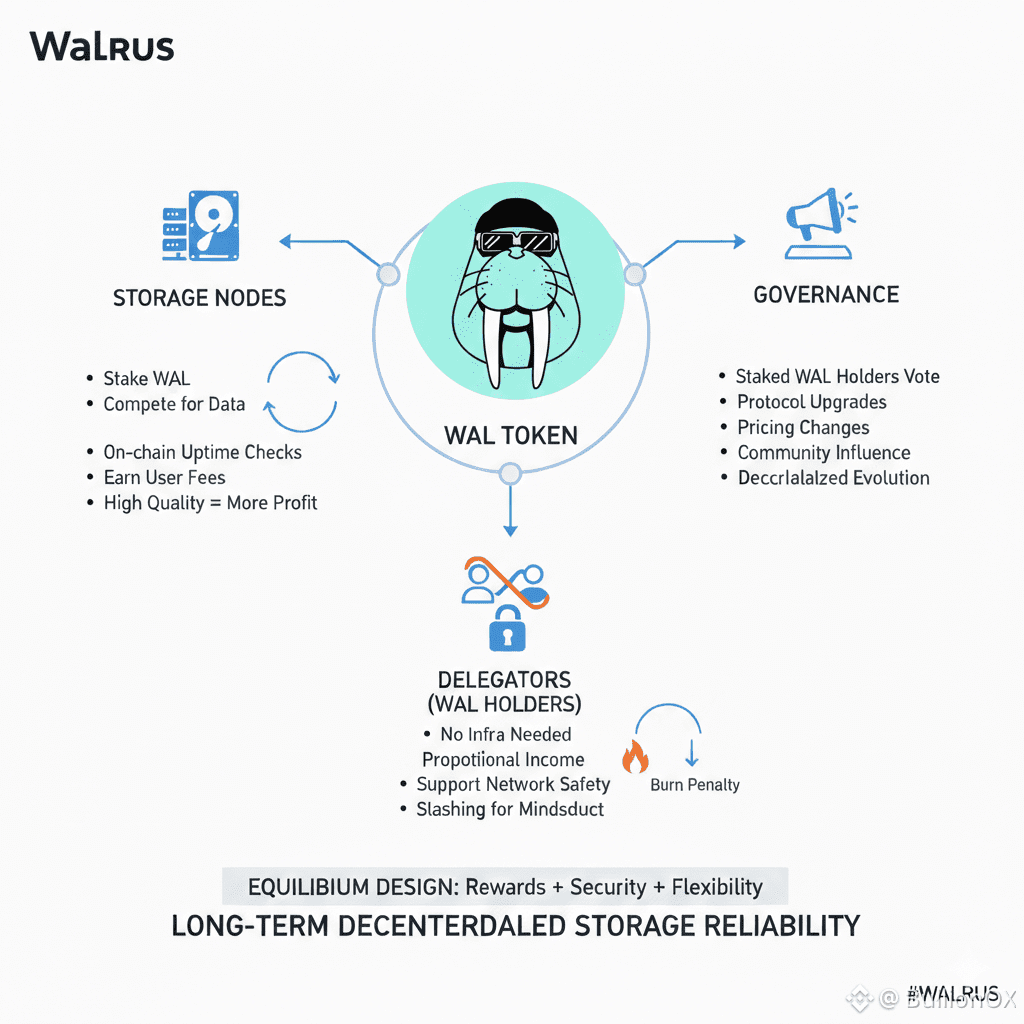
To be connected and process data blobs, storage nodes need to stake WAL and compete with each other to be delegated more information to earn more money. Consistently good performance in terms of on chain availability checks will get them a share of user paid storage fees, which are passed out uniformly across epochs. This forms a straight correlation between uptime, quality and profit.
To everyday holders, delegation will enable the involvement without an incurred infrastructure, and give them proportional income in assisting network safety. The system incorporates such mechanisms as possibility to slash poorly behaved and burn penalty on over movement of the stake, further aligning the system.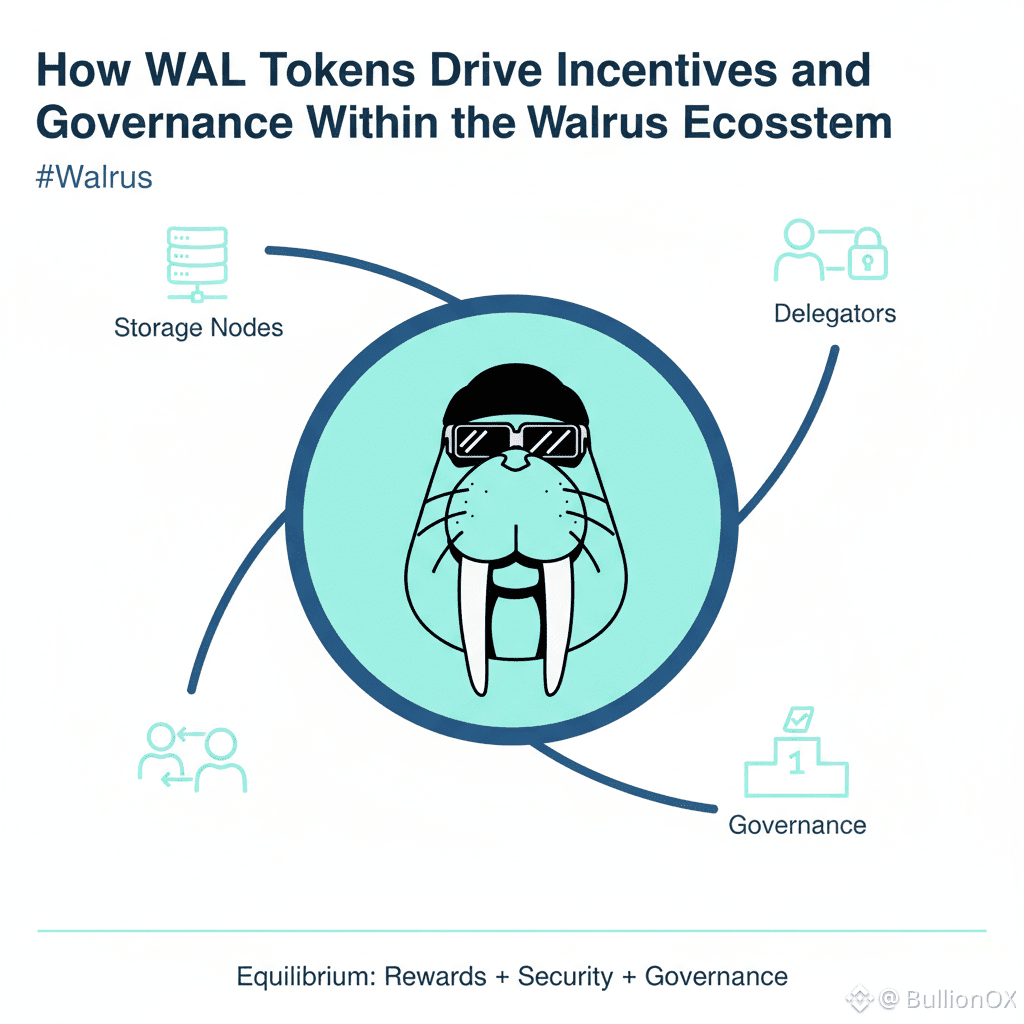
It is balanced by governance: the staked $WAL holders participate in voting on important parameters, e.g. pricing changes or upgrades to the protocol, allowing the community to influence the evolution without being controlled centrally.
It is an equilibrium design usage fund that rewards, stakes are secured and governance provides flexibility. Practically, such an arrangement is very much comfortable with long term reliability in decentralized storage.
How would you think these incentives would increase with Walrus?

