

A lot of crypto projects ask to be judged like assets, but Walrus almost dares you to judge it like infrastructure. That’s the more interesting game over the next twelve months, because @Walrus 🦭/acc isn’t trying to be a new “place to trade.” It’s trying to be the place where the heavy stuff lives: the files, media, datasets, archives, and application state that modern onchain products quietly depend on. Walrus went live on mainnet on March 27, 2025, and it was framed from day one as Mysten Labs’ second major protocol after Sui, less a shiny app, more a foundational layer meant to make the internet feel programmable again.
The easiest way to understand the scorecard is to remember how Walrus is built. Walrus is the data plane, Sui is the control plane. Storage resources and blobs are tracked with onchain objects and metadata on Sui, and when a blob is successfully encoded and distributed, Walrus can publish a Proof of Availability, a PoA certificate on Sui that acts like an official public receipt that storage service has begun. In Walrus’s own framing, PoA turns “trust me, it’s stored” into a verifiable custody record, and after that point of availability Walrus takes responsibility for maintaining availability for the storage period.
So the first thing to watch in the coming year isn’t a candle chart, it’s whether real usage is steadily graduating from experiments into habits. One clean proxy is the rhythm of PoA itself: how often new PoA events are being created, how quickly blobs reach PoA from the user’s perspective, and how that pace changes as more apps integrate storage as a default feature rather than an optional add-on. Another signal is the shape of demand: do users buy storage for short bursts, or do they renew and commit for longer durations? And because Walrus is paid in $WAL , the most “boring” question becomes surprisingly important: is the payment experience predictable enough that teams can budget? Walrus explicitly says its payment mechanism is designed to keep storage costs stable in fiat terms and that users pay upfront for a fixed time while the WAL paid is distributed over time to storage nodes and stakers, which is exactly the kind of detail you want to see when a network is trying to behave like a utility rather than a casino.
Then comes the part users feel even when they don’t know the name “Walrus”: retrieval. If Walrus is going to be the data layer for builders, the next year is really a story about whether reads feel dependable at scale, especially at the messy edges where networks churn and nodes go offline. Walrus’s technical identity is Red Stuff, its two-dimensional erasure coding approach that’s meant to deliver high redundancy without the blunt cost of full replication, while making recovery more efficient through self-healing. The Walrus paper describes Red Stuff as achieving high security with about a 4.5× replication factor and emphasizes that it’s designed to handle asynchronous network challenges and node churn without breaking the promise of availability. In practice, that translates into metrics that matter more than hype: successful retrieval rates, time-to-first-byte, performance at the tail end (the slowest requests users actually notice), and how often repair activity is needed to keep blobs healthy.
Underneath retrieval sits the question every decentralized network eventually faces: can it stay decentralized while still staying good? At launch, Walrus said it had over 100 independent node operators and claimed its storage model could keep user data available even if up to two-thirds of nodes went offline. Big claims like that don’t need cheering; they need observing. Over the next year, watch whether the operator set remains meaningfully distributed, whether stake concentrates into a few dominant operators or stays competitive, and whether committee or epoch transitions feel smooth rather than disruptive. Walrus’s own design and economics point to delegated staking as the backbone: nodes compete to attract delegated stake, stake influences assignment of data, and rewards are tied to behavior, with slashing described as part of the future alignment once enabled. If Walrus is healthy, decentralization should look less like a slogan and more like a measurable distribution of operators, stake, and performance.
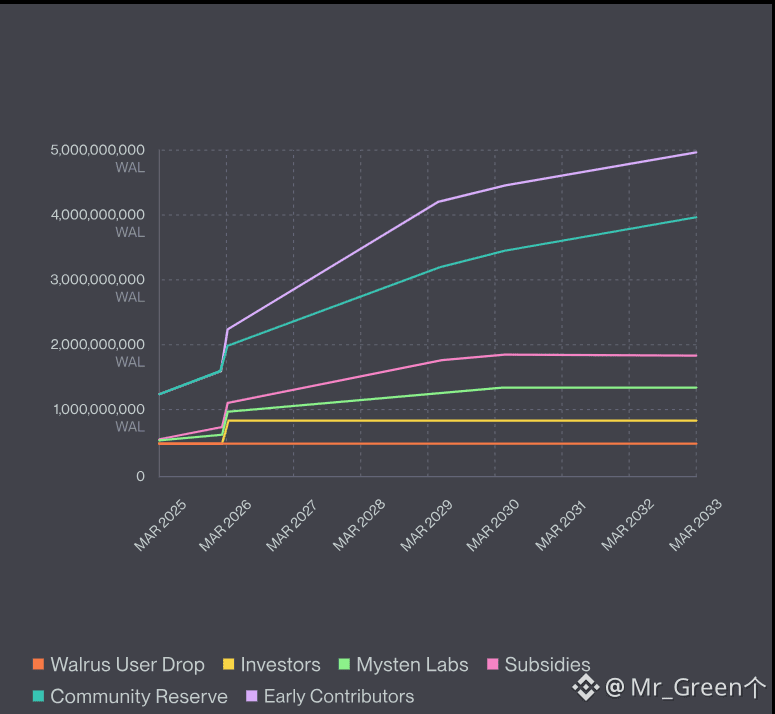
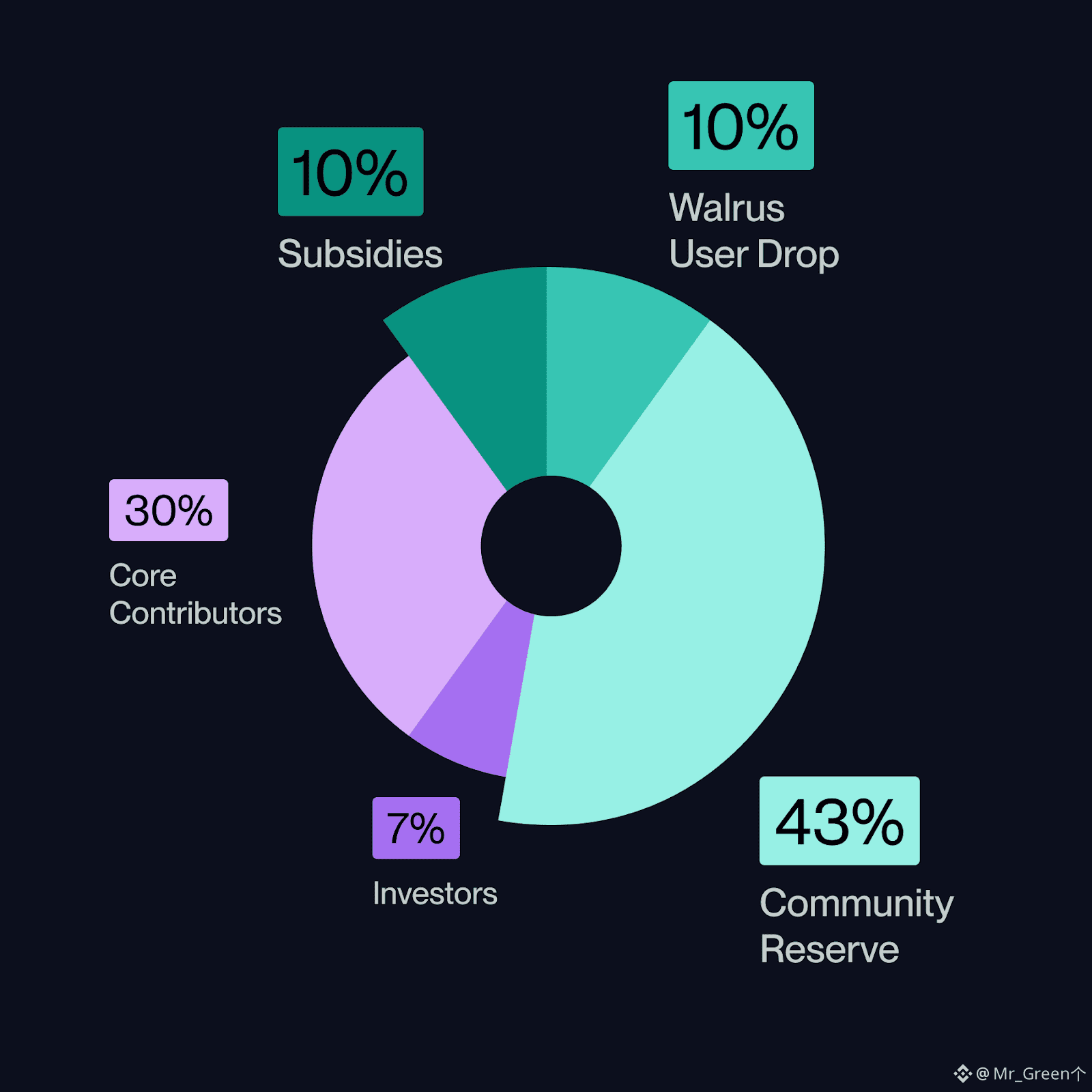
Economics is the other half of reliability, and it’s also where “beyond price” becomes very literal. Walrus openly sets aside 10% of WAL supply for subsidies intended to support adoption in early phases, letting users access storage at a lower rate than the market price while helping storage nodes maintain viable business models. That’s useful scaffolding, but the next year asks whether the building can stand with less scaffolding: does the share of operator rewards coming from actual user fees grow relative to subsidies, and does demand keep up as incentives normalize? Walrus also describes burning mechanisms tied to penalties for short-term stake shifts and, once live, slashing of low-performing nodes with partial burning, both aimed at discouraging behavior that harms the network. And because supply dynamics matter to network planning even when you’re not “talking price,” the release schedule is worth tracking as an infrastructure operator would: Walrus describes a 5,000,000,000 max supply, 1,250,000,000 initial circulating supply, and a distribution where 43% is community reserve (with 690M available at launch and linear unlock until March 2033), 10% user drop, 10% subsidies, 30% core contributors, and 7% investors, with investors unlocking 12 months from mainnet launch. Predictable unlocks don’t decide success, but they do shape how fast the network needs real usage to mature.
Finally, the most exciting metric is the one you can’t fake with a single announcement: builders shipping things ordinary people actually use. Walrus leans hard into the idea that blobs and storage resources can be represented as onchain objects on Sui, making storage programmable rather than just a place to dump files. That design should show up as apps that treat storage like a composable primitive: media-first products, AI/data tooling, games with real asset pipelines, NFT ecosystems that stop sweating broken metadata links, and websites that can be published without “managing servers.” Walrus Sites is a particularly visible proof point because it turns the abstract idea of decentralized storage into something anyone can click; the docs describe how a Walrus Site can be owned by Sui addresses, linked from Sui objects, and even mapped to human-readable names via SuiNS. Over the next year, it’s worth watching whether that becomes a niche demo or a normal pattern, whether “the front end lives on Walrus” becomes as unremarkable as “the contract lives on-chain.”
If you want a one-sentence way to think about the next twelve months, it’s this: Walrus already told the world what it is, a programmable, verifiable blob storage network secured through PoA on Sui and powered by Red Stuff encoding, and now it has to prove that it behaves like dependable public infrastructure under real load. The best stories won’t be written by the market; they’ll be written by the quiet accumulation of PoA receipts, successful retrievals, resilient operator performance, subsidies giving way to genuine fee demand, and a growing number of apps that stop asking “can we store this?” because Walrus made storage feel native.


