

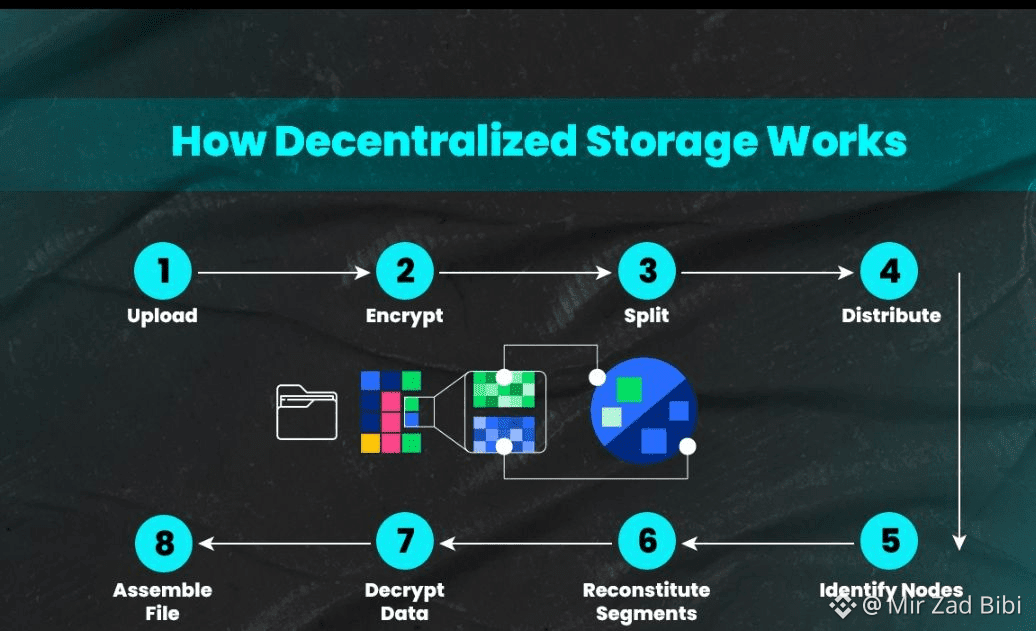
Decentralized storage only works if everyone plays their part. Data needs to stay available, nodes need to stay honest, and the system needs a way to adapt when things don’t go as planned. Walrus tackles this by keeping its governance practical, lightweight, and tightly connected to real network behavior.
Instead of letting governance directly rewrite the protocol, Walrus focuses on something more effective: adjusting economic incentives. This keeps the system stable at its core while allowing it to respond to changing conditions.
Governance That Reflects Real Costs
Walrus governance runs through the WAL token. Storage nodes vote with their stake, including any delegated tokens, which means influence scales with responsibility. Nodes that suffer when others underperform are the same ones deciding how penalties should be set.
Importantly, governance does not directly push protocol upgrades. Changes to the protocol only happen when a supermajority of storage nodes accept them during reconfiguration. In practice, this means upgrades follow discussion, testing, and broad agreement—similar to how mature Layer 1 networks evolve.
A Simple, Predictable Governance Flow
Any storage node can propose updated parameters before the staking cutoff of an epoch. Once proposals are live, nodes vote for a single option or choose to keep things as they are.
If a proposal gets more than half of the votes and quorum is met, it takes effect in the next epoch. If not, nothing changes. There are no minimum staking requirements to participate, which keeps governance open while still economically weighted.
The result is a system that can adapt without constant disruption.
Why Penalties Matter for Blob Storage
Walrus governance controls a small but critical set of parameters. These include penalties related to shard recovery and penalties for failing data challenges.
The rules are carefully constrained. Sending a shard must always be more costly than receiving one, so responsibility stays with the sender. Likewise, failing data challenges must cost more than honest recovery, giving nodes a reason to report problems accurately.
These mechanics quietly protect blob availability. They discourage shortcuts without overengineering enforcement.
Reading Blobs and the Free-Rider Problem
Walrus is designed first for durable blob storage. Reading data is encouraged to be fast and free, but it is not strictly enforced. This creates a familiar challenge: if nodes expect others to serve reads, everyone might stop responding.
Walrus assumes that most nodes want the network to succeed, but it doesn’t rely on that alone. The design leaves room for market-driven solutions to emerge naturally.
Services Built on Top of Walrus
Storage nodes can offer paid read endpoints with performance guarantees. Third-party caches or CDNs can sit on top of Walrus, providing fast access to blobs for a fee paid by readers or writers.
Other ideas, such as on-chain bounties or integrating light nodes more formally, expand the ecosystem without burdening the base layer. Blob storage stays simple, while services compete on quality and speed.
A Quietly Strong Design Choice
Walrus treats governance as a tuning mechanism, not a battlefield. By separating protocol changes from economic adjustments, it keeps the network stable while still responsive.
As blobs become a core building block for data-heavy applications, this balance between incentives, governance, and optional services gives Walrus a clear path to scale—without forcing complexity where it isn’t needed.

