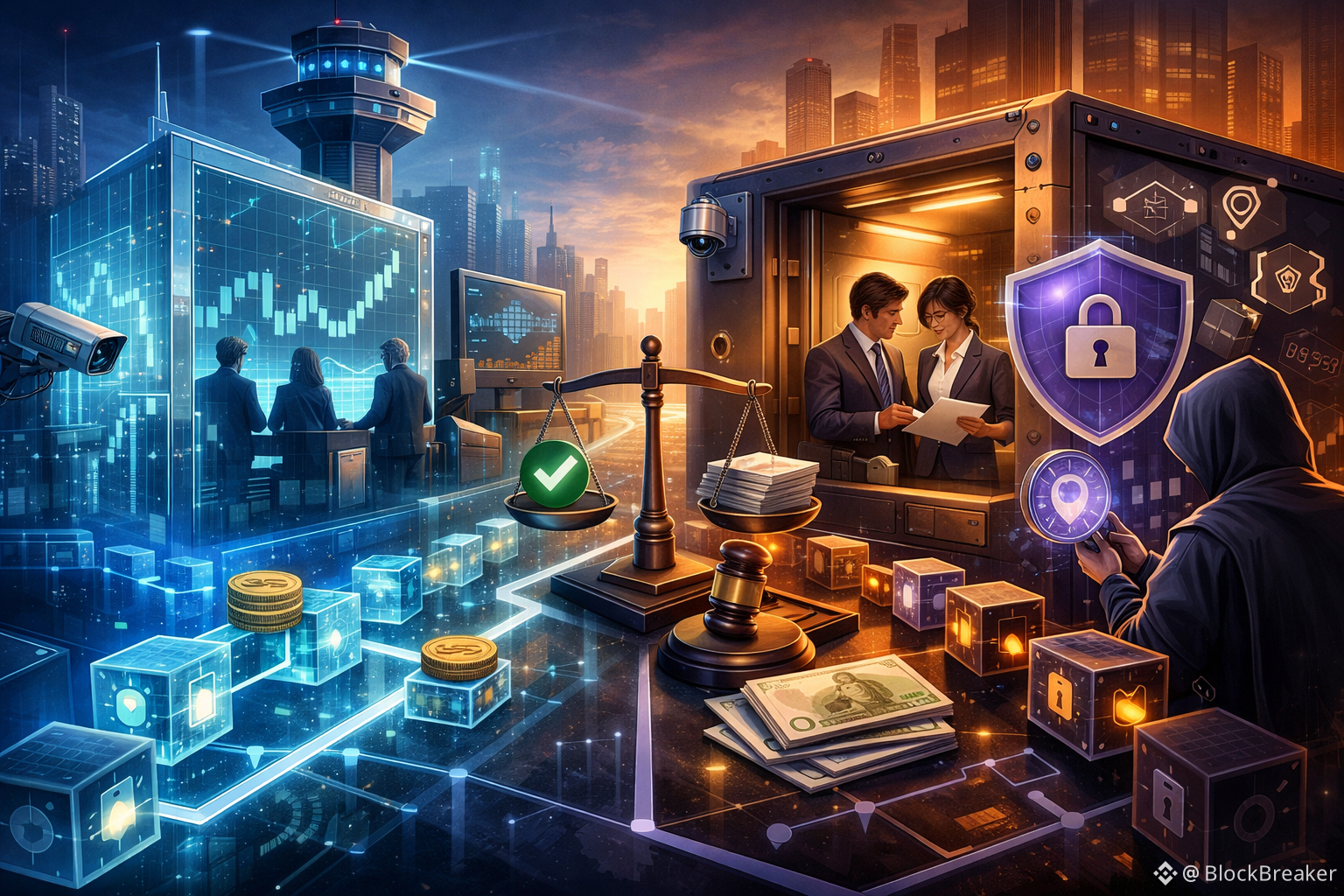
I’ve been thinking about Dusk less as a blockchain and more as a personality type. Not loud, not trying to impress, not obsessed with being “the fastest” or “the most composable.” Instead, it feels like a system that’s asking a quieter, more uncomfortable question: what if a ledger’s real job isn’t to expose everything, but to know exactly when to stay silent?
Most blockchains grow up in a world where transparency is treated like virtue itself. Every balance visible. Every transaction linkable. The assumption seems to be that if something is hidden, it must be suspicious. That mindset works well for grassroots coordination and open-source culture, but it breaks down almost immediately when you try to run real financial infrastructure on top of it. In regulated finance, secrecy isn’t a loophole—it’s a legal obligation. At the same time, secrecy without accountability is useless. Dusk exists in that narrow, awkward middle space.
What makes Dusk feel different is that it doesn’t pretend this tension can be solved later. From the base layer, it accepts that some activity must be visible and some must not, and it gives both of those behaviors equal legitimacy. The transparent transaction model and the zero-knowledge one aren’t “features” you toggle on for marketing reasons; they’re two native ways of speaking to the same ledger. That matters, because it mirrors how institutions actually behave. Payroll is private. Treasury reporting is public. Client relationships are confidential. Regulatory proofs are mandatory. Trying to force all of that into a single visibility model is where most blockchain finance stories quietly fall apart.
I don’t see Dusk as chasing anonymity. It’s closer to discretion. The Phoenix transaction model, with its zero-knowledge structure and selective disclosure, feels less like hiding and more like controlled disclosure. It reminds me of how accountants or auditors work: you don’t open the entire company’s books to the world, but when the right party asks the right question, you can prove that the numbers are correct. That’s a very different philosophy from the “trust me, it’s private” posture that has burned this industry more than once.
The technical stack reinforces that mindset. The settlement layer is conservative by design, and execution environments sit on top of it rather than rewriting it. Bringing an EVM-compatible environment into that structure isn’t revolutionary on its own, but the intention behind it is telling. It’s less about attracting every developer under the sun and more about lowering friction for teams who already understand Ethereum tooling but want different guarantees underneath. In other words, Dusk seems to care more about who builds on it than how loudly it can announce that they’ve arrived.
What really caught my attention recently wasn’t a flashy partnership or a token price movement, but a node software update. The kind of update most people scroll past. New endpoints for transaction counts. Better pagination. Clearer ways to query contract metadata. Faster inclusion of transactions into blocks. That’s the kind of work you do when you expect operators, analysts, and compliance teams to actually rely on the system. It’s unglamorous, but it’s also a signal that the project is thinking beyond demos and toward day-to-day use.
The DUSK token itself makes more sense when you stop looking at it like a speculative chip and start looking at it like infrastructure fuel. Staking isn’t framed as a casino; it’s framed as participation in network security. The long emissions schedule suggests patience rather than urgency, as if the team expects the network to exist for decades rather than cycles. Whether that optimism is justified is an open question, but the design doesn’t scream “extract value quickly.” It feels more like “keep the lights on, sustainably.”
That said, not everything feels solved. The migration path from ERC-20 or BEP-20 representations into native DUSK is a reminder that bridges are still trust chokepoints, no matter how elegant the core protocol is. When value moves between systems, someone is always watching, relaying, reissuing. For institutions, that’s not a footnote—it’s a central risk consideration. Dusk will eventually be judged not just on how private or auditable its ledger is, but on how cleanly and credibly value enters and exits that ledger.
Where the story becomes more tangible is in the ecosystem direction. The appearance of regulated instruments like a MiCAR-aligned digital euro isn’t exciting in the same way meme tokens are, but that’s kind of the point. If Dusk succeeds, it won’t be because it captured attention—it will be because it quietly became usable. Pairing that with reliable data infrastructure and exchange-grade integrations suggests a worldview where blockchains are expected to plug into existing financial reality rather than replace it overnight.
If I strip all the jargon away, here’s what Dusk feels like to me: a ledger designed by people who have sat in rooms where “just make it public” is not an acceptable answer. A system that assumes someone, somewhere, will eventually ask for proof—and that when they do, you won’t want to expose everything else just to satisfy them. Whether Dusk ultimately earns a permanent place in financial infrastructure will depend on adoption, trust, and execution. But as an idea, it’s refreshingly honest about the world it’s trying to serve.