
Plasma breaks approvals.
Not the signature. The timing.
The payment hits. USDT settles. PlasmaBFT finality closes while the approval chain is still waking up. The on-call hasn’t acknowledged. The second signer is offline. The policy assumes minutes. Plasma gives you seconds.
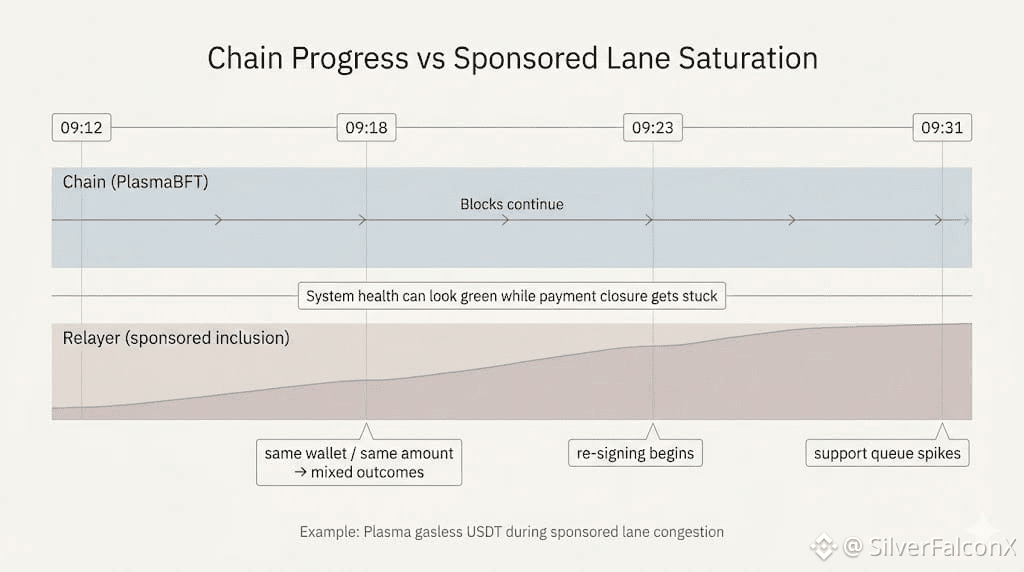
Nothing fails. And that’s what makes it harder to argue with.
The relayer already signed. The sponsored lane did its job. From the chain’s point of view, this is finished business. Internally, it’s still a question waiting for a human.
Who approved this?
Ops checks the runbook. The amount is over the auto-release threshold. It should’ve waited for a second approver. But the app didn’t block. It forwarded. The relayer didn’t know the difference. Plasma's consensus layer PlasmaBFT didn’t ask.
So the approval exists as paperwork you’re trying to catch up with.
Support is calm at first. “Payment confirmed.” Treasury isn’t. They’re scrolling through Slack, looking for a thumbs-up that never arrived. Compliance wants to know why a transfer that size cleared before the approval log updated. Nobody is accusing anyone. Not yet.
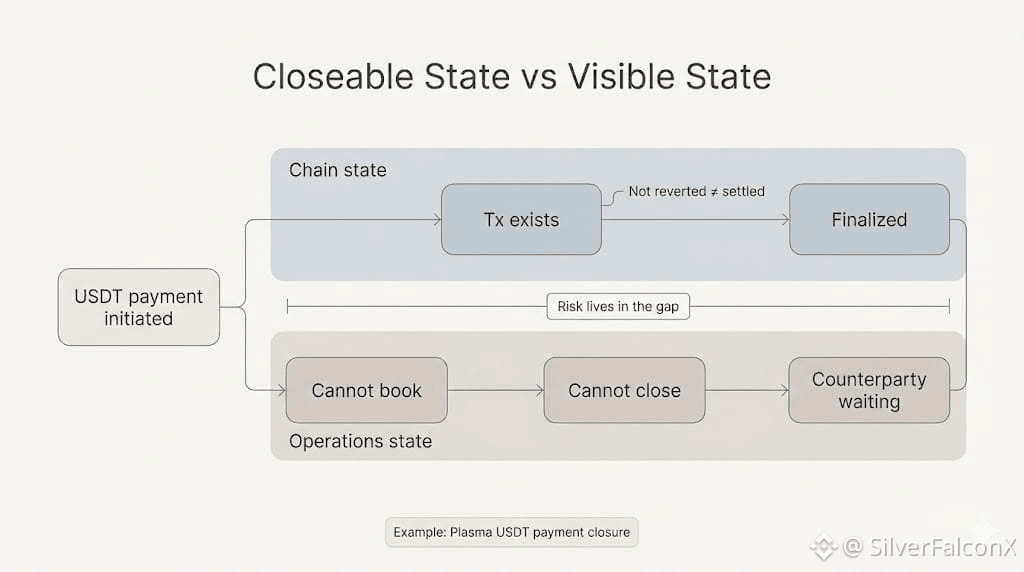
Here’s where it goes wrong in practice: on slower rails, approval latency and settlement latency blurred together. You could pretend approval happened “in time” because nothing finalized until long after the decision. On Plasma, settlement doesn’t wait for that comfort.
I’ve seen teams try to retro-approve. Write it down. Timestamp it. Attach context. It looks neat until you line it up against the chain. The sequence is backwards, and you can’t unsee it.
And then someone asks the real question, quietly: who owns the gap?
The engineer points at configuration. The product lead points at UX. Treasury points at the threshold. Compliance points at ordering: intent doesn’t reorder time.
Meanwhile the user sees a completed payment and moves on.
And this is where it stops feeling like “process” and starts feeling like a wall. Either approval is real before the relayer signs, or it’s not part of the system. No soft buffer. No grace window to “fix it after” without creating a second story.
Some teams move approval upstream. Hard blocks. Explicit signer presence. Smaller auto-limits on the sponsored lane. Fewer “we’ll check after” assumptions. It feels slower. It stops this particular class of embarrassment.
A lot don’t. They keep the flow and add exceptions. Notes. Long threads trying to justify sequence. It holds until audit asks why the chain finalized before the rule did.
Plasma doesn’t negotiate with internal timing.
It records what happened, in the order it happened. #plasma $XPL @Plasma #Plasma

